CPT Code 80061:Lipid Panel Billing & Medicaid Coverage Guide USA
Understanding how to properly bill CPT code 80061 is essential for healthcare providers, medical billers, and practice managers across the United States. While it may seem like a routine lab test, mistakes in coding, documentation, or Medicaid policy interpretation can quickly lead to denied claims and lost revenue.
Learn how to bill CPT code 80061 for lipid panels, including Medicaid coverage, ICD-10 codes, and medical billing guidelines in the USA.
This guide walks you through everything you need to know—from what the lipid panel includes to how Medicaid handles reimbursement—written in a clear, practical, and human-focused way.
What Is CPT Code 80061?
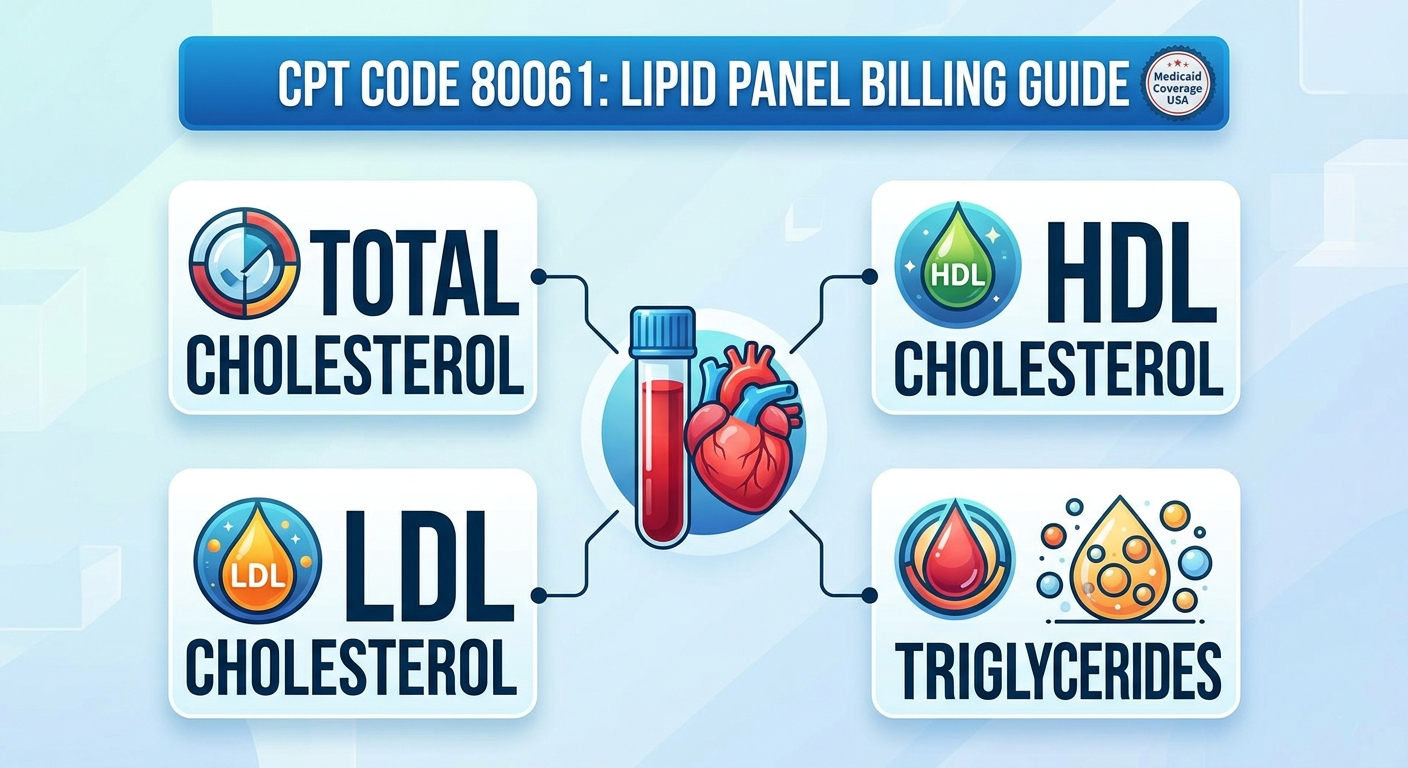
CPT code 80061 represents a lipid panel, a blood test used to measure cholesterol and triglyceride levels. It’s one of the most commonly ordered diagnostic tests in primary care.
A standard lipid panel includes:
- Total cholesterol
- HDL (high-density lipoprotein)
- LDL (low-density lipoprotein)
- Triglycerides
These markers help providers evaluate a patient’s risk for cardiovascular disease, stroke, and other chronic conditions.
Why the Lipid Panel Matters in Everyday Practice
You’ll see CPT 80061 used in both preventive care and chronic disease management. It’s not just about numbers on a lab report—it directly impacts treatment decisions.
Physicians rely on lipid panels to:
- Detect early signs of heart disease
- Monitor patients on cholesterol-lowering medications
- Manage conditions like diabetes and hypertension
- Support annual wellness visits
Because it’s used so frequently, even small billing errors can add up quickly across multiple patients.
Medicaid Coverage for CPT Code 80061
Medicaid coverage for lipid panels isn’t one-size-fits-all. Each state has its own rules, but in Medicaid coverage lipid panel USA have consistent patterns you should understand.
When Medicaid Typically Covers a Lipid Panel
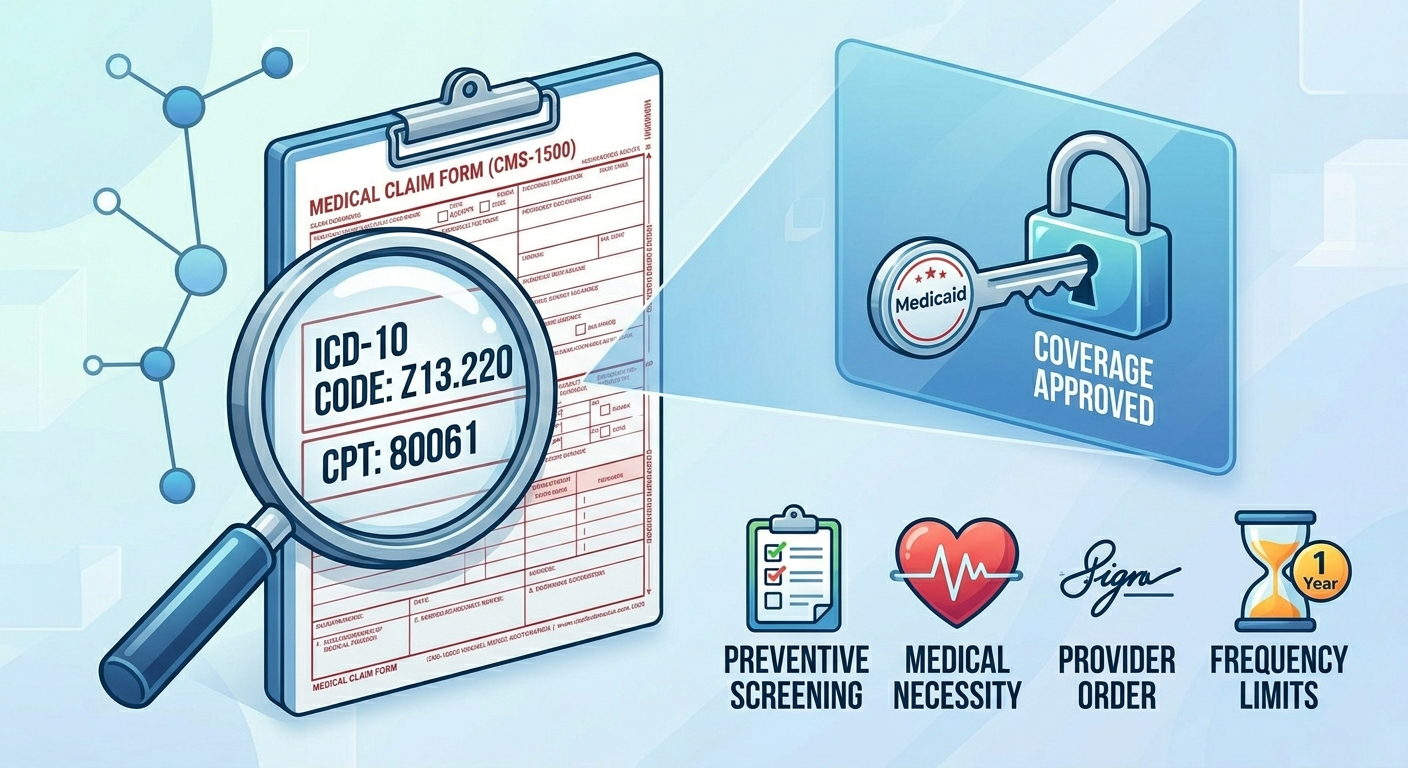
Preventive Screening Medicaid USA
Many Medicaid programs cover lipid panels as part of routine screenings, especially for adults with risk factors.
Medical Necessity
Coverage is more straightforward when the test is linked to a diagnosed condition like hyperlipidemia or cardiovascular disease.
Provider Authorization
The test must be ordered by a qualified healthcare provider and properly documented.
Choosing the Right Diagnosis Codes
Correct diagnosis coding is critical when billing CPT 80061. Without it, even a medically necessary test can be denied.
Common ICD-10 codes for lipid panel include:
- E78.0 – Pure hypercholesterolemia
- E78.5 – Hyperlipidemia, unspecified
- I10 – Essential hypertension
- Z13.220 – Screening for lipoid disorders
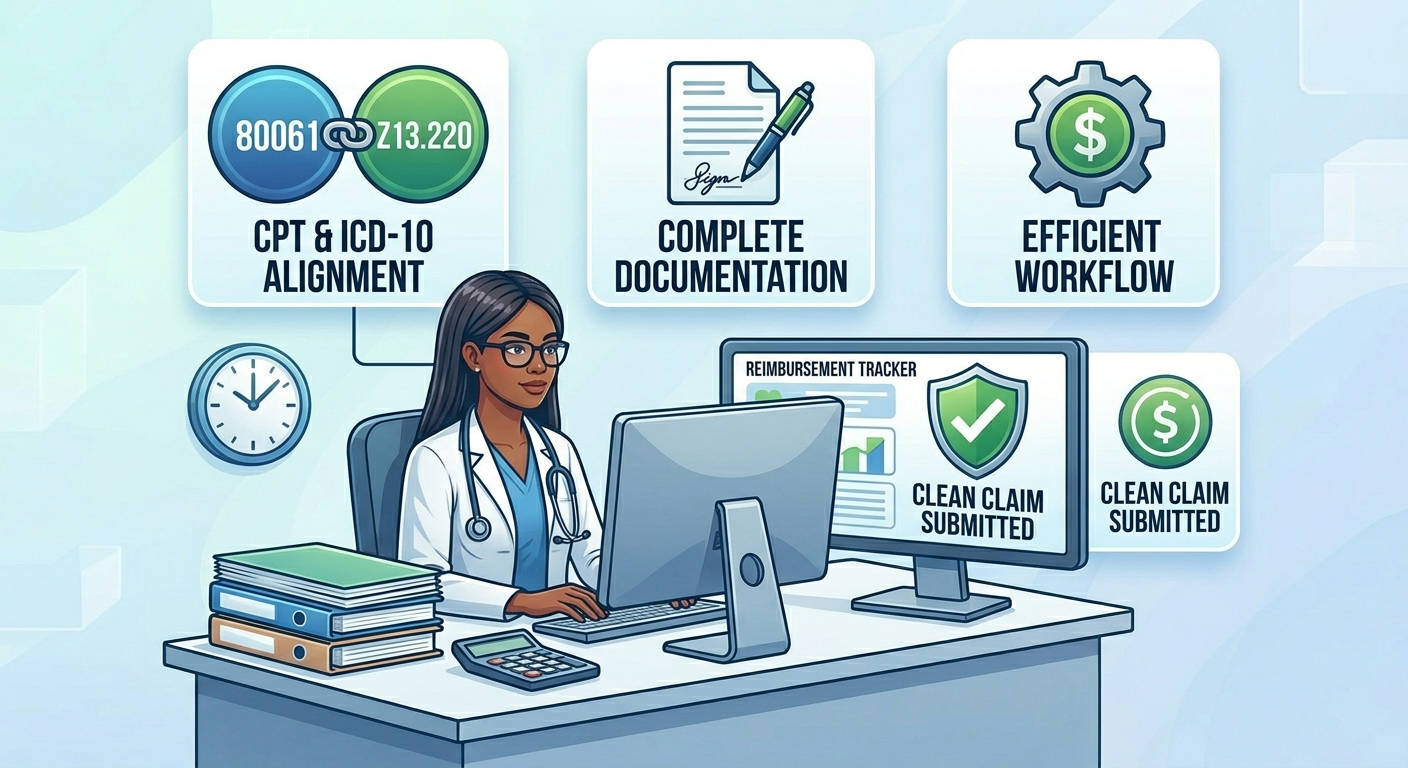
The key is alignment. Your diagnosis must clearly justify why the lipid panel was ordered.
Medical Billing CPT 80061 Guidelines
Getting paid correctly isn’t just about submitting a claim—it’s about submitting a clean claim.
Avoid Unbundling
CPT 80061 is a panel code. That means you should not bill its individual components separately unless there’s a very specific and justified reason.
Watch Frequency Limits
Medicaid often limits how often a lipid panel can be billed:
- Once per year for routine screening
- More frequently with documented medical necessity
Billing too frequently without justification is a common reason for denial.
Use Modifiers Carefully
Modifiers are rarely needed for CPT 80061, but if the test is repeated on the same day for a valid clinical reason, proper modifier use becomes important.
Documentation Is Everything
Make sure your records include:
- Physician order
- Clinical reason (medical necessity)
- Patient history
- Lab results
If documentation is incomplete, reimbursement is at risk.
Common Mistakes That Lead to Claim Denials
Even experienced billing teams run into issues with CPT 80061. Here are the most common ones:
Mismatch Between CPT and ICD-10 Codes
If the diagnosis doesn’t support the test, Medicaid may reject the claim.
Billing Too Frequently
Ignoring frequency limits can trigger automatic denials.
Duplicate Claims
Submitting the same claim without correction creates compliance risks.
Missing or Weak Documentation
Auditors look for clear justification—anything vague can cause problems.
Reimbursement for CPT Code 80061
Reimbursement varies depending on the state and provider setting. Medicaid fee schedules differ, but generally:
- Payments are relatively low compared to other procedures
- Volume and accuracy are key to maintaining revenue
- Errors can quickly outweigh profits due to rework and delays
That’s why efficiency and accuracy in billing matter so much for lab-related services.
How to Improve Your Billing Process
If you’re handling medical billing in-house or managing a revenue cycle team, small improvements can make a big difference.
Focus on Clean Claims
Double-check coding before submission. A clean claim reduces delays and rework.
Stay Updated on Medicaid Policies
State guidelines change more often than most people expect. Regular updates help avoid outdated practices.
Train Your Staff Regularly
Billing rules evolve, and ongoing training keeps your team sharp and compliant.
Use Reliable Billing Software
Automation helps reduce human error and improves claim tracking.
Real-Life Billing Scenario
Here’s a simple example to tie everything together.
A 50-year-old patient visits a clinic for an annual check-up. The provider orders a lipid panel as part of preventive care.
Billing Breakdown:
- CPT Code: 80061
- ICD-10 Code: Z13.220
- Payer: Medicaid
If the patient meets eligibility criteria and hasn’t exceeded frequency limits, the claim should process without issues. However, if the same test was billed recently without a medical reason, denial is likely.
The Bigger Picture: Preventive Care and Cost Savings
Lipid panels aren’t just routine—they’re part of a larger shift toward preventive healthcare in the United States.
By identifying risks early, providers can:
- Reduce hospitalizations
- Lower long-term treatment costs
- Improve patient outcomes
For Medicaid programs, preventive services like lipid panels are a cost-saving strategy over time.
Conclusion
CPT code 80061 may be simple on the surface, but accurate billing requires attention to detail. From selecting the right diagnosis code to understanding Medicaid rules, every step plays a role in whether your claim gets approved.
When handled correctly, lipid panel billing can be smooth, predictable, and efficient. When handled poorly, it leads to denials, delays, and unnecessary frustration.
The difference comes down to knowledge, systems, and consistency.
If you’re managing medical billing in the USA, mastering codes like CPT 80061 is a small step that makes a big impact on your overall revenue cycle success.