

How to Reduce Endocrinology Claim Denials | Utreatibill

Table of Contents

How to Reduce Endocrinology Claim Denials through proactive claim review and reimbursement optimization

How to Reduce Endocrinology Claim Denials

Claim denials remain one of the biggest financial challenges facing endocrine practices today. Even a small increase in denied claims can significantly impact cash flow, delay reimbursements, and create additional administrative work for providers and office staff. As payer requirements become more complex, endocrinologists must adopt proactive billing strategies to protect revenue and maintain operational efficiency.

Understanding how to reduce endocrinology claim denials starts with identifying the most common causes of rejections and implementing systems that prevent errors before claims are submitted. From coding mistakes and documentation gaps to insurance verification issues and authorization failures, every stage of the billing process can influence reimbursement outcomes.

Many practices invest heavily in patient care but overlook weaknesses in their billing workflow. As a result, claims that should be approved on the first submission often require resubmission, appeals, or extensive payer follow-up. These delays increase costs and reduce staff productivity.

This guide explores the most common denial causes, practical prevention strategies, and billing best practices that can help endocrine practices improve collections while reducing revenue loss.

Many providers rely on specialized endocrinology billing services to improve claim accuracy and maintain steady cash flow. However, even experienced practices can face reimbursement challenges due to evolving payer requirements, documentation standards, and coding updates. Understanding where denials originate is the first step toward building a stronger billing process and improving financial performance.

Why Endocrinology Claims Are Frequently Denied

Endocrinology is a highly specialized field that involves chronic disease management, hormone therapy treatments, laboratory testing, and ongoing patient monitoring. These services often require detailed documentation and strict compliance with payer requirements ICD-10-CM Official Guidelines

Unlike routine office visits, endocrine claims frequently include multiple diagnoses, supporting documentation, modifiers, and prior authorization requirements. Even minor errors can trigger claim denials.

Common reasons for denied claims include:

  • Incorrect diagnosis coding
  • Missing documentation
  • Authorization issues
  • Eligibility verification errors
  • Incomplete patient information
  • Incorrect modifier usage
  • Untimely claim submission
  • Lack of medical necessity documentation

When these issues occur repeatedly, practices experience reduced reimbursement rates and increased administrative costs.

The Financial Impact of Claim Denials

Many providers underestimate how expensive denied claims can become. Every denial requires staff time, investigation, corrections, appeals, and follow-up communication with payers.

A denied claim often costs significantly more to rework than a clean claim costs to submit initially. Additionally, some denied claims are never recovered, resulting in permanent revenue loss.

For endocrine practices managing diabetes care, thyroid disorders, osteoporosis treatments, and hormone replacement therapy, even a small denial rate can have a major impact on monthly collections.

High denial rates may also lead to:

  • Increased accounts receivable days
  • Reduced cash flow
  • Higher administrative costs
  • Staff burnout
  • Lower patient satisfaction

Denied claims can also reduce reimbursement accuracy by creating delays in collections and increasing administrative costs. Claims that are not corrected quickly often move into accounts receivable, making recovery more difficult and affecting overall practice profitability. Over time, these issues can negatively impact revenue growth and operational efficiency.

Common Endocrinology Billing Mistakes That Cause Denials

1. Inaccurate Medical Coding

Coding errors remain one of the leading causes of claim denials.

Incorrect CPT codes, ICD-10 codes, modifiers, or documentation inconsistencies can trigger immediate rejections. Endocrine practices frequently manage complex conditions that require precise coding and supporting documentation.

Investing in accurate endocrinology coding services helps ensure claims are submitted correctly the first time.

2. Incomplete Documentation

Insurance carriers require detailed records supporting the medical necessity of services provided.

Missing physician notes, treatment plans, laboratory results, or patient history can lead to denied claims even when treatment was appropriate.

Documentation should clearly support every billed procedure and diagnosis.

3. Failure to Verify Insurance Eligibility

One of the simplest ways to prevent denials is through accurate endocrinology insurance verification.

Eligibility changes occur frequently. Patients may switch plans, lose coverage, or encounter benefit limitations that affect reimbursement.

Strong endocrinology insurance verification processes go beyond checking active coverage. Effective insurance eligibility verification identifies authorization requirements, coverage limitations, and benefit restrictions before services are provided, helping practices avoid costly billing errors.

Insurance eligibility specialist reviewing patient coverage and authorization requirements before claim submission

The Role of Prior Authorization in Denial Prevention

Prior authorization plays a major role in endocrine reimbursement.

Many hormone therapies, specialty medications, imaging procedures, and laboratory tests require approval before services are performed prior authorization requirements.

Failure to obtain authorization often results in automatic denials regardless of medical necessity.

Best practices include:

  • Tracking authorization expiration dates
  • Documenting approval numbers
  • Maintaining payer communication records
  • Reviewing authorization requirements regularly

A proactive authorization process reduces avoidable denials and reimbursement delays.

How to Improve Claim Accuracy Before Submission

Preventing denials begins before claims reach the payer.

Successful practices establish quality control processes that identify issues before submission.

These processes may include:

Claim Scrubbing

Automated claim scrubbing tools review submissions for coding errors, missing information, and payer-specific requirements before claims are sent. This process helps practices generate more clean claims, improve reimbursement accuracy, and reduce preventable claim denials.

Documentation Reviews

Regular audits help ensure documentation supports billed services. medical necessity documentation

Coding Audits

Regular audits performed by endocrinology coding services help identify recurring billing issues, improve documentation quality, and strengthen compliance with payer requirements. These reviews also support clean claim submissions and help reduce coding-related denials.

Staff Education

Ongoing training helps billing teams stay current with payer updates and coding changes.

Improving claim accuracy significantly increases first-pass acceptance rates.

Endocrinology Claim Denial Prevention Strategies

Successful practices focus on prevention rather than correction.

Effective endocrinology claim denial prevention strategies often include:

Standardized Billing Workflows

Consistent workflows reduce variability and minimize errors.

Real-Time Eligibility Verification

Accurate Eligibilty verification remains one of the most effective ways to reduce claim denials. Verifying eligibility before every visit helps providers prevent billing issues caused by inactive coverage, benefit changes, or missing authorizations.

Strong Documentation Processes

Providers should document medical necessity clearly and consistently.

Denial Tracking

Monitoring denial trends helps identify recurring issues.

Performance Reporting

Reporting provides visibility into denial rates, payer behavior, and reimbursement performance.

Reporting also supports revenue optimization by identifying denial patterns, payer trends, reimbursement issues, and workflow inefficiencies. This data helps practices make informed decisions that improve financial performance over time.

How to Improve Reimbursements for Endocrine Practices

Improving reimbursement rates requires more than reducing denials.

Practices should focus on optimizing the entire billing cycle, including:

  • Accurate charge capture
  • Timely claim submission
  • Payment posting
  • Accounts receivable follow-up
  • Appeals management
  • Financial reporting

Strong endocrinology revenue cycle management processes help practices identify opportunities for improvement while maintaining compliance.

Many providers ask how to improve reimbursements for endocrine practices without increasing patient volume. The answer often lies in stronger endocrinology revenue cycle management processes that improve billing efficiency, accelerate payments, and reduce preventable denials.

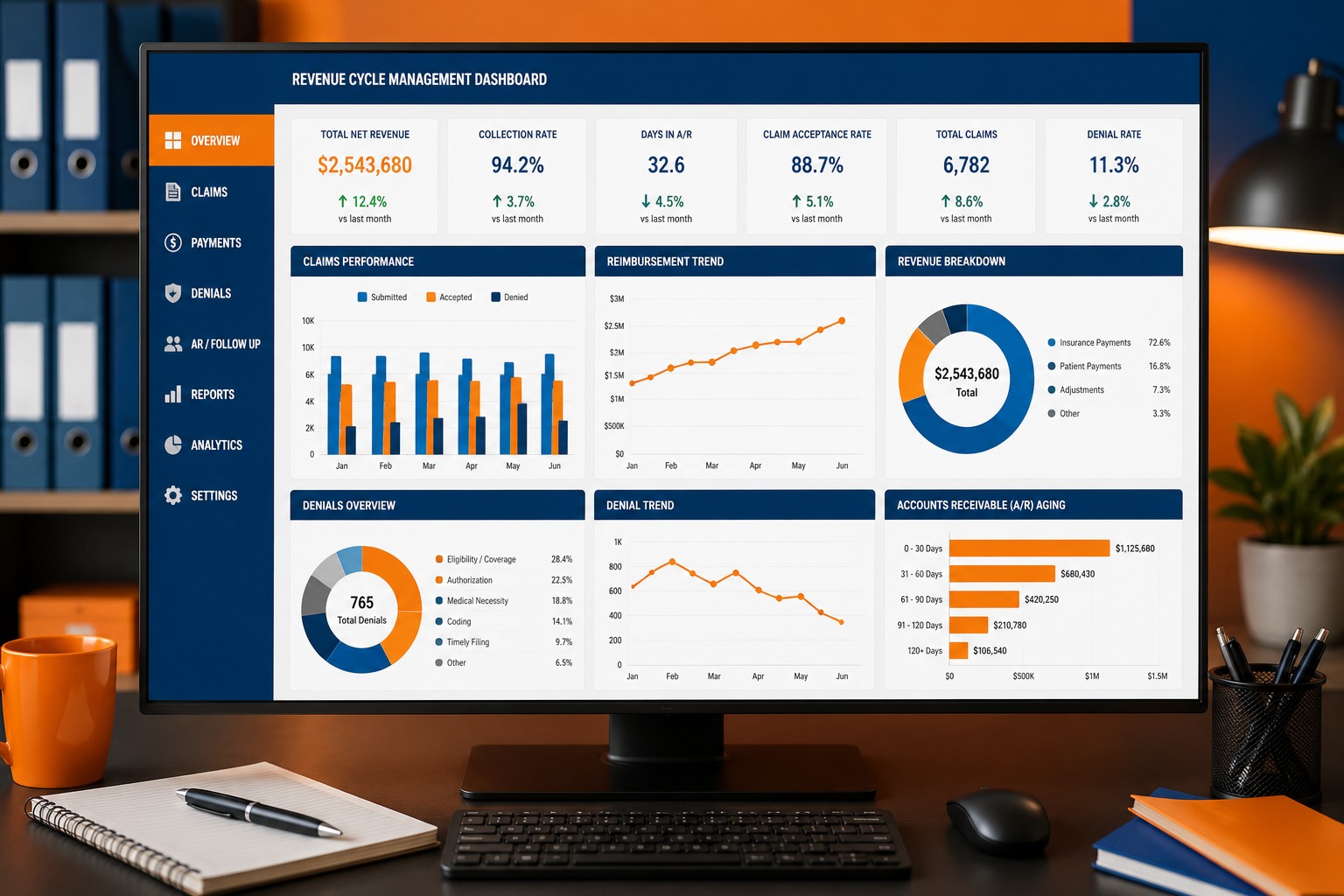
Healthcare revenue cycle management dashboard displaying reimbursement trends and financial performance metrics

When Should Practices Consider Outsourcing Billing?

As endocrine practices grow, managing billing internally becomes increasingly difficult.

Many providers choose endocrinology medical billing services to reduce administrative burden while improving collections.

Professional endocrinology medical billing services provide access to experienced specialists who understand denial management, coding compliance, payer regulations, and specialty billing requirements. Many practices use endocrinology medical billing services to improve efficiency while reducing administrative burdens.

Benefits often include:

  • Access to experienced billing specialists
  • Improved coding accuracy
  • Faster payer follow-up
  • Reduced denial rates
  • Better reporting and analytics
  • Increased staff efficiency

As payer requirements continue evolving, many providers are searching for how to reduce endocrinology claim denials in 2026. Implementing endocrinology claim denial strategies, improving endocrinology insurance verification, and focusing on reducing denied claims in endocrinology medical billing can help practices maintain stronger reimbursement performance and long-term financial growth.

Healthcare billing team reviewing workflow analytics, claim tracking reports, and operational performance dashboards in a modern medical office

Building a More Efficient Billing Workflow

Long-term financial success depends on creating reliable processes that support accuracy, consistency, and accountability throughout daily operations. Many payment issues originate from small workflow gaps that go unnoticed until they begin affecting overall performance.

Healthcare organizations that regularly evaluate internal procedures are often better positioned to respond to payer changes, documentation requirements, and operational challenges. Establishing clear responsibilities for staff members, maintaining organized records, and implementing routine quality reviews can help reduce unnecessary delays and improve overall efficiency.

Technology also plays a critical role in streamlining administrative tasks. Automated reporting tools, eligibility systems, claim tracking platforms, and performance dashboards provide valuable insights that help teams identify potential problems before they become larger issues. Access to real-time data allows decision-makers to make informed adjustments that support stronger financial outcomes.

Another important factor is communication. Providers, administrators, and billing personnel should work together to ensure information is documented accurately and transferred efficiently between departments. Improved collaboration often leads to faster issue resolution and fewer processing errors.

Regular performance evaluations can further strengthen operations by highlighting trends, identifying training opportunities, and uncovering areas where additional process improvements may be needed. Small adjustments made consistently over time often produce significant results.

Organizations that focus on operational excellence are better equipped to maintain steady cash flow, improve staff productivity, and adapt to changing industry requirements while continuing to deliver high-quality patient care.

Final Thoughts

Reducing claim denials requires a combination of accurate coding, strong documentation, insurance verification, authorization management, and continuous performance monitoring.

Practices that invest in denial prevention strategies often experience improved cash flow, lower administrative costs, and higher reimbursement rates. By focusing on claim accuracy and proactive billing management, providers can spend less time dealing with insurance issues and more time delivering quality patient care.

For practices looking to strengthen reimbursement performance and streamline billing operations, partnering with experts in Endocrinology Billing Services can provide the support needed to reduce denials and improve long-term financial stability.


Frequently Asked Questions

Why do insurance companies reject medical claims?

Claims are commonly rejected because of coding mistakes, missing documentation, eligibility issues, incomplete patient information, or authorization problems. Identifying the root cause quickly helps prevent future payment delays.

Improving documentation quality, reviewing submissions before filing, and maintaining accurate patient records can significantly increase acceptance rates and reduce administrative work.

A rejected claim contains errors that prevent processing and must be corrected before resubmission. A denied claim has already been processed by the payer but was not approved for payment.

Documentation supports the medical necessity of services provided. Clear and complete records help payers understand why treatment was required and reduce the likelihood of payment disputes.

Most practices benefit from reviewing workflows, reports, and performance metrics regularly to identify issues early and improve overall efficiency.

Ongoing education helps teams stay current with payer requirements, documentation standards, and industry changes that can affect payment outcomes.

Tracking trends, reviewing reports, and analyzing payer responses can help uncover patterns that contribute to delayed or unpaid claims.

Important factors include industry experience, transparency, reporting capabilities, responsiveness, compliance knowledge, and a proven track record of improving financial performance.

Resolution times vary depending on the payer, complexity of the issue, and supporting documentation available. Prompt follow-up generally leads to faster outcomes.

Reporting provides visibility into collections, payment trends, operational performance, and areas where process improvements may increase efficiency and profitability.