
There is a quiet crisis happening in healthcare billing that most providers don’t talk about openly. Practices lose an estimated 5 to 10 percent of their annual revenue to coding errors, missed charges, and avoidable claim denials. For a mid-sized practice, that can translate to hundreds of thousands of dollars walking out the door every year — not because of bad medicine, but because of billing inefficiency.
The solution many providers are turning to is not hiring more in-house staff. It is partnering with a reliable medical coding company that brings certified expertise, the latest coding tools, and proven processes to the table. Let’s dig into why this matters and what the concrete advantages actually look like in practice.
What Outsourced Medical Coding Services Actually Mean
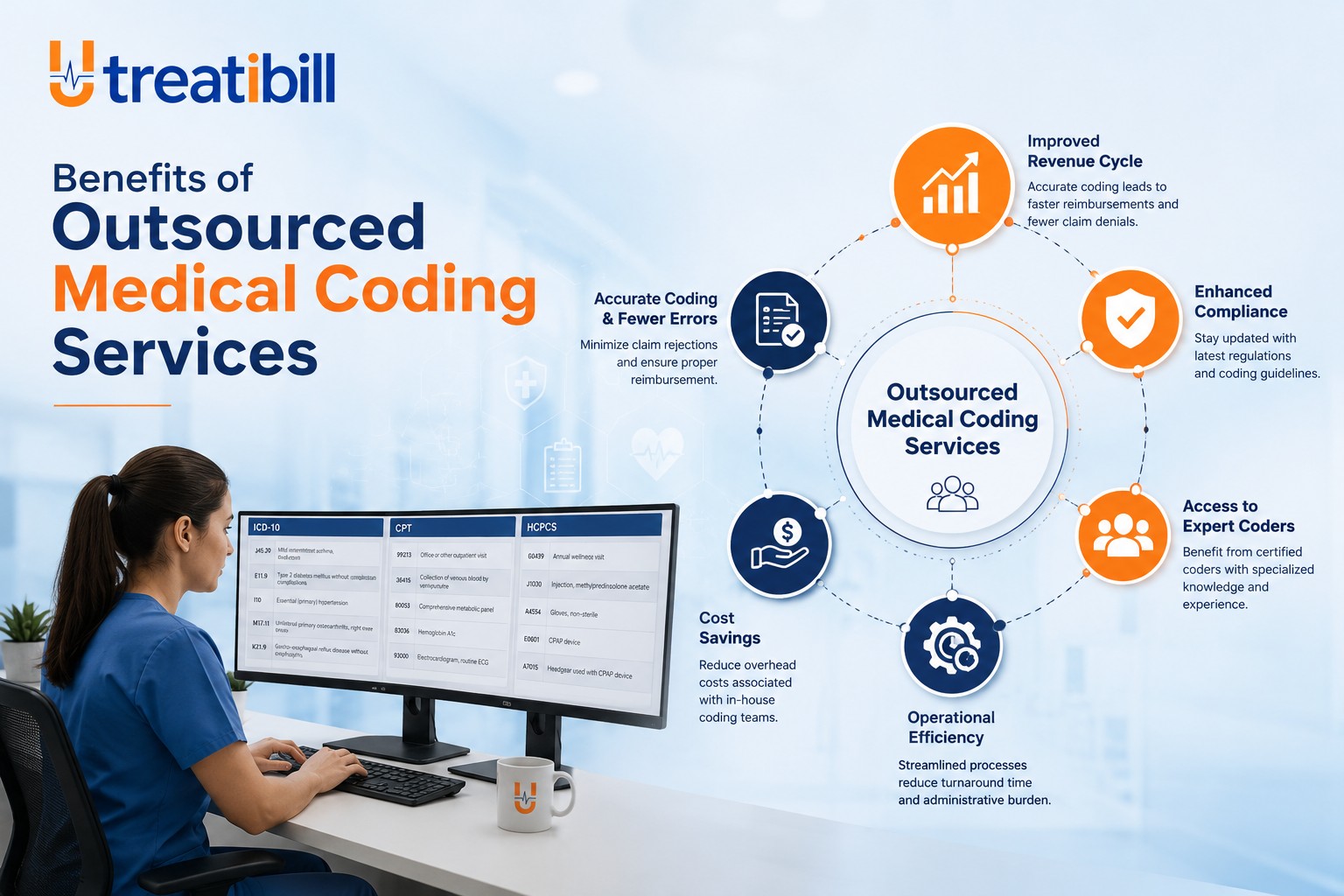
Before getting into the benefits, it helps to clarify what we’re talking about. Outsourced medical coding services involve partnering with an external team of certified medical coders who handle the translation of physician notes, diagnoses, procedures, and treatments into the standardized codes that insurance companies use to process claims — primarily ICD-10, CPT, and HCPCS coding systems.
This is not about handing off a minor administrative task. Medical coding is the engine behind your entire revenue cycle. Every insurance claim your practice submits begins with a code, and if that code is wrong, incomplete, or inconsistent with the patient documentation, you are looking at delays, denials, or compliance risk.
Healthcare providers process thousands of insurance claims every year, making coding accuracy a critical factor in maintaining steady cash flow and avoiding unnecessary reimbursement delays.
According to the Centers for Medicare & Medicaid Services (CMS), payer requirements and fee schedules are updated regularly — meaning coders must stay current with annual changes to CPT codes, ICD-10 revisions, and payer-specific rules. Keeping an in-house team trained on all of this is expensive and time-consuming. Outsourcing shifts that burden to specialists whose entire job is to stay current.

Benefit 1: Significant Reduction in Claim Denials
If you have ever wondered how medical coding services reduce claim denials, the answer is straightforward: precision and pre-submission review. When certified coders handle your charts, they catch errors before a claim ever reaches the payer. Upcoding, undercoding, mismatched diagnosis and procedure codes, and missing modifiers are identified and corrected at the source.
The American Medical Association (AMA) has documented that physician practices spend significant time and resources appealing denied claims — a process that eats into staff productivity and delays cash flow. Many of those denials trace back to coding issues that better upstream processes would have prevented entirely.
When you work with a professional medical coding service, your claims go out the door with the right codes attached to the right documentation. That means fewer rejections, fewer appeals, and faster payments. Over time, even a modest improvement in first-pass claim acceptance rates can add up to a significant revenue gain.
Benefit 2: Improved Reimbursement Accuracy
There is a difference between getting paid and getting paid correctly. Many practices receive reimbursements that are technically processed but are lower than they should be — because procedures were coded at a lower level of complexity than actually occurred, or because billable services were missed entirely during documentation review.
Professional medical coding services are designed to close that gap. Certified coders are trained to read patient documentation thoroughly and identify every billable service, selecting the CPT codes that accurately reflect the level and type of care provided. This is not about gaming the system — it is about making sure your practice receives what it is legitimately owed.
Reimbursement accuracy also depends on understanding how different payers interpret coding rules. Medicare, Medicaid, and commercial insurers often have slightly different guidelines for the same procedure. A coder who works across multiple payer types every day develops the kind of nuanced knowledge that is difficult to build in-house, especially in smaller practices.
Want to know how to improve reimbursement accuracy with medical coding? The starting point is always ensuring that codes submitted match the documentation, that modifiers are applied correctly, and that bundling rules are followed. A skilled coding partner handles all of that as a matter of routine.
Benefit 3: Access to Certified Medical Coders Across Specialties
Not all medical coding is the same. Cardiology coding involves very different rules than orthopedics, which differs again from behavioral health or emergency medicine. Coding errors in specialty practices are often more costly because the procedures are more complex and the reimbursement rates are higher.
Professional medical coding services for specialty practices bring specialty-specific expertise that is hard to replicate in-house. Rather than training one or two generalist coders to handle everything, you get access to a team where different coders specialize in different clinical areas. This depth of knowledge translates directly into more accurate claims and fewer specialty-specific denials.
The American Academy of Professional Coders (AAPC) certifies coders in general practice as well as specialty-specific credentials — including cardiology, orthopedics, and general surgery. When evaluating an outsourced coding partner, it is worth asking what certifications their team holds and whether they have coders dedicated to your specialty.
Benefit 4: Keeping Up with ICD-10 and CPT Updates

Every October, the ICD-10 code set is updated with new codes, revised descriptions, and retired entries. Every January, CPT codes are revised by the AMA with additions and deletions. Missing these updates — or applying outdated codes — results in claim rejections and potential compliance issues.
ICD-10 and CPT coding services for accurate reimbursements depend entirely on staying current. For in-house teams, this means annual training, updated reference materials, and time spent reviewing changes across hundreds or thousands of codes. For an outsourced coding company, staying updated is simply part of operations. Their systems, training, and workflows are built around continuous education and code set maintenance.
HCPCS coding — the Healthcare Common Procedure Coding System used primarily for Medicare and Medicaid claims — is also updated regularly and carries its own complexity, particularly for durable medical equipment, supplies, and certain outpatient services. Having a partner who manages all three coding systems simultaneously removes a significant administrative burden from your practice.
Benefit 5: Stronger Coding Compliance and Lower Audit Risk
Coding compliance is not just about accuracy — it is about documentation habits, payer rule adherence, and audit readiness. The Office of Inspector General (OIG) publishes an annual Work Plan that identifies coding and billing patterns it intends to scrutinize. Practices with inconsistent coding patterns or inflated complexity levels are at higher risk for audits and potential recoupment demands.
A reputable medical coding company conducts internal audits as part of its standard quality process. This means reviewing samples of coded claims, identifying patterns that might raise red flags with payers, and correcting documentation habits before they become a liability. Your outsourced coding partner effectively acts as an internal compliance function — flagging issues before regulators or payers do.
This proactive approach to coding compliance is something most in-house teams simply cannot sustain consistently, especially without a dedicated compliance officer. The peace of mind alone is worth something — knowing your claims are being reviewed with fresh eyes before they go out the door.
Benefit 6: Faster Revenue Cycle Turnaround
Revenue cycle management is about the speed and reliability of money moving from patient encounter to payment. Every day a claim sits uncoded is a day your practice goes without reimbursement. Backlogs happen in-house when coders are sick, when staff turns over, or when claim volume spikes unexpectedly.
Outsourced medical coding services for healthcare providers are designed to scale. When your volume increases — whether due to seasonal patterns, new providers, or expanded services — your coding partner absorbs that increase without the lag time of hiring and training new staff. Claims move through the pipeline more consistently, reducing average days in accounts receivable and improving cash flow predictability.
This kind of operational consistency is one of the less visible but highly impactful benefits of outsourcing. It doesn’t show up in a single month’s data, but over a year, the cumulative effect on revenue cycle performance is substantial.
Benefit 7: Real Cost Savings Over In-House Staffing
Hiring a full-time, experienced medical coder is not cheap. When you factor in salary, benefits, continuing education, credentialing costs, coding software licenses, and management time, the true cost of in-house coding is significantly higher than it appears on a job posting.
Outsourcing converts those fixed costs into a variable, performance-linked expense. Most professional medical coding services charge a percentage of collections or a per-claim fee, meaning your coding costs scale with your revenue rather than running as fixed overhead regardless of volume. For smaller and mid-sized practices in particular, this structure offers meaningful financial flexibility.
There is also the hidden cost of turnover. When an experienced in-house coder leaves, they take their institutional knowledge with them. Recruiting, onboarding, and training a replacement takes months — and during that period, coding quality and speed suffer. An outsourced partner eliminates that vulnerability entirely.
Benefit 8: Better Patient Documentation Feedback Loop
One underappreciated benefit of working with a professional coding team is the feedback loop it creates around clinical documentation. Coders regularly encounter notes that lack the specificity needed to support the codes being billed — vague diagnoses, missing laterality, incomplete procedure descriptions.
A good coding partner doesn’t just code around these gaps. They communicate them back to your clinical staff in a structured way, helping providers understand what documentation elements insurers require to support higher-level codes. Over time, this feedback improves the quality of patient documentation across your practice, which in turn supports more accurate coding, better reimbursement accuracy, and lower audit risk.
This documentation improvement cycle is one of the long-term compounding benefits that practices rarely anticipate when they first explore outsourcing — but consistently cite as one of the most valuable outcomes after a year or two of partnership.

How to Choose the Right Outsourced Medical Coding Partner
Not every coding company is the same. Here are the key factors to evaluate when selecting a partner:
Credentials: Look for certified medical coders with relevant specialty certifications through AAPC or AHIMA — CPC, CCS, CPMA, or specialty-specific credentials.
Specialty experience: Ask specifically about experience in your clinical specialty and request references from similar practices.Strong ICD-10 coding services should include ongoing coder education, annual code update training, and detailed quality assurance reviews to ensure coding consistency and compliance.
Audit and QA processes: Understand how they review their own work. Regular internal audits and quality checks are non-negotiable.
EHR integration: Make sure their systems can connect with your electronic health records platform to minimize workflow disruption.
Transparent reporting: You should receive regular data on coding accuracy rates, denial rates, and documentation issues flagged by their team.
HIPAA compliance: Your coding partner handles protected health information. Documented HIPAA-compliant data handling is non-negotiable.
UtreatiBill’s professional medical coding services check every one of these boxes — certified coders, specialty expertise, seamless EHR integration, and full reporting transparency built in from day one.
Common Questions About Outsourcing Medical Coding
Will I lose control over my billing process?
No — if you choose the right partner. Good outsourced coding services operate with full transparency, giving you visibility into every claim, every denial, and every coding decision. You retain complete oversight; you simply offload the execution.
What about data security?
Any reputable medical coding company operates under HIPAA regulations and maintains Business Associate Agreements (BAAs), encrypted data transfer protocols, and access controls. Always ask for documentation of their security practices before signing any agreement.
Is outsourcing right for small practices?
In many ways, small practices benefit the most. They rarely have the resources to hire specialized coders for each clinical area and are most vulnerable to the cash flow disruption that comes from claim denials and backlogs. Outsourcing gives small practices access to the same level of coding expertise that large health systems maintain internally — without the overhead.

The Bottom Line
Healthcare billing is complex, and the rules governing it change constantly. For most practices, trying to build and maintain world-class coding expertise in-house is neither practical nor financially efficient. Outsourced medical coding services offer a better path — one that combines certified expertise, operational consistency, regulatory compliance, and measurable improvement in revenue cycle performance.
The practices that thrive financially are not necessarily the ones seeing the most patients. They are the ones making sure every patient encounter is coded accurately, every billable service is captured, and every claim goes out with the documentation to support it. That is what a strong coding partner delivers.
If your practice is dealing with rising denial rates, coding backlogs, or uncertainty about ICD-10 and CPT compliance, it is worth having a conversation. The right partner doesn’t just process your codes — they strengthen the financial foundation your entire practice stands on.
Ready to reduce claim denials and improve reimbursement accuracy? Explore UtreatiBill’s Medical Coding Services and schedule a free consultation today.