
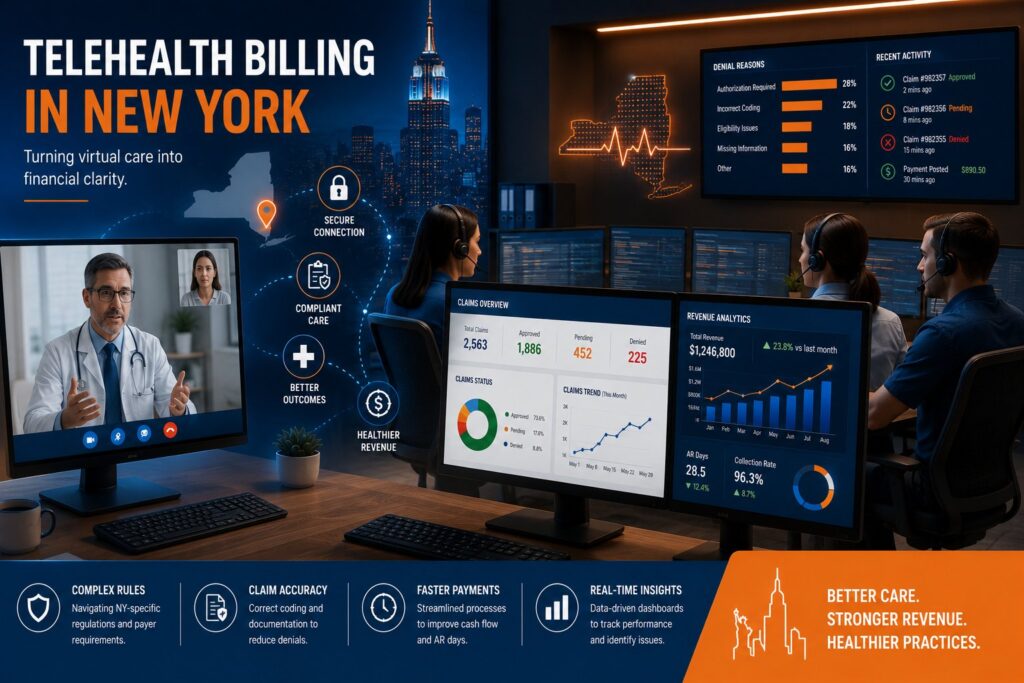
Telehealth Billing Challenges in New York
Telehealth Billing Challenges in New York have become one of the most discussed healthcare topics as virtual healthcare services continue to expand rapidly across the state. Hospitals, clinics, mental health providers, and private practices increasingly rely on telehealth appointments to improve patient access and convenience.
However, telehealth growth also brings major billing and reimbursement complexities. Insurance companies, Medicare, Medicaid, and private payers all have different virtual care billing requirements. Healthcare providers often struggle with claim denials, coding errors, compliance issues, and reimbursement delays.
Understanding the latest Telehealth Billing Challenges in New York is essential for healthcare organizations that want to improve financial performance while delivering high-quality virtual care services.
Healthcare providers seeking expert billing support can explore:
Medical Billing Services in New York
Why Telehealth Is Growing in New York
Telehealth usage increased dramatically after healthcare providers recognized the convenience and accessibility of virtual care.
Patients across New York now use telehealth services for:
- Primary care consultations
- Mental health therapy
- Follow-up appointments
- Chronic disease management
- Pediatric consultations
- Specialist appointments
Virtual healthcare improves access for busy urban populations and patients living in remote areas.
As telehealth expands, providers must adapt to evolving billing requirements and insurance policies.
Understanding Telehealth Billing Challenges in New York
Virtual healthcare billing differs significantly from traditional in-person billing.
Healthcare providers must understand:
- Telehealth CPT codes
- Insurance-specific billing requirements
- Modifier usage
- Documentation standards
- HIPAA compliance regulations
Without accurate billing processes, providers risk delayed payments and increased claim denials.
Current Telehealth Billing Challenges in New York continue to affect healthcare organizations of all sizes.
1. Insurance Reimbursement Complications
One of the biggest Telehealth Billing Challenges in New York is inconsistent insurance reimbursement policies.
Different insurance providers have different rules for:
- Covered telehealth services
- Audio-only consultations
- Video visit reimbursements
- Telehealth modifiers
- Patient eligibility requirements
Healthcare providers often struggle to keep up with constantly changing payer guidelines.
According to Centers for Medicare & Medicaid Services (CMS), telehealth reimbursement policies continue evolving nationwide.
Incorrect reimbursement procedures often lead to delayed payments or denied claims.
2. Incorrect Telehealth Coding Issues
Telehealth billing requires highly accurate coding practices.
Common coding mistakes include:
- Incorrect CPT codes
- Missing modifiers
- Improper place-of-service codes
- Documentation inconsistencies
Even small coding errors can result in claim denials or underpayments.
Professional billing teams help providers maintain coding accuracy and reduce reimbursement risks.
3. HIPAA Compliance Risks
Protecting patient information during virtual visits is extremely important.
Healthcare providers must ensure telehealth platforms and billing systems remain HIPAA compliant.
Security measures should include:
- Encrypted communication systems
- Secure patient data storage
- Access control protocols
- Compliance monitoring
Healthcare organizations can learn more from:
HIPAA Guidelines by HHS
HIPAA compliance remains one of the most critical Telehealth Billing Challenges in New York.
4. Multi-State Licensing and Billing Problems
Many telehealth providers treat patients across state lines.
This creates additional challenges involving:
- Provider licensing requirements
- Insurance regulations
- Medicaid billing policies
- Credentialing processes
Providers offering virtual care in multiple states must understand each state’s healthcare billing laws.
These licensing complications significantly affect telehealth billing workflows.
5. Technology and Documentation Challenges
Telehealth services rely heavily on technology.
Healthcare providers often face problems related to:
- Incomplete documentation
- Technical system failures
- Poor EHR integration
- Missing visit details
Accurate documentation is essential for successful insurance reimbursement.
Modern billing systems help providers improve documentation accuracy and claim approval rates.
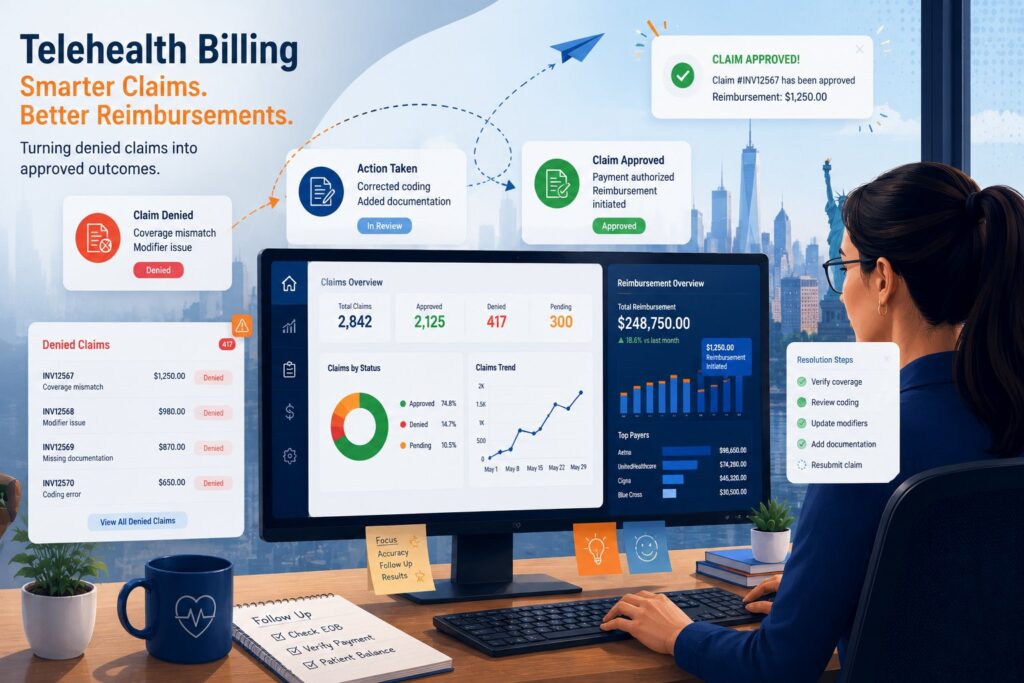
6. Increased Claim Denials for Telehealth Services
Telehealth claims are often denied more frequently than traditional in-person visits.
Common reasons include:
- Missing telehealth modifiers
- Incorrect coding
- Incomplete documentation
- Insurance eligibility problems
Professional billing specialists help reduce denial rates by ensuring claims are submitted correctly the first time.
Reducing denials is one of the biggest priorities related to Telehealth Billing Challenges in New York.
7. Medicaid and Medicare Telehealth Rules
Telehealth billing rules for Medicare and Medicaid frequently change.
Providers must stay updated on:
- Eligible virtual services
- Approved telehealth platforms
- Billing modifiers
- Documentation requirements
Failure to follow updated regulations can result in denied claims and compliance issues.
Healthcare providers often rely on professional billing companies to manage these complex requirements.
8. Patient Billing Confusion
Many patients are unfamiliar with telehealth billing structures.
Patients may become confused about:
- Insurance coverage
- Co-payments
- Virtual consultation charges
- Billing statements
Clear patient communication and transparent billing practices improve satisfaction and reduce disputes.
Healthcare providers that simplify telehealth billing experiences often improve patient retention.
9. Why Professional Billing Support Matters
Managing telehealth billing internally can overwhelm healthcare staff.
Professional billing companies help providers by offering:
- Accurate telehealth coding
- Insurance verification
- Claim submission support
- Denial management
- Revenue cycle optimization
- HIPAA-compliant billing systems
Expert billing support helps healthcare organizations reduce administrative stress while maximizing reimbursements.
Why Utreatibill Supports Telehealth Providers
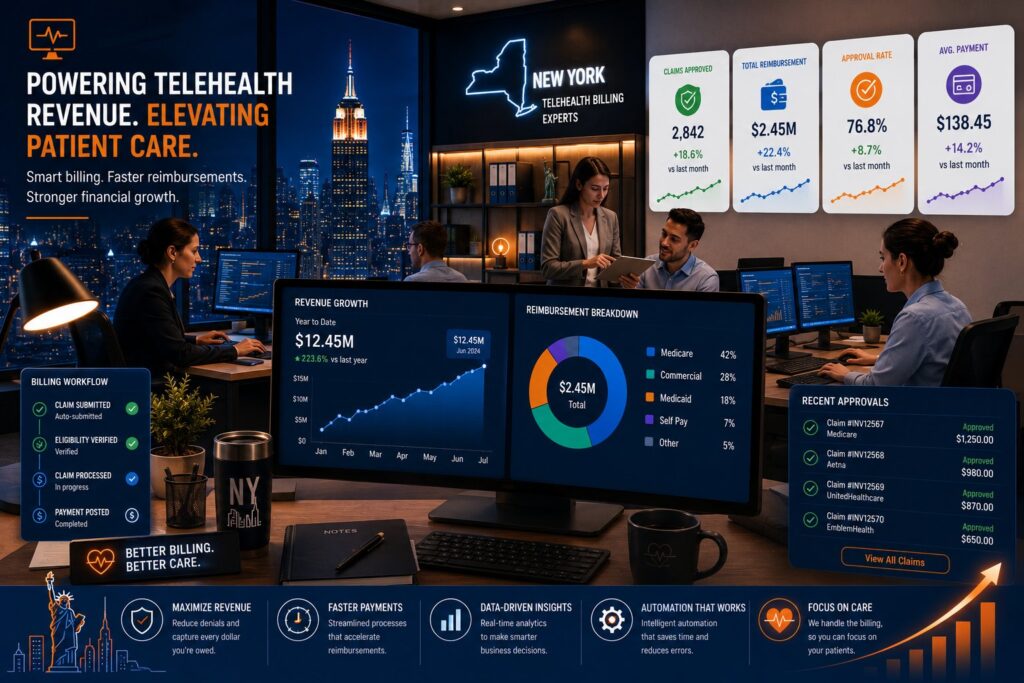
Healthcare providers managing virtual healthcare services can benefit from partnering with Utreatibill.
Benefits include:
- Accurate telehealth coding
- Faster claim processing
- Reduced reimbursement delays
- HIPAA-compliant systems
- Revenue cycle management support
- Dedicated billing specialists
Final Thoughts
Virtual healthcare is rapidly transforming the healthcare industry, but providers must overcome serious billing and reimbursement obstacles to remain profitable.
Understanding current Telehealth Billing Challenges in New York helps healthcare organizations improve claim accuracy, reduce denials, and maintain financial stability.
Healthcare providers that invest in professional telehealth billing support are better positioned for long-term success in the growing digital healthcare market.
For professional billing solutions, visit:
Utreatibill Medical Billing Services in New York
Frequently Asked Questions
What are Telehealth Billing Challenges in New York?
Telehealth Billing Challenges in New York include coding errors, insurance reimbursement issues, compliance risks, and telehealth claim denials.
Why are telehealth claims often denied?
Claims are commonly denied due to missing modifiers, incorrect coding, incomplete documentation, or insurance eligibility problems.
Why is telehealth billing more complex than traditional billing?
Telehealth billing involves additional coding requirements, insurance policies, and virtual care compliance regulations.
How can providers reduce telehealth claim denials?
Providers can reduce denials through accurate coding, proper documentation, and professional billing support.
Is telehealth billing covered by Medicare and Medicaid?
Yes, many telehealth services are covered, but billing requirements vary depending on regulations and payer policies.
Why is HIPAA compliance important for telehealth?
HIPAA compliance protects patient information and ensures secure virtual healthcare communication.
What technology is used for telehealth billing?
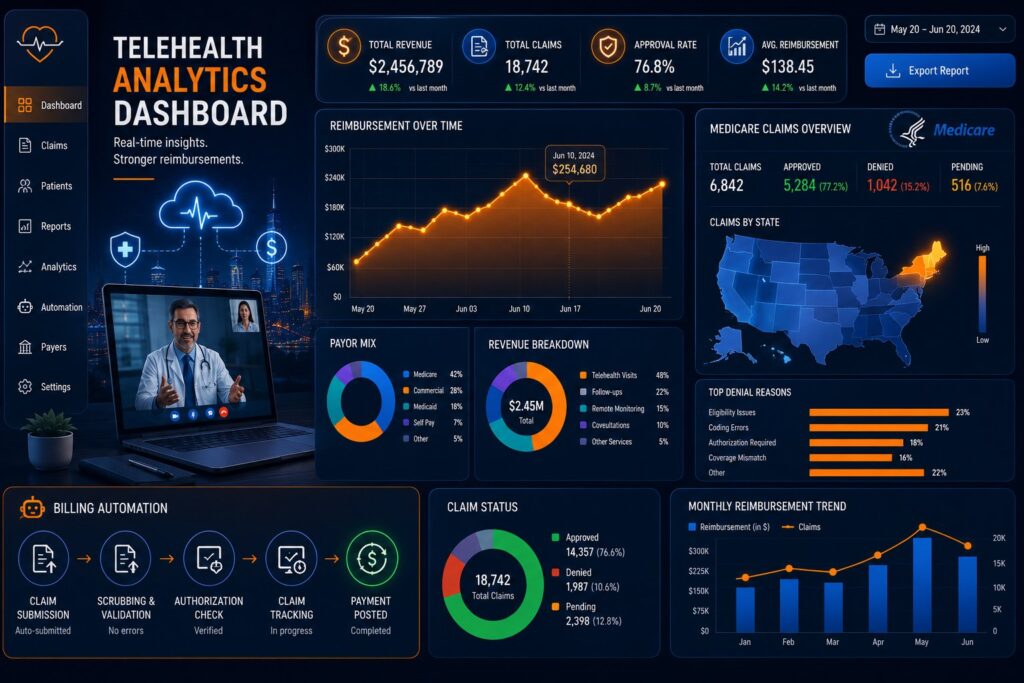
Modern billing systems use EHR integration, automated claims tracking, and analytics dashboards.
How do professional billing companies help telehealth providers?
They improve coding accuracy, reduce claim denials, optimize revenue cycle management, and streamline reimbursements.
What specialties commonly use telehealth services?
Mental health, primary care, pediatrics, chronic disease management, and specialist consultations commonly use telehealth.
How can healthcare providers improve telehealth billing efficiency?
Providers should use accurate coding practices, updated billing systems, professional billing support, and compliance-focused workflows.