
Texas Medical Billing Trends: Essential Changes Transforming Healthcare Revenue
Texas Medical Billing Trends
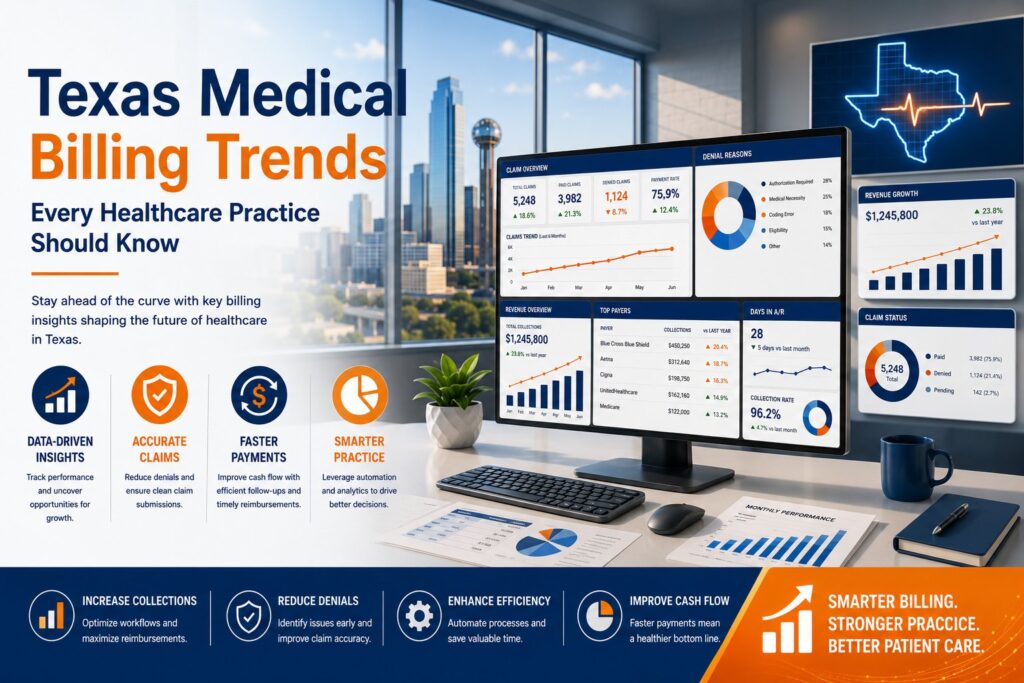
Texas Medical Billing Trends are reshaping how healthcare providers manage insurance claims, patient billing, and revenue cycle operations. As Texas continues to experience major healthcare growth, clinics and hospitals are adopting smarter billing solutions to reduce administrative stress and improve profitability.
Healthcare providers across Texas face increasing challenges such as claim denials, insurance policy changes, staffing shortages, and compliance requirements. To remain competitive, providers are embracing modern billing technologies, automation, and outsourcing strategies.
Understanding the latest Texas Medical Billing Trends can help healthcare organizations improve efficiency, accelerate reimbursements, and strengthen long-term financial performance.
Healthcare providers looking for professional billing support can explore:
Utreatibill Medical Billing Services in Texas
Why Texas Medical Billing Trends Matter
Texas has one of the largest healthcare markets in the United States. With growing patient populations and expanding healthcare networks, providers must adapt quickly to financial and operational changes.
Current Texas Medical Billing Trends impact:
- Insurance reimbursements
- Revenue cycle management
- Compliance requirements
- Operational efficiency
- Patient satisfaction
- Financial stability
Practices that fail to modernize billing operations often experience delayed payments and increased claim denials.
1. Rise of Outsourced Billing Services
One of the biggest Texas Medical Billing Trends is the rapid growth of outsourced medical billing services.
Healthcare providers are outsourcing billing operations because managing in-house billing teams has become expensive and time-consuming.
Benefits of outsourcing include:
- Lower operational costs
- Faster reimbursements
- Reduced claim denials
- Access to billing experts
- Improved compliance management
Outsourcing allows providers to focus more on patient care while billing specialists handle complex insurance processes.
2. AI and Automation in Medical Billing
Automation is transforming healthcare billing across Texas.
Modern billing companies now use:
- AI-assisted coding
- Automated claim submissions
- Real-time payment tracking
- Smart denial management systems
- Financial analytics dashboards
These technologies reduce manual errors and improve billing efficiency.
According to Centers for Medicare & Medicaid Services (CMS), electronic healthcare administration continues to improve reimbursement efficiency nationwide.
Automation is one of the most impactful Texas Medical Billing Trends for modern healthcare organizations.
3. Faster Electronic Claims Processing
Electronic claim processing is replacing outdated manual billing methods.
Healthcare providers are adopting digital workflows because they:
- Speed up reimbursements
- Reduce paperwork
- Improve claim accuracy
- Minimize administrative delays
Professional billing companies submit clean claims electronically to improve first-pass approval rates.
Faster claim processing helps Texas healthcare providers maintain healthy cash flow.
4. Revenue Cycle Management Growth
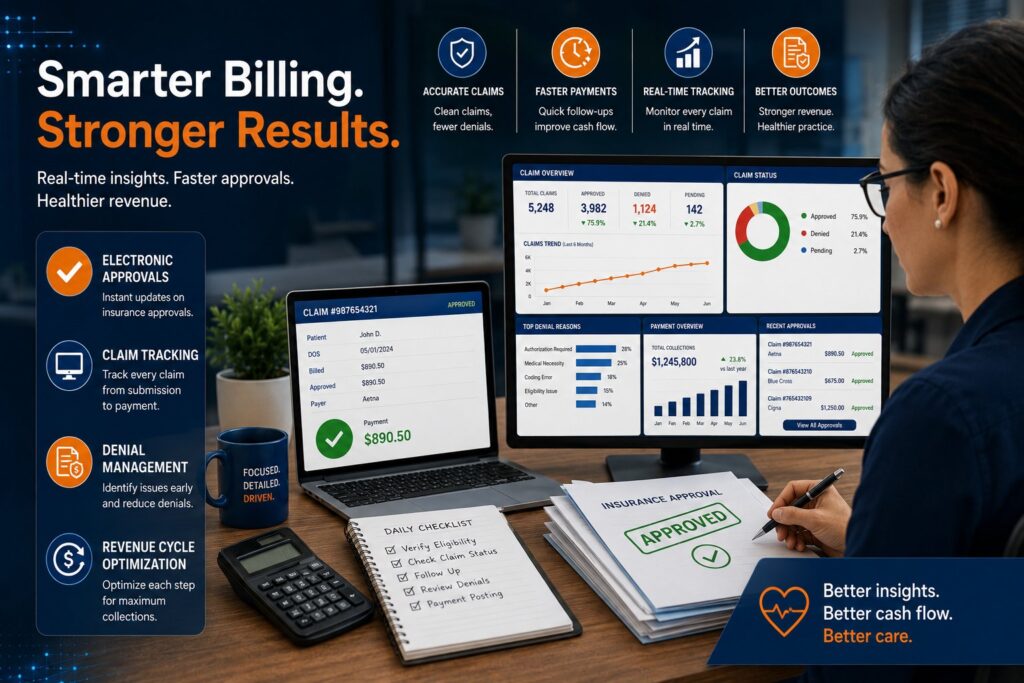
Revenue Cycle Management (RCM) has become a major priority for healthcare providers.
Modern Texas Medical Billing Trends focus heavily on improving every stage of the revenue cycle.
RCM services include:
- Eligibility verification
- Prior authorization
- Claims submission
- Payment posting
- Insurance follow-ups
- Accounts receivable management
Efficient revenue cycle management helps providers maximize reimbursements and reduce unpaid claims.
5. Increased Focus on HIPAA Compliance
Protecting patient information is more important than ever.
Reliable billing companies follow strict HIPAA compliance guidelines to secure healthcare data.
Security measures include:
- Encrypted systems
- Secure patient records
- Access management controls
- Compliance monitoring
Healthcare providers can learn more from:
HIPAA Guidelines by HHS
HIPAA compliance remains one of the most critical Texas Medical Billing Trends for healthcare organizations.
6. Specialty-Specific Billing Solutions
Different medical specialties require specialized coding and billing expertise.
Many billing providers now offer customized services for:
- Cardiology
- Pediatrics
- Orthopedics
- Dermatology
- Mental health
- Urgent care
- Internal medicine
Specialty-specific billing improves coding accuracy and reimbursement performance.
This growing customization is shaping modern Texas Medical Billing Trends.
7. Telehealth Billing Expansion
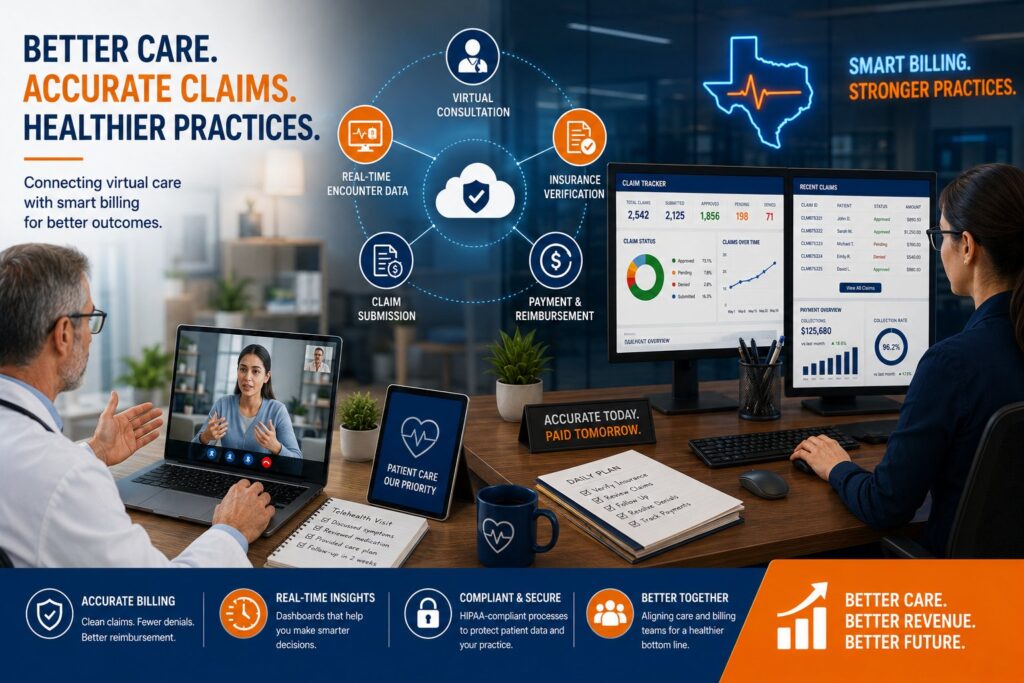
Telehealth services expanded rapidly in recent years, especially after increased demand for virtual healthcare.
Billing telehealth services requires accurate coding and insurance compliance.
Healthcare providers now need billing teams that understand:
- Telehealth CPT codes
- Insurance reimbursement rules
- Virtual care documentation
- Medicare telehealth requirements
Telehealth billing has become one of the fastest-growing Texas Medical Billing Trends.
8. Advanced Analytics and Financial Reporting
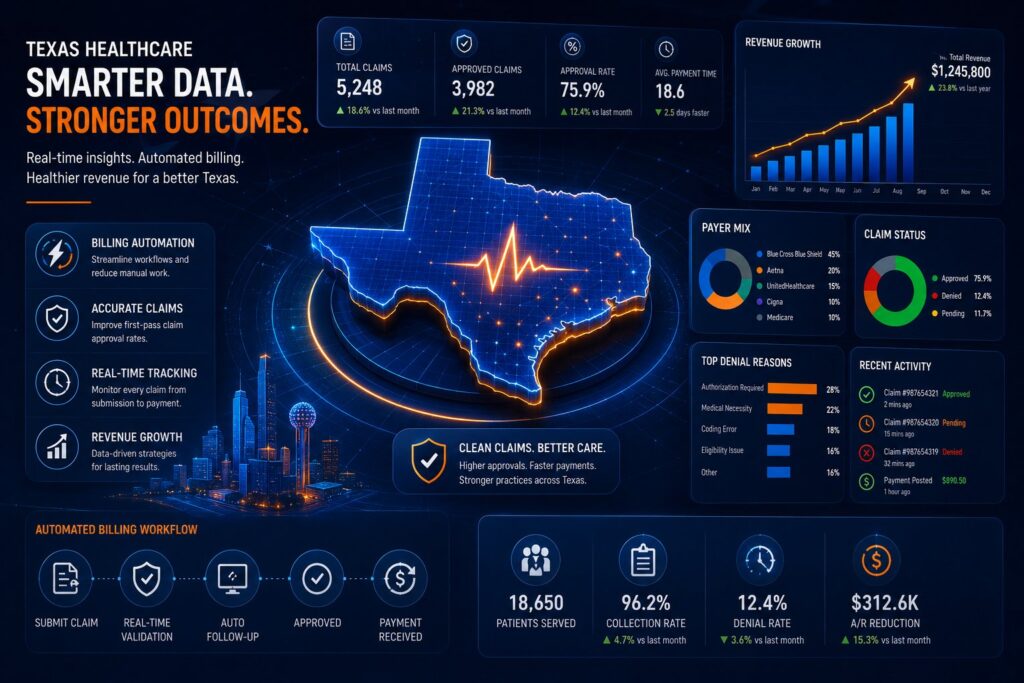
Modern billing companies provide detailed financial reporting tools to healthcare providers.
Analytics may include:
- Revenue trends
- Claim approval rates
- Denial percentages
- Accounts receivable aging
- Insurance performance reports
These insights help providers make better financial decisions.
Advanced reporting tools are becoming a standard part of Texas Medical Billing Trends.
9. Improved Patient Billing Experiences
Patients now expect transparent and user-friendly billing systems.
Healthcare organizations are improving patient experiences through:
- Clear billing statements
- Digital payment options
- Faster insurance processing
- Online billing portals
Patient satisfaction directly impacts healthcare reputation and retention.
Improving the patient billing experience is an important healthcare trend throughout Texas.
10. Texas Healthcare Staffing Challenges
Healthcare staffing shortages continue to impact billing departments across Texas.
Many providers struggle to recruit experienced billing professionals.
As a result, outsourcing and automation have become popular solutions.
Professional billing companies help healthcare organizations reduce workload pressure while maintaining billing accuracy.
This challenge continues to drive major Texas Medical Billing Trends.
11. Why Healthcare Providers Are Choosing Professional Billing Partners
Healthcare providers want billing partners that deliver:
- Accurate coding
- Faster reimbursements
- Reduced claim denials
- HIPAA compliance
- Financial transparency
- Advanced technology support
Reliable billing companies improve operational performance and long-term financial stability.
Why Utreatibill Supports Texas Healthcare Providers
Healthcare organizations seeking professional billing support can benefit from working with Utreatibill.
Benefits include:
- Accurate medical coding
- Revenue cycle optimization
- HIPAA-compliant billing systems
- Faster claim processing
- Reduced insurance denials
- Dedicated billing specialists
Learn more here:
Utreatibill Texas Medical Billing Services
Final Thoughts
The healthcare industry is evolving rapidly, and understanding the latest Texas Medical Billing Trends is essential for healthcare providers that want to improve financial performance and operational efficiency.
From AI-powered automation to outsourced billing and telehealth reimbursement, modern billing strategies are helping Texas healthcare organizations reduce claim denials and maximize revenue.
Healthcare providers that adapt to these trends will be better positioned for long-term success.
For professional billing support, visit:
Utreatibill Medical Billing Services in Texas
Frequently Asked Questions
What are Texas Medical Billing Trends?
Texas Medical Billing Trends refer to modern changes in healthcare billing, including automation, outsourcing, telehealth billing, and revenue cycle optimization.
Why are healthcare providers outsourcing billing services?
Providers outsource billing to reduce operational costs, improve claim accuracy, and accelerate reimbursements.
How does automation improve medical billing?
Automation reduces manual errors, speeds up claim processing, and improves billing efficiency.
What is Revenue Cycle Management?
Revenue Cycle Management includes all financial processes related to patient billing, insurance claims, and reimbursements.
Why is HIPAA compliance important in medical billing?
HIPAA compliance protects sensitive patient information and helps healthcare providers avoid legal risks.
How does telehealth affect medical billing?
Telehealth requires specialized coding and billing processes to ensure proper insurance reimbursement.
What specialties benefit from professional billing services?
Cardiology, pediatrics, orthopedics, dermatology, mental health, and urgent care clinics all benefit from specialized billing support.
How do analytics improve healthcare billing?
Analytics provide insights into claim approvals, revenue trends, and financial performance.
Why are staffing shortages affecting billing departments?
Healthcare organizations often struggle to recruit experienced billing professionals, increasing the demand for outsourcing.
How can healthcare providers choose the right billing partner?
Look for experience, HIPAA compliance, advanced technology, transparent reporting, and strong customer support.