
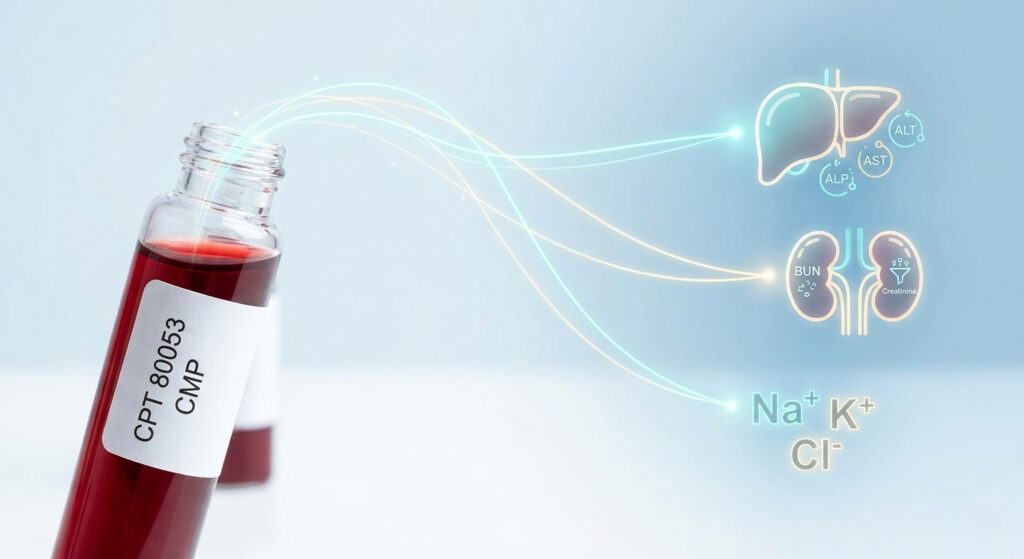
Comprehensive Metabolic Panel (CMP) Billing in America
If you’re working in medical billing and coding in the USA, you’ve probably seen CPT Code 80053 come up again and again. And honestly, there’s a reason for that — it’s one of the most commonly billed lab panel codes in the entire healthcare system.
But here’s the problem:
A lot of billers use it, but not everyone fully understands it.
That’s where this guide comes in.
Whether you’re a beginner, a revenue cycle management (RCM) professional, this article will break down everything about CPT 80053 (Comprehensive Metabolic Panel CPT code) in a simple, real-world way.
What is CPT Code 80053?
CPT Code 80053 is used to bill a Comprehensive Metabolic Panel (CMP) — a group of lab tests that gives doctors a detailed look at a patient’s overall health.
Instead of ordering tests one by one, providers use this panel to quickly assess:
- Blood sugar levels
- Kidney function
- Liver function
- Electrolyte balance
- Protein levels
👉 In simple terms:
It’s a full-body internal health snapshot using blood work.
Why CPT 80053 Matters in Medical Billing
In the world of medical billing services in the USA, this code plays a huge role in both revenue and compliance.
✔ High-Volume Code
CMP tests are ordered daily for:
- Routine checkups
- Chronic disease monitoring
- Hospital admissions
✔ Revenue Impact
Using the correct CPT 80053 billing guidelines helps:
- Reduce claim denials
- Increase reimbursement accuracy
- Improve cash flow
✔ Compliance Risk
Incorrect billing can lead to:
- Insurance audits
- Payment takebacks
- Legal issues
What Does CPT Code 80053 Include?
One of the most searched questions is:
👉 “What does CPT code 80053 include?”
This code represents 14 lab tests. To bill it, all components must be performed.
CMP Components:
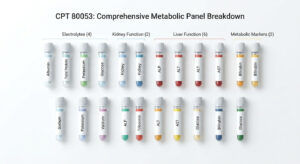
🧪 Electrolytes
- Sodium
- Potassium
- Chloride
- Carbon dioxide
🧪 Kidney Function Tests
- Blood Urea Nitrogen (BUN)
- Creatinine
🧪 Liver Function Tests
- Albumin
- Total Protein
- Alkaline Phosphatase
- ALT (Alanine Aminotransferase)
- AST (Aspartate Aminotransferase)
- Bilirubin
🧪 Other Tests
- Glucose
- Calcium
👉 Important Billing Rule:
If even one test is missing, you cannot bill CPT 80053. You must bill individual lab codes instead.
CPT 80053 vs 80048 (CMP vs BMP)
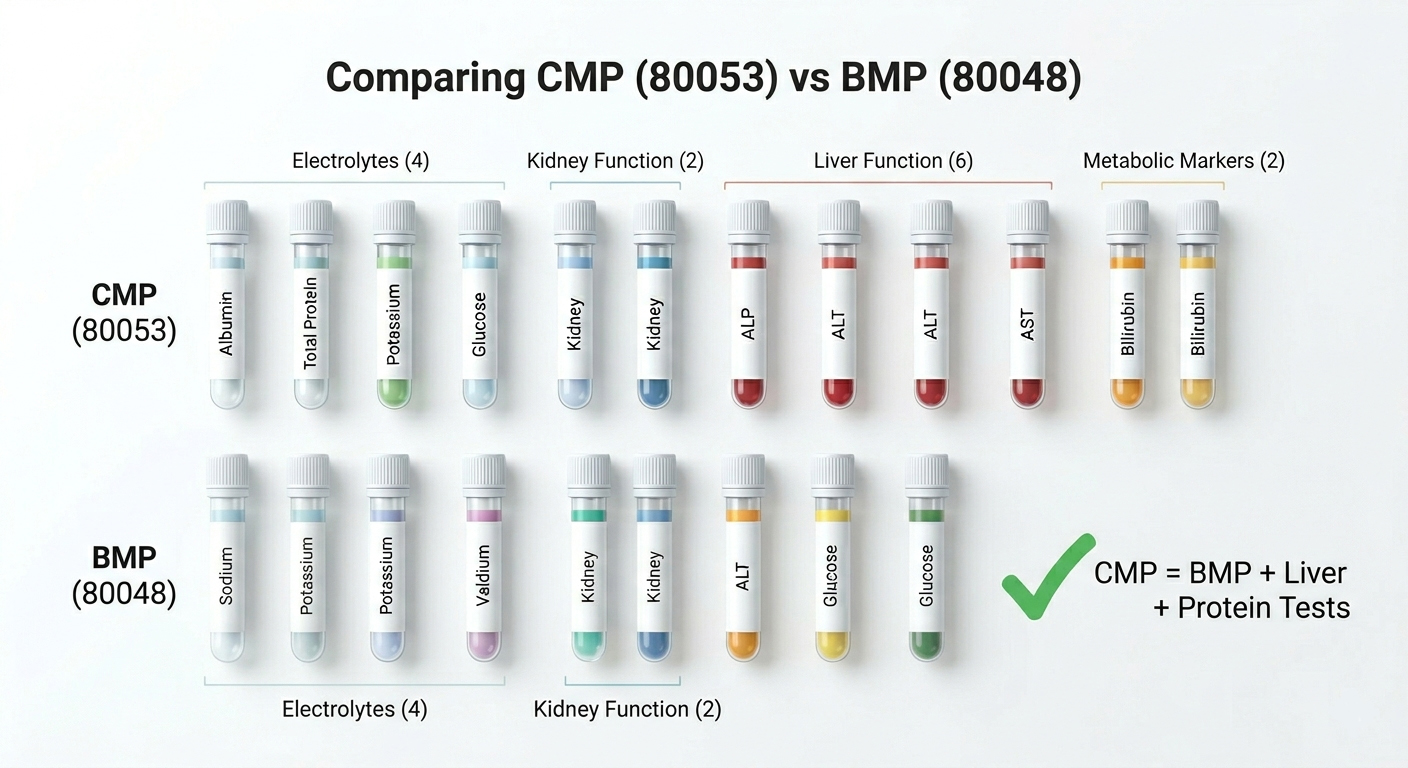
The primary difference is the comprehensiveness of the test. A BMP (Basic Metabolic Panel) is a subset of the CMP.
The CMP includes all 8 tests found in the BMP, plus 6 additional tests, primarily focused on liver function and protein levels.
| Feature | CPT 80053 (CMP) | CPT 80048 (BMP) |
| Total Tests | 14 | 8 |
| Liver Tests | ✅ Included | ❌ Not included |
| Protein Tests | ✅ Included | ❌ Not included |
| Usage | Comprehensive | Basic |
👉 CMP = BMP + Liver + Protein tests
When to Use CPT Code 80053
You should use this code when a full metabolic panel is medically necessary.
Common Use Cases:
- Annual physical exams
- Diabetes monitoring
- Hypertension management
- Kidney disease tracking
- Medication monitoring
👉 This answers the long-tail query:
“When to use CPT code 80053”
CPT 80053 Billing Guidelines (Step-by-Step)
If you want clean claims and fast payments, follow these:
✔ Perform All Tests
All 14 components must be included.
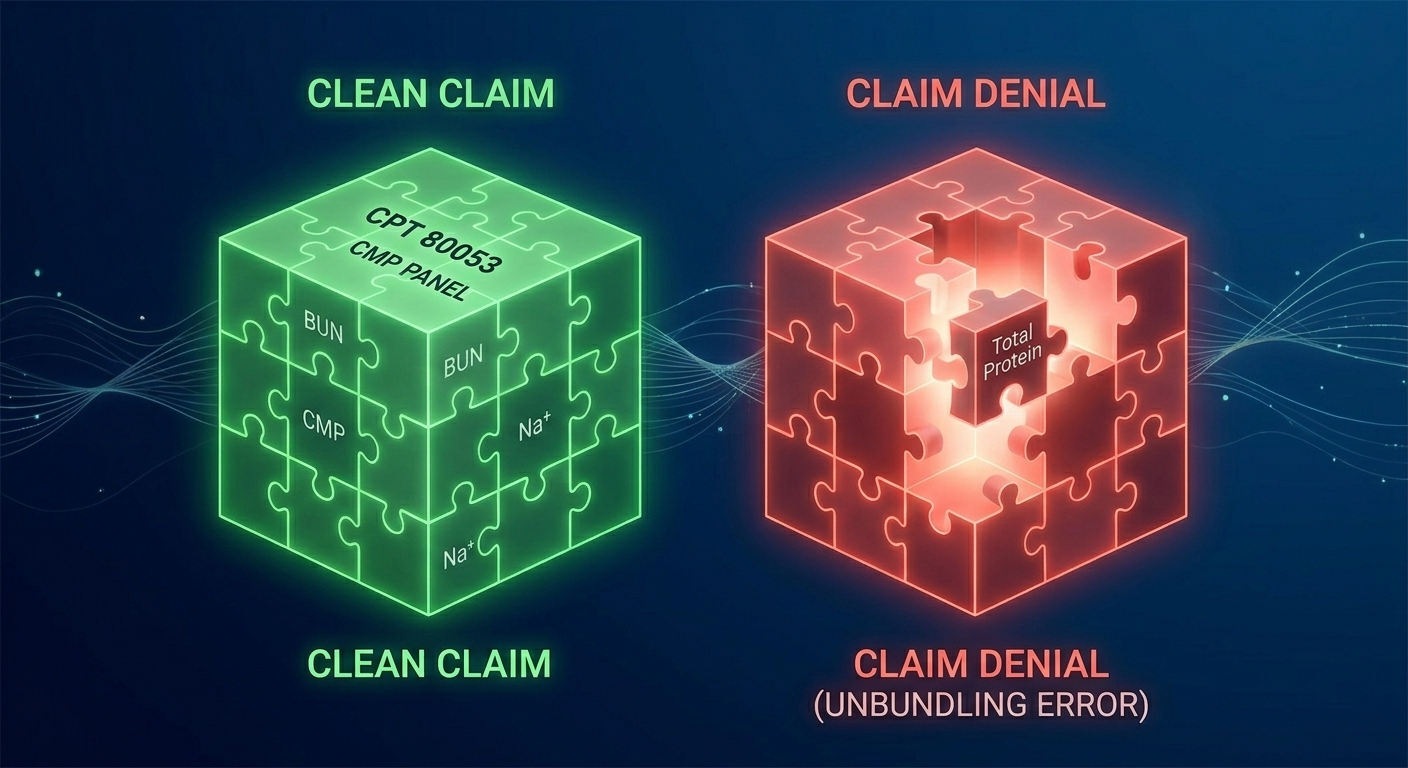
✔ Avoid Unbundling
Do NOT bill individual tests separately if billing CMP.
✔ Check Payer Rules
Each insurance company may have:
- Frequency limits
- Specific diagnosis requirements
✔ Link Correct Diagnosis Codes
This is critical for insurance claim submission.
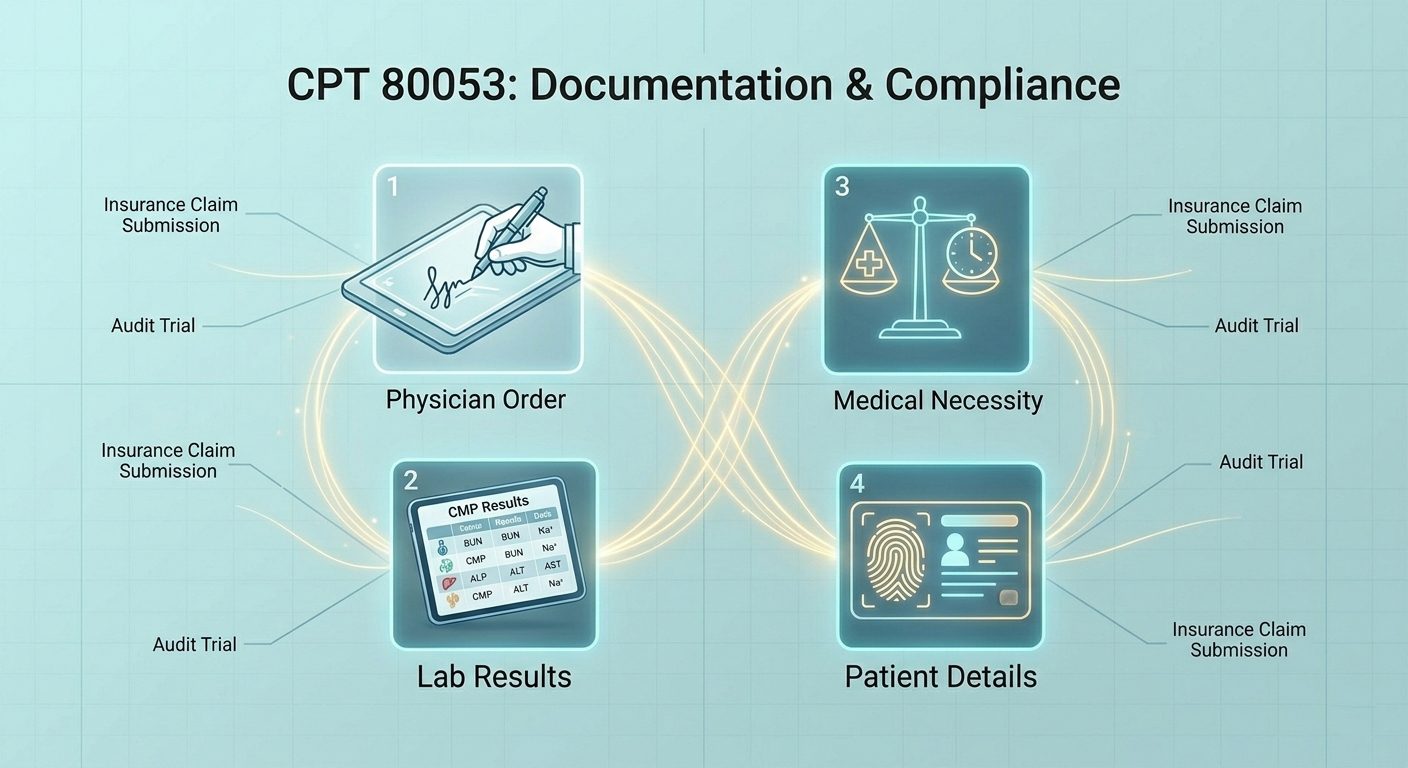
CPT 80053 Documentation Requirements
Another important search term:
👉 “CPT 80053 documentation requirements”
Make sure your documentation includes:
- Physician’s order
- Lab results
- Medical necessity
- Patient details
Without this, claims may be denied.
CPT 80053 Diagnosis Codes List (Common ICD-10)
To support medical necessity, here are commonly used ICD-10 codes:
- R73.9 – Abnormal glucose
- E11.9 – Type 2 diabetes
- I10 – Hypertension
- N18.9 – Kidney disease
- Z00.00 – Routine exam
CPT 80053 Reimbursement (USA)
One of the most searched topics is:
👉 “CPT 80053 reimbursement rate”
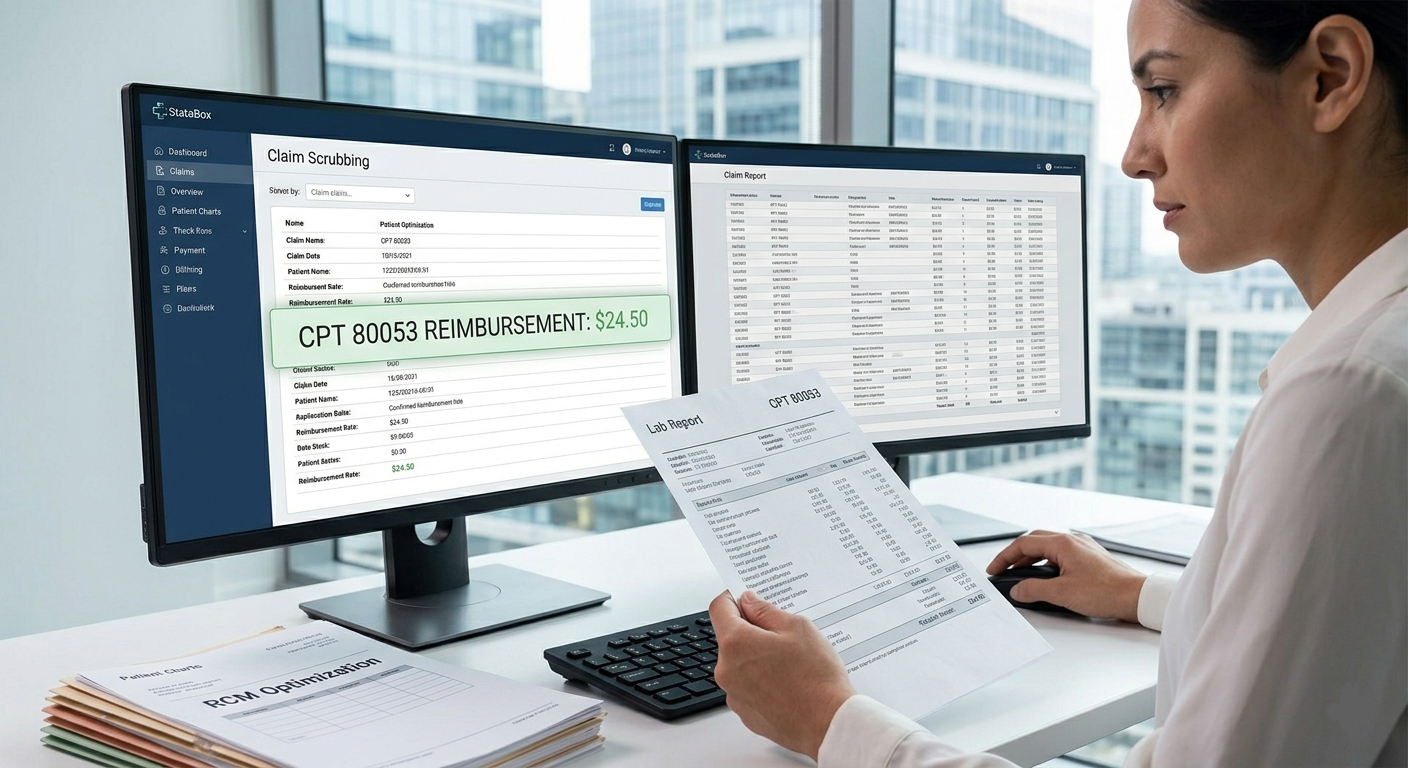
💰 Average Reimbursement:
- Medicare: ~$14–$25
- Private Insurance: Can be higher
👉 Always verify payer contracts.
Is CPT 80053 Covered by Insurance?
👉 Short answer: Yes, but with conditions
This answers:
“Is CPT 80053 covered by insurance USA?”
Coverage depends on:
- Medical necessity
- Diagnosis code
- Payer policy
Can CPT 80053 Be Billed With Other Codes?
Another FAQ:
👉 It depends.
- ❌ Cannot bill with individual CMP components
- ✔ Can be billed with unrelated lab tests
Common Mistakes in CPT 80053 Billing
Avoid these if you want clean claims:
❌ Missing Tests
→ Leads to denial
❌ Wrong ICD-10 Code
→ No medical necessity
❌ Duplicate Billing
→ Audit risk
❌ Unbundling
→ Compliance violation
Role of CPT 80053 in Revenue Cycle Management (RCM)
In revenue cycle management (RCM), this code is high-impact.
Why?
- High usage = consistent revenue
- Small errors = big financial loss over time
Best Practices:
- Use claim scrubbing tools
- Audit lab reports
- Automate validation
High-Intent Section
If you run or plan to start a medical billing company in the USA, mastering lab billing codes like CPT 80053 is critical.
Many clinics today prefer to:
- Outsource medical billing services in the USA
- Hire CPT coding services
- Improve collections using expert RCM services for clinics
FAQs
What is CPT code 80053 used for?
It is used to bill a comprehensive metabolic panel that evaluates overall health.
What does CPT 80053 include?
It includes 14 lab tests covering kidney, liver, electrolytes, and glucose.
What is the difference between 80053 and 80048?
80053 is a comprehensive panel, while 80048 is basic.
How to bill CPT 80053 correctly?
Ensure all tests are completed, link proper ICD-10 codes, and avoid unbundling.
Final Thoughts
CPT Code 80053 isn’t just another billing code — it’s a core part of lab billing in the USA healthcare system.
If you understand:
- Its components
- Billing rules
- Documentation
- Common mistakes
👉 You’ll reduce denials, improve reimbursement, and stand out as a skilled biller.