
Why Urgent Care Centers Lose Revenue Without Proper ICD-10 & CPT Coding
Urgent care centers operate in one of the most demanding environments in modern healthcare. Patients walk in without appointments, conditions vary widely, and the pressure to see, treat, and discharge quickly is constant. In this kind of high-volume setting, medical billing often gets treated as an afterthought — something handled in the back office after the real work is done.
That mindset is expensive.
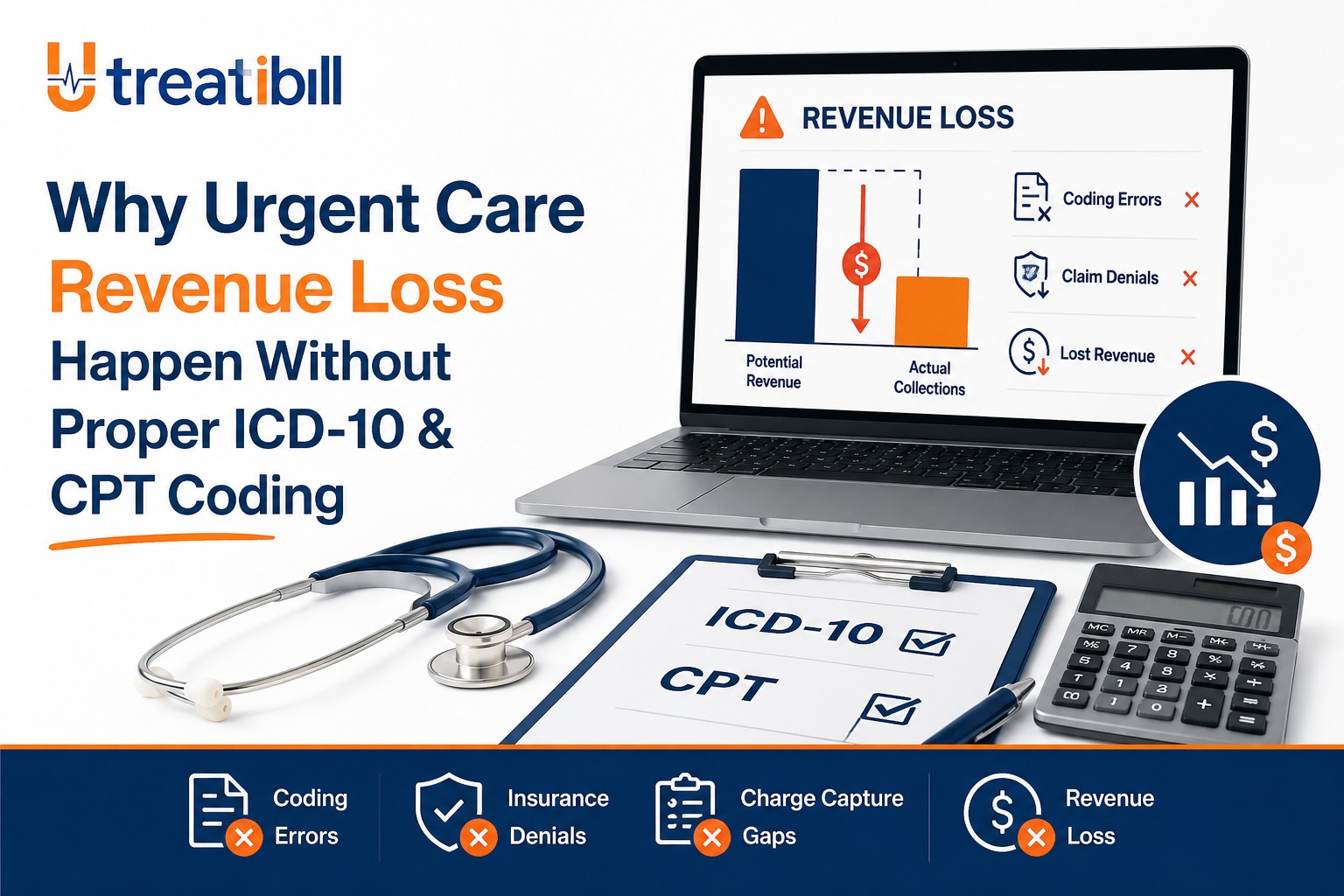
Urgent care revenue loss tied directly to coding errors is one of the most underreported financial problems in outpatient medicine. Clinics that haven’t audited their billing workflows in the past year are almost certainly leaving money on the table — sometimes tens of thousands of dollars annually — without ever knowing why collections feel short.
This blog breaks down exactly how improper ICD-10 and CPT coding drains urgent care revenue, what specific mistakes are most common, and what you can do to fix it before it compounds further.
The Hidden Cost of Coding Errors in Urgent Care
Most urgent care owners think of claim denials as isolated incidents — a nuisance, not a pattern. But when you look at the data, the picture changes. According to the American Medical Association, medical billing errors account for significant financial losses for practices every year, with coding inaccuracies being one of the leading contributors.
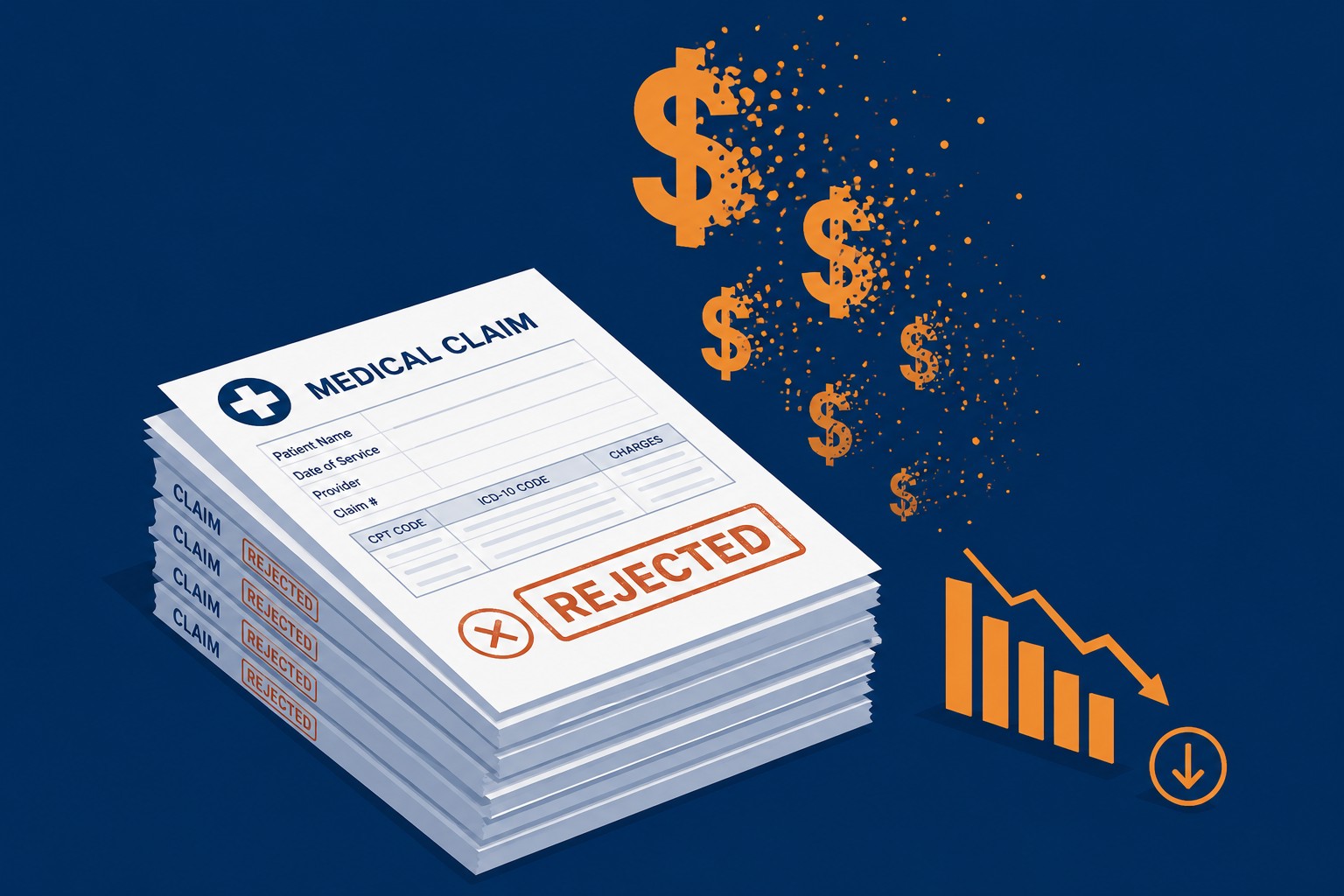
The challenge with walk-in clinic billing errors is that they often go undetected until AR (accounts receivable) starts aging beyond 90 days. By that point, recovering those payments becomes significantly harder. Payers have stricter timely filing deadlines, and patients are harder to reach. What started as a fixable coding mistake turns into a write-off.
Urgent care revenue loss doesn’t usually happen all at once. This is exactly why urgent care centers lose revenue from coding errors even when patient volume remains strong. Small documentation and coding mistakes accumulate over time, creating a significant financial drain.It accumulates — claim by claim, patient by patient — until the financial gap becomes undeniable.
What Are ICD-10 and CPT Codes, and Why Do They Matter So Much?
For anyone outside the billing world, a quick primer: ICD-10 codes describe the patient’s diagnosis (what’s wrong), while CPT codes describe the services provided (what was done). Both have to be accurate, specific, and compatible with each other for a claim to get paid.
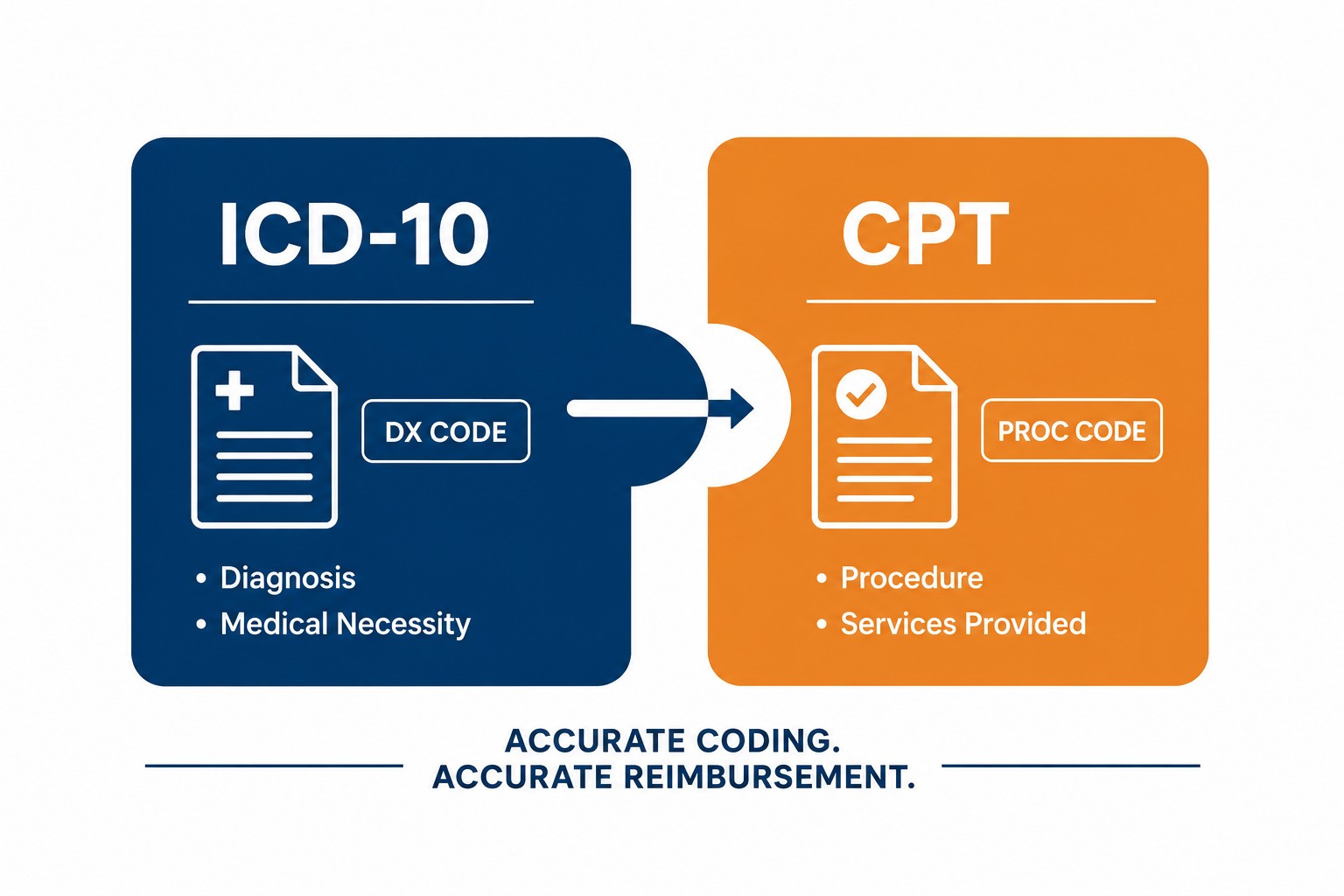
Payers use these codes to determine whether the service was medically necessary, whether it falls within the patient’s benefit coverage, and how much they owe. A single wrong digit, a missing modifier, or a mismatch between diagnosis and procedure can trigger an automatic rejection.
In urgent care specifically, the range of services billed on any given day is enormous — laceration repairs, X-rays, rapid strep tests, EKGs, respiratory evaluations, COVID testing, fracture management. Each of these has its own set of CPT codes and acceptable ICD-10 pairings. Keeping that all straight, especially during a busy clinic day, is genuinely difficult.
That difficulty is exactly why urgent care CPT coding errors are so common — and so costly.
The Most Common ICD-10 Mistakes in Urgent Care Settings
Urgent care ICD-10 mistakes tend to fall into a few predictable categories. Understanding them is the first step toward reducing them.
Using nonspecific or unspecified codes when more specific options exist. ICD-10 was designed to be highly specific. Billing “unspecified” versions of a diagnosis when the documentation clearly supports a more precise code tells the payer your documentation is weak — and invites scrutiny or denial.
Not updating codes after a rule-out. A patient comes in with chest pain, you rule out a cardiac event, and the final diagnosis is musculoskeletal. If the claim goes out coded for chest pain because no one updated it post-visit, you’ve introduced a mismatch that may trigger a review.
Sequencing errors. ICD-10 guidelines require that codes be listed in a specific order based on the primary reason for the visit. Getting that sequence wrong — even with accurate codes — can cause denials or downcoding.
Missing laterality. Many ICD-10 codes require you to specify left, right, or bilateral. Submitting without this detail is a common urgent care ICD-10 mistake that results in rejection from many commercial payers.
Each of these is a legitimate issue affecting medical coding accuracy in urgent care, directly impacting reimbursement rates, denial rates, and overall financial performance.
How CPT Coding Errors Drain Urgent Care Revenue
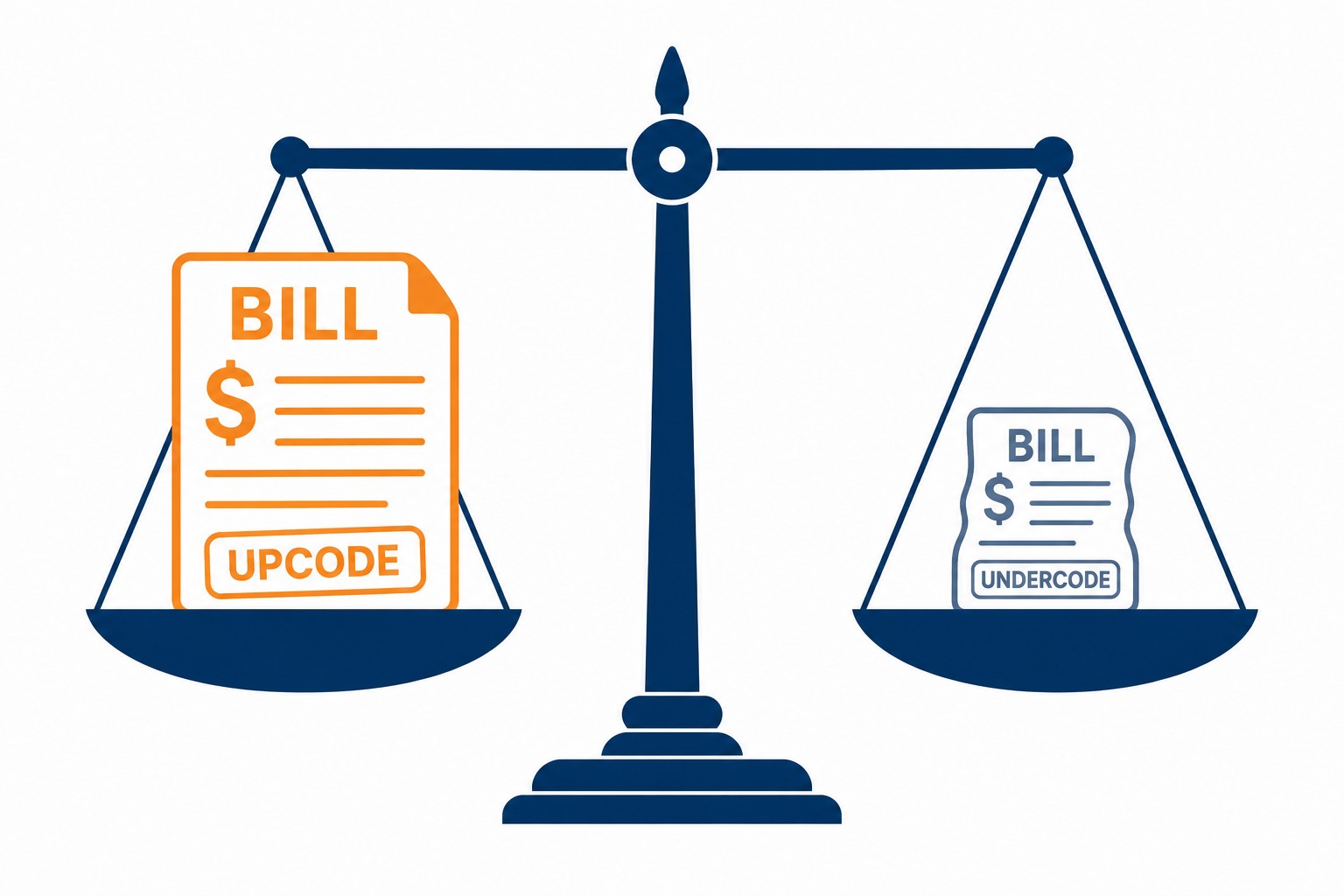
On the procedure side, urgent care CPT coding errors are equally problematic — and they come in two directions: upcoding and undercoding.
Undercoding and upcoding in urgent care represent opposite extremes of the same problem. While upcoding increases compliance risk, undercoding quietly reduces reimbursement and contributes directly to lost revenue opportunities. Upcoding — billing for a higher level of service than what was documented — is a compliance risk that can trigger audits and penalties. But undercoding — billing for a lower level of service than what was actually provided — is just as harmful financially, and it happens far more often than most clinic administrators realize.
Many urgent care providers default to a level 3 E/M code (99213) for most visits out of habit or caution, even when the documentation clearly supports a level 4 (99214) or higher. Multiply that conservative billing across hundreds of visits per month, and the revenue impact becomes significant.
Beyond E/M levels, CPT modifier usage in urgent care is a frequent source of errors. Modifiers must accurately communicate when services were distinct, separately identifiable, or performed under special circumstances. Incorrect modifier usage often leads to delayed payments or denials. Modifiers like -25 (significant, separately identifiable E/M on the same day as a procedure) are essential when a physician performs both an evaluation and a minor procedure in the same visit — but they’re frequently omitted. Without the modifier, the payer may bundle the E/M into the procedure payment, leaving you reimbursed for only one service when two were clearly provided.
Other common CPT errors in urgent care include:
Billing for supplies separately when they’re bundled into the procedure code. Using the wrong code for wound care complexity. Failing to capture facility fees when applicable. Missing add-on codes for extended visits or additional services. Each of these represents an urgent care charge capture error — a service provided but not correctly or fully billed. Over time, charge capture gaps can significantly reduce collections despite stable patient volumes.
Why Claim Denials Compound Over Time
One denied claim is manageable. A consistent denial rate above 5% is a cash flow crisis in slow motion.
Urgent care claim denials don’t just delay payment — they generate administrative work, consume staff time, and in many cases result in permanent revenue loss if not appealed within the payer’s window. According to research published by the Healthcare Financial Management Association (HFMA), up to 65% of denied claims are never reworked or resubmitted. That’s money gone permanently.

The connection between how ICD-10 mistakes cause urgent care claim denials and long-term financial health is direct. Poor first-pass claim acceptance rates force your billing staff into a reactive cycle — chasing denials instead of processing new claims, which slows everything down and creates a backlog in urgent care accounts receivable management.
Insurance claim rejection in urgent care also has a softer cost: staff morale. Billing teams that spend their days appealing preventable denials burn out faster and make more mistakes over time.
The Revenue Cycle Perspective: Where Coding Fits In
Coding doesn’t exist in isolation. It’s one piece of a larger urgent care revenue cycle management system, and weak coding undermines every other part of that system.
Think about it this way. Your front desk verifies insurance. Your provider documents the visit. Your coder translates that documentation into codes. Your biller submits the claim. If the coding step introduces errors, every downstream step — payment posting, AR follow-up, patient billing — is dealing with bad data.
This is why urgent care billing inefficiencies that start in coding are so hard to untangle. By the time a denial arrives, the original visit may have been weeks ago, the documentation is harder to access, and the provider has seen hundreds of patients since then.
The most efficient practices treat coding accuracy as a revenue protection strategy, not just a compliance requirement. They invest in ongoing coder training, regular auditing, and systems that flag potential errors before claims go out the door.
If you’re not sure where your practice stands, the team at UtreatiBill’s urgent care medical billing services offers a free revenue assessment that can identify where coding errors may be affecting your collections.
The Impact on Cash Flow Is Real and Measurable
The impact of wrong CPT codes on urgent care reimbursement isn’t theoretical. Let’s put some rough numbers to it.
If your clinic sees 1,500 patients per month and your average reimbursement per visit is $180, that’s $270,000 in monthly collections when everything goes right. A 10% denial rate — not unusual for clinics without dedicated billing oversight — means $27,000 per month in claims requiring rework. Even if you recover 60% of those through appeals, you’re still losing over $10,000 monthly in permanent write-offs. That’s more than $120,000 per year.
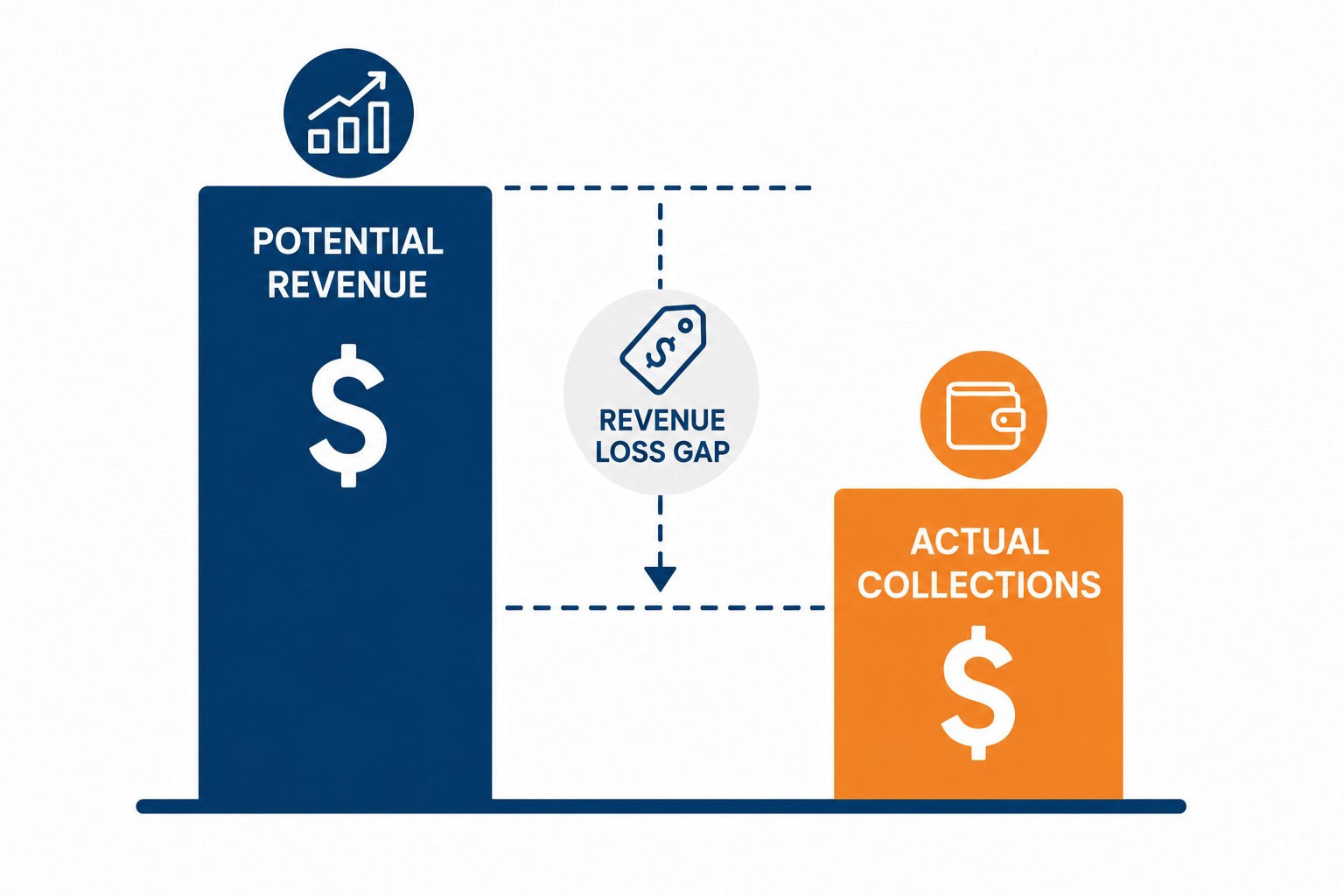
And that assumes the rest of your billing is clean. Add in undercoding, missed modifiers, and charge capture errors, and the real number is likely higher.
Understanding how to reduce revenue loss in urgent care billing starts with accepting that the problem exists and quantifying it. Practices that audit their coding regularly — at least quarterly — consistently outperform those that don’t, both in first-pass acceptance rates and net collections.
The American Academy of Professional Coders (AAPC) recommends routine coding audits as a best practice for any high-volume outpatient facility. You can learn more about coding audit standards at AAPC’s official website.
How Urgent Care Billing Errors Affect Cash Flow Beyond Denials
Claim denials are the most visible symptom of coding problems, but urgent care billing errors that affect cash flow go deeper than rejections alone.
Delayed payments are one example. Even when a claim isn’t outright denied, payers may put it in a “pending” or “suspended” status for additional review if something looks off — an unusual diagnosis-procedure pairing, a high-cost modifier without supporting documentation, an ICD-10 code that doesn’t match the patient’s age or gender. These delays can stretch payment timelines from 30 days to 90 or more, straining your working capital.
Patient billing confusion is another. When coding errors cause insurance to underpay or deny, the balance often gets shifted to the patient. If that balance is higher than expected because of a billing error — not a legitimate patient responsibility — it creates friction, complaints, and collection challenges that damage the patient relationship.
Then there’s the audit risk. Consistent patterns of upcoding or misused modifiers can trigger payer audits, which are time-consuming, stressful, and potentially expensive. The Centers for Medicare and Medicaid Services (CMS) actively monitors coding patterns, and deviations from expected norms can result in payment recoupment. More information on CMS compliance guidelines is available at CMS.gov.
What Best-in-Class Urgent Care Billing Looks Like
Practices that have solved their coding revenue leakage share a few common characteristics.
They use certified coders with urgent care-specific experience. General medical coders may not be familiar with the nuances of urgent care E/M guidelines, modifier requirements, or the specific CPT codes used for walk-in procedures. Specialty-trained coders make fewer errors and catch more opportunities.
They audit regularly. A quarterly coding audit that pulls a random sample of charts and compares documentation to codes submitted will reveal patterns that would otherwise go unnoticed. It’s the single highest-ROI activity in revenue cycle management.
They invest in denial analysis. Rather than just working individual denials, high-performing practices track denial reasons by code, payer, and provider. Patterns become actionable. The HFMA publishes resources on denial management best practices at HFMA.org.
They use real-time eligibility verification. Many claim issues originate before the patient even sees a provider. Verifying insurance, confirming benefits, and collecting accurate demographic information upfront eliminates a major category of coding-adjacent errors.
For urgent care centers that want this level of billing infrastructure without hiring a full internal team, outsourced solutions like UtreatiBill’s urgent care medical billing services provide specialized expertise, proactive denial management, and transparent reporting designed specifically for fast-paced walk-in environments.
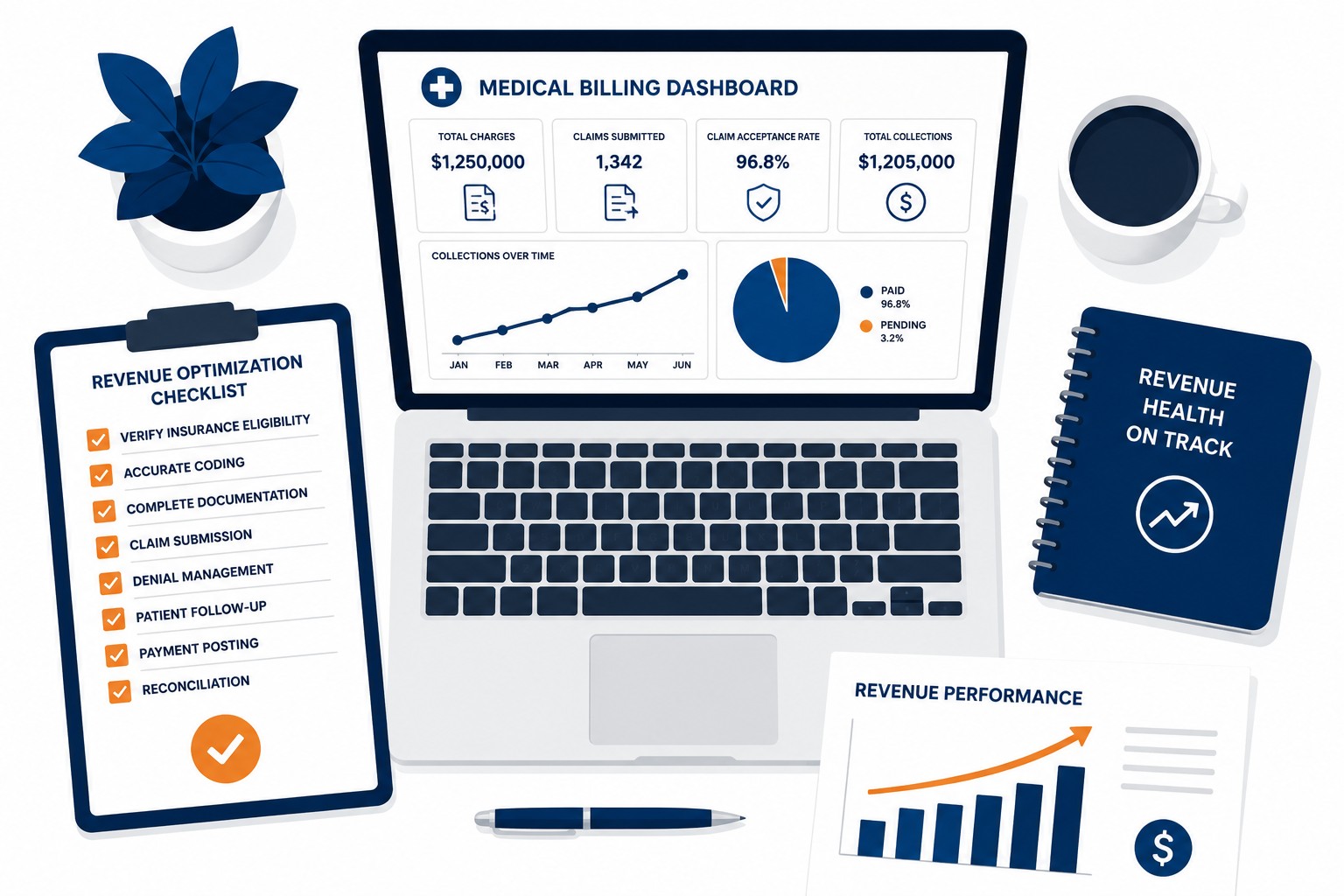
Building a Stronger Revenue Foundation
Urgent care revenue loss from coding errors is not inevitable. It’s a solvable problem — but it requires honest assessment, consistent process improvement, and the right expertise.
The clinics that maximize reimbursements aren’t necessarily the ones seeing the most patients. They’re the ones making sure every patient encounter is coded accurately, every modifier is applied correctly, and every claim goes out clean. That discipline, compounded over thousands of visits, is what separates practices with healthy margins from those perpetually chasing their AR.
Whether you handle billing in-house or work with an outside partner, the principles are the same: audit often, train continuously, and treat coding as a clinical-financial priority — not an afterthought.
If you’re concerned that coding errors may be contributing to urgent care billing inefficiencies at your practice, the best first step is a billing audit. It’s the fastest way to see exactly where revenue is being lost and what it would take to recover it.