Medical Billing and Coding Salary, Career Growth & Best Schools
What Medical Billing and Coding Actually Involves
Before we get into the numbers, it helps to understand exactly what this profession entails day to day. Medical billing and coding sits at the intersection of clinical care and healthcare finance. Coders translate physician notes, diagnostic reports, and treatment records into standardized alphanumeric codes using systems like ICD-10-CM, CPT, and HCPCS Level II. Billers then take those codes and turn them into reimbursement claims submitted to Medicare, Medicaid, or private insurance carriers.
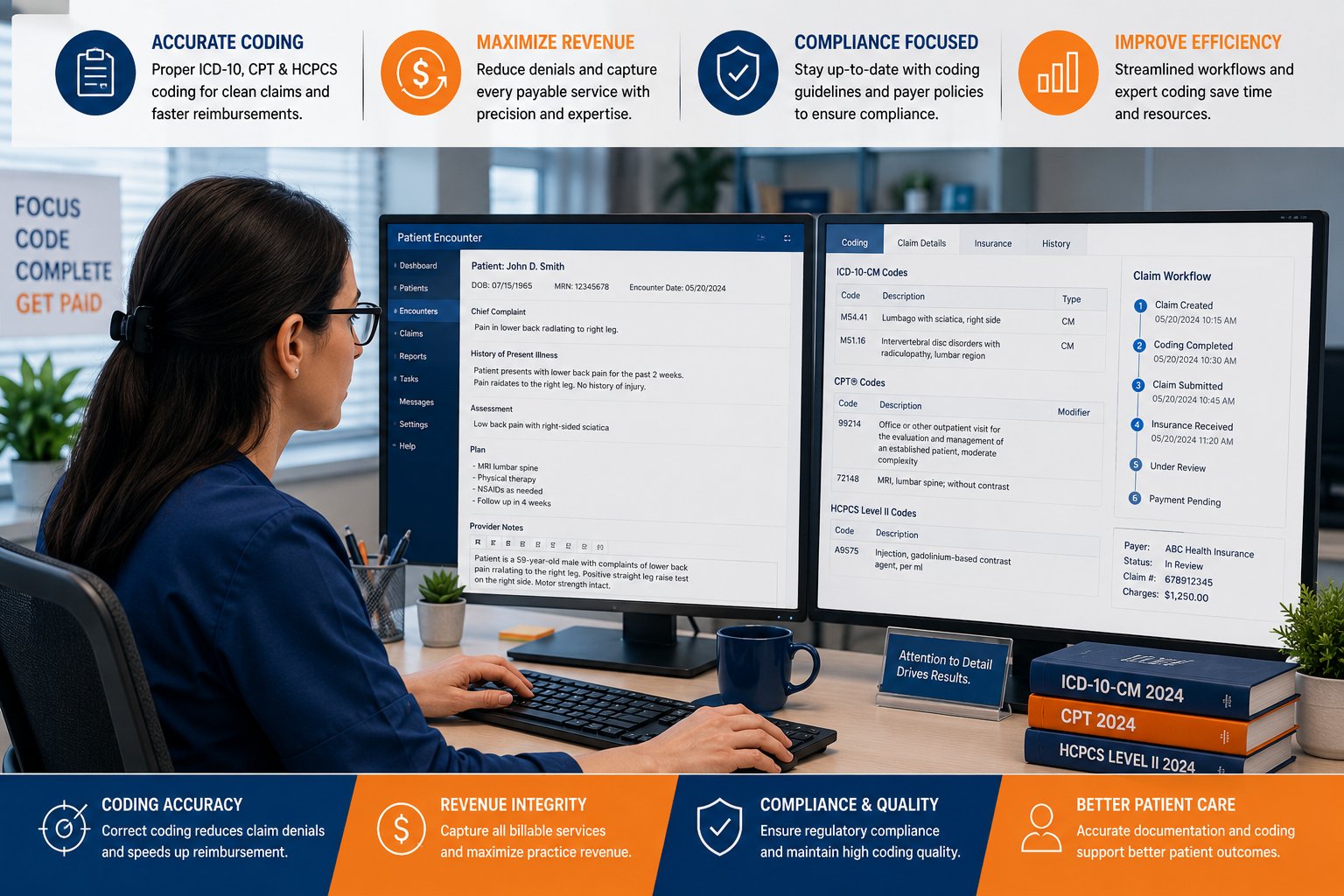
The work demands a surprisingly high level of accuracy. A single misplaced digit can mean a rejected claim, a compliance audit, or a significant revenue loss for a practice. That precision is a big part of why healthcare coding jobs tend to reward experienced specialists so well. Hospitals, physician offices, billing companies, government agencies, and increasingly software vendors all employ people with these skills.
If you want a broader sense of how billing functions within a modern practice, Utreatibill’s resource hub is a good starting point — it covers how revenue cycle management works from patient intake all the way through final payment posting.
Medical Billing and Coding Salary: The Full Picture
One of the first things people want to know is, how much does a medical billing and coding specialist make? The honest answer is: it depends enormously on your role, credentials, years of experience, geographic location, and care setting. That said, the data paints a genuinely encouraging picture.
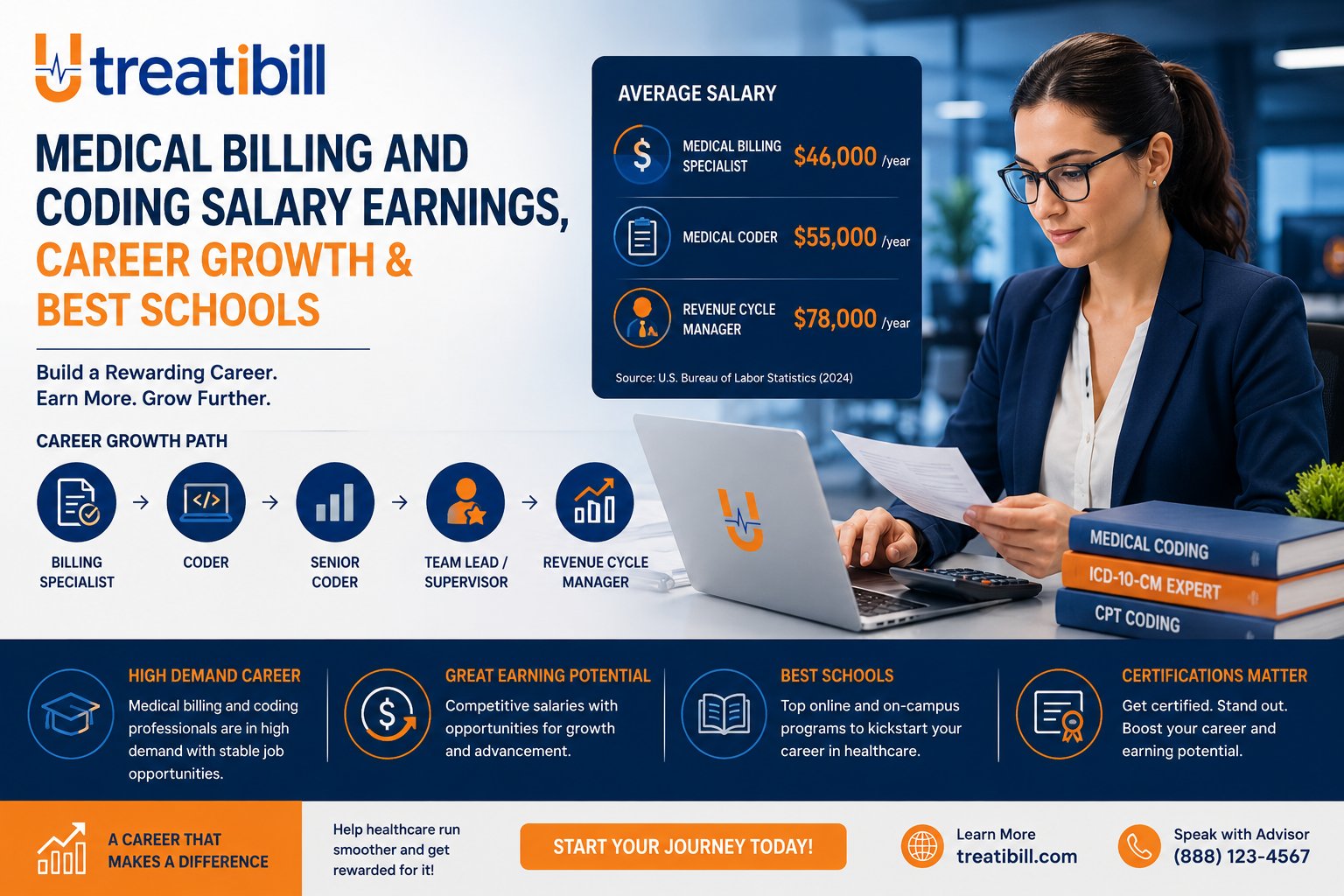
According to the U.S. Bureau of Labor Statistics (BLS), the median annual wage for medical records specialists — the broader category that includes billing and coding roles — sat at approximately $48,780 as of the most recent occupational outlook data. However, that median does not reflect the premium that certified or senior-level professionals command.
Compensation surveys conducted by AAPC (American Academy of Professional Coders), the field’s largest credentialing body, consistently show that credentialed coders earn meaningfully more. Their most recent national survey found that members with active certifications earn a median closer to $58,000 to $62,000 annually, and those with multiple credentials or managerial experience often top $80,000.
These ranges are national approximations. Your actual medical billing specialist salary can shift significantly based on where you live. Coders working in California, New York, Massachusetts, and the Pacific Northwest routinely earn 15–25% above the national median. Meanwhile, states with lower costs of living may pay less in absolute terms but often offer comparable purchasing power.
AAPC Salary Survey, 2024
What Drives Your Earning Potential
Salary in this field does not move in a straight line. Several interconnected factors determine where you land on the pay spectrum, and understanding them helps you make smarter career decisions early.
Specialty Coding vs. General Coding
Coders who specialize in high-complexity areas — cardiology, neurosurgery, oncology, radiology, or orthopedics — tend to earn more than those handling general family practice or internal medicine claims. The codes in these specialties are dense, the documentation requirements are exacting, and errors can trigger significant compliance exposure. Employers pay for expertise that reduces that risk.
Employer Type
Hospital systems and large health networks generally pay more than small physician offices. Third-party billing companies can offer strong compensation packages, especially if they handle specialty practices. Government agencies like the VA or CMS-contracted payers often come with robust federal benefits packages that effectively increase total compensation well beyond the base salary figure.
Experience and Tenure
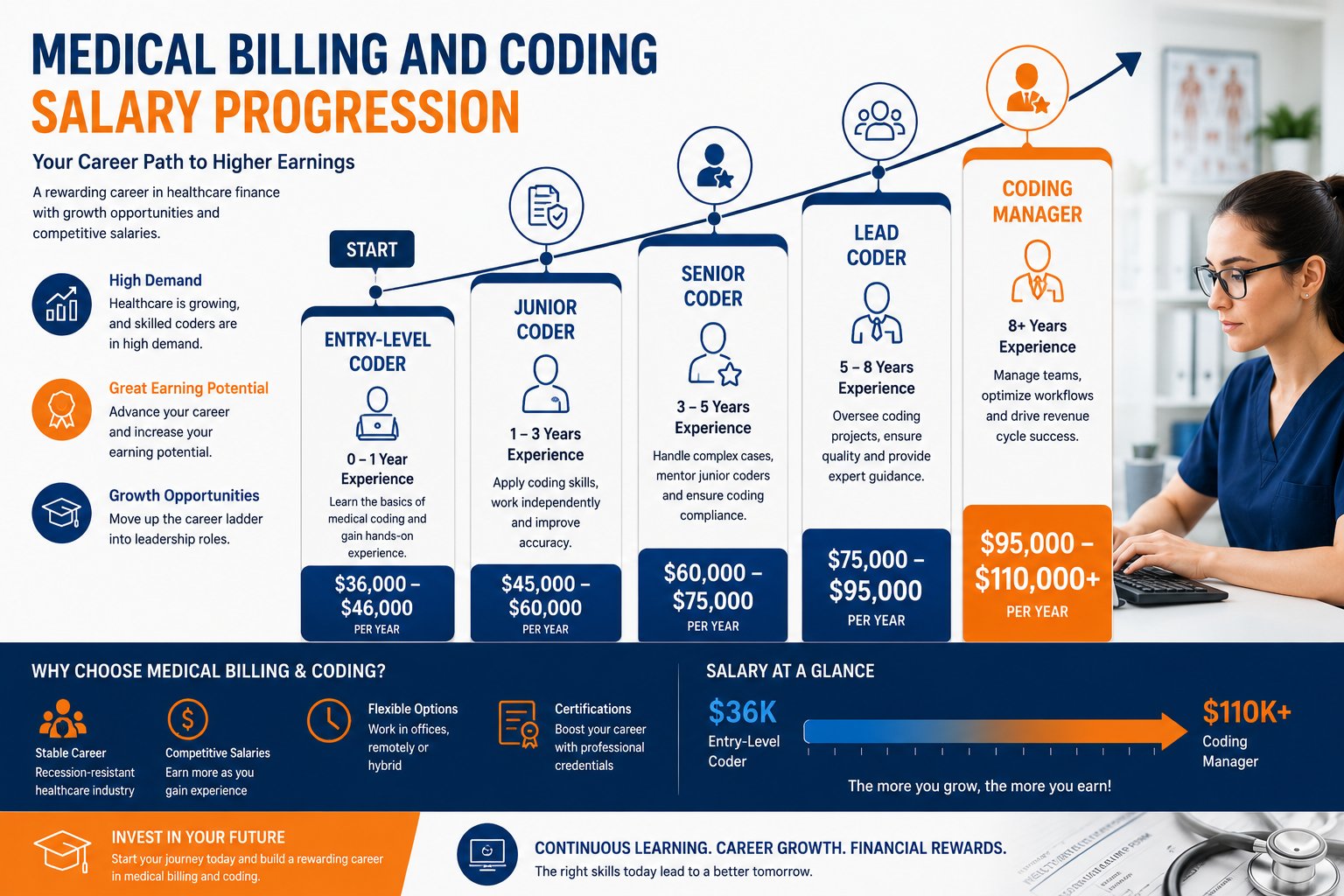
The jump from zero to two years of experience is often the steepest learning curve but also the fastest period of salary growth. After that, progression tends to accelerate with each additional credential and each specialized skill added. Professionals who pursue leadership development alongside technical coding skills often reach the $85K–$110K range within eight to ten years.
Geographic Location and Remote Work
The rise of remote medical coding jobs has fundamentally altered the geography of compensation. A coder based in rural Ohio can now work for a hospital system in California and earn California-level wages without relocating. We cover this shift in more detail in the remote work section below.
Medical Coding Certifications That Move the Needle
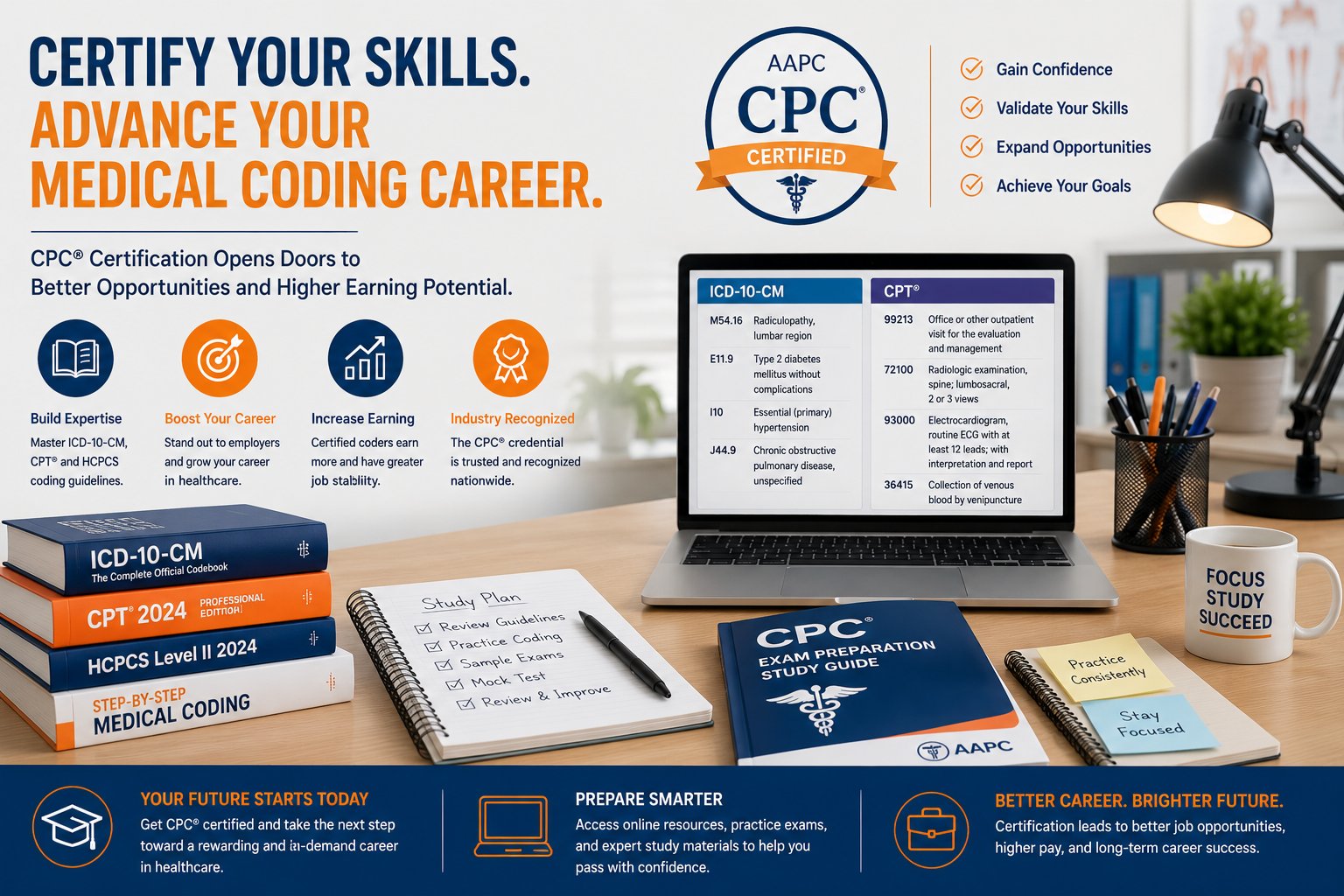
Credentials are arguably the single biggest lever you have over your salary in the early and mid stages of your career. Medical coding certification signals to employers that you have been tested against a rigorous national standard and that your skill set is verifiable. Several credentialing bodies offer recognized designations, but three dominate most job postings.
CPC — Certified Professional Coder
Offered by AAPC, the CPC certification is the most widely recognized credential in outpatient and physician office coding. The exam consists of 150 questions covering anatomy, ICD-10-CM, CPT, and HCPCS Level II codes. Most candidates spend 60–150 hours preparing, and the pass rate for first-time takers hovers around 70%. The CPC is often the minimum requirement for mid-level coding positions and can push your annual salary $8,000–$15,000 higher than you would earn without it.
Learn more directly from AAPC’s official CPC certification page.
CCS — Certified Coding Specialist
The CCS, offered by AHIMA (American Health Information Management Association), skews more toward inpatient hospital coding and is particularly valued in acute care settings. If your target is hospital employment, the CCS can be a stronger signal than the CPC alone. The two are not mutually exclusive — many senior coders hold both.
CCA — Certified Coding Associate
Also from AHIMA, the CCA is the entry-level credential designed for people just starting out. It is broader and less specialized than the CCS, making it a good first step if you have completed a coding training program but do not yet have professional experience to sit for the CPC or CCS.
The CPC covers outpatient coding. Adding a CPC specialty credential — such as CPC-H for hospital outpatient or a specialty-specific add-on — can make your profile stand out in competitive markets without the time investment of pursuing an entirely separate exam track.
If you are working toward certification and want to understand how clean claim submission ties into your day-to-day work, Utreatibill’s billing process guides offer practical context that reinforces exam-level knowledge.
Medical Billing and Coding Careers: Where the Field Goes
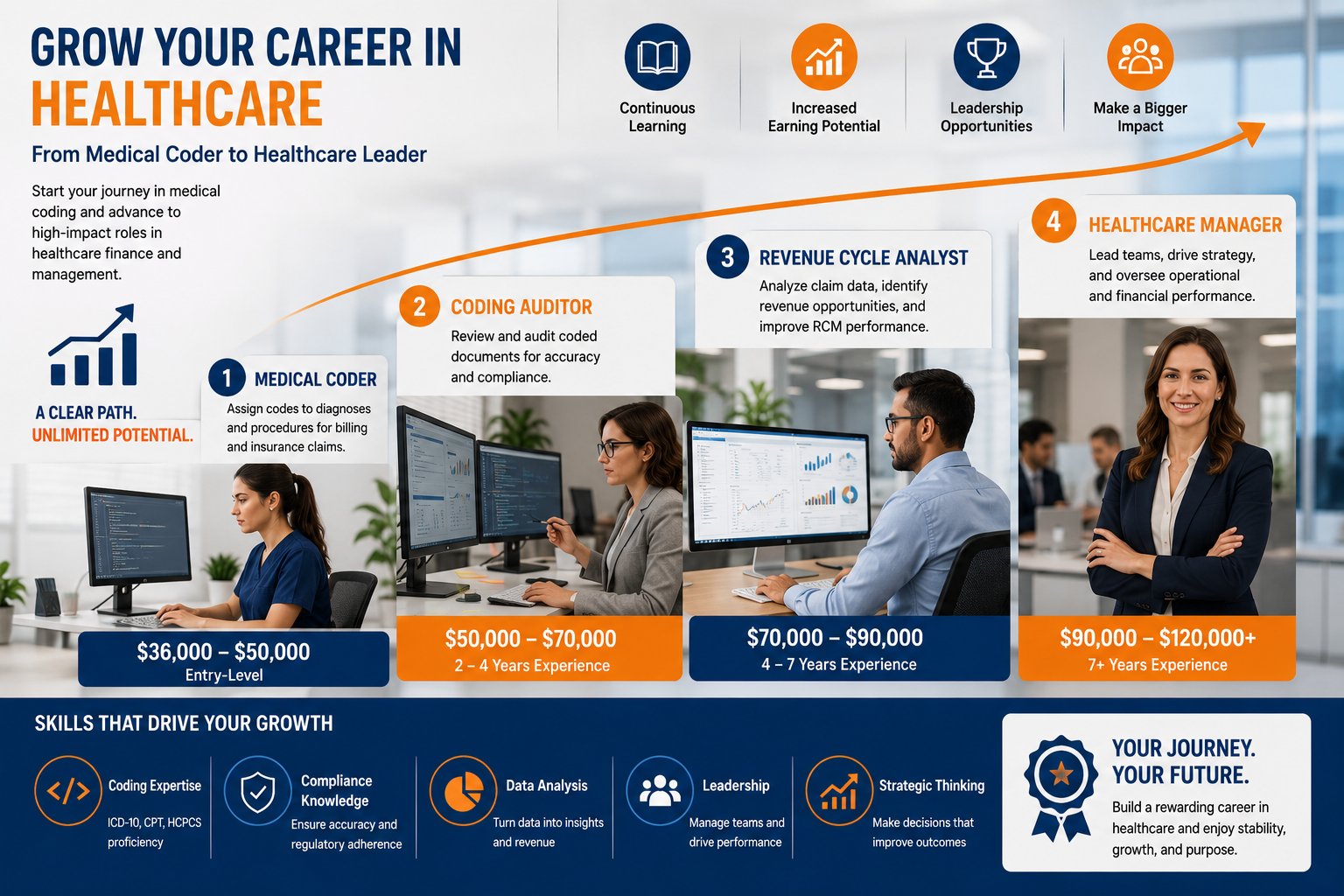
Medical billing and coding careers are often mischaracterized as dead-end data entry work. The reality is almost the opposite. The field has a rich upward trajectory, and professionals who invest in their development regularly move into roles that would surprise those outside the industry.
Coding Auditor
Auditors review documentation and coded claims for accuracy, compliance with payer guidelines, and adherence to CMS regulations. It is a more analytical, advisory role that commands salaries in the $65,000–$90,000 range and is in high demand as regulatory scrutiny of coding accuracy intensifies.
Revenue Cycle Analyst
Revenue cycle analysts sit at the junction of finance and clinical operations. They use coding knowledge alongside data analysis skills to identify denial trends, measure key performance indicators, and recommend process improvements. Many healthcare systems have created entire departments around this function, and strong analysts regularly transition into director-level positions.
Health Information Manager
This is where healthcare administration careers and medical coding expertise converge. Health information managers oversee the people, systems, and processes that ensure patient data is accurate, secure, and usable. A bachelor’s or master’s degree in health information management, combined with AHIMA’s RHIA credential, is typically required. Salaries in this track commonly range from $75,000 to $120,000 depending on facility size.
Medical Coding Educator or Consultant
Experienced coders with strong communication skills often pivot into training, consulting, or compliance roles. Independent consultants who help practices prepare for audits or transition to new code sets can earn $80–$150 per hour working with multiple clients simultaneously — a flexibility that appeals strongly to coders with family obligations or entrepreneurial ambitions.
Healthcare IT and EHR Optimization
As electronic health record systems become more sophisticated, vendors and health systems increasingly need people who understand both the clinical workflow and the coding logic baked into those platforms. Coders who develop familiarity with EHR systems like Epic or Cerner and pursue related IT certifications can move into implementation, training, or configuration roles with substantially higher earning ceilings.
Remote Medical Coding Jobs and the Future of Work
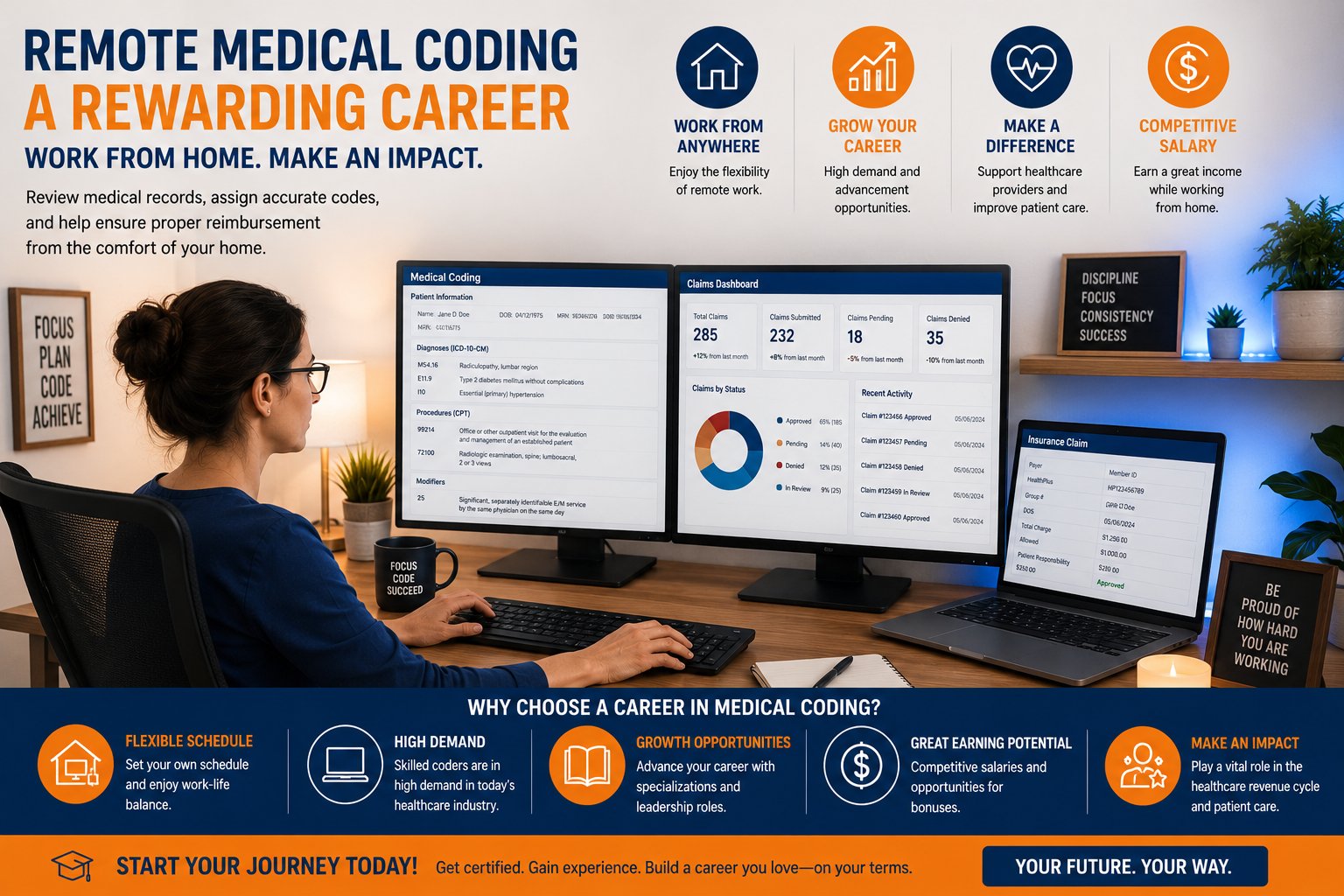
Perhaps no other trend has reshaped healthcare coding jobs as dramatically as the shift to remote work. Even before 2020, large healthcare systems and billing companies were experimenting with work-from-home coders. The acceleration that followed has made remote positions the expectation rather than the exception for experienced professionals.
Today, a significant portion of active coding positions are fully remote, and the number continues to grow. AAPC’s job board consistently lists hundreds of remote openings from healthcare systems, managed care organizations, and coding staffing firms. Platforms like Indeed, LinkedIn, and specialized healthcare job sites like Health eCareers also maintain robust listings.
That said, the remote opportunity is not equally distributed. Employers routinely require applicants for remote positions to have at least one active credential (typically the CPC or CCS), a minimum of two years of relevant experience, and a demonstrated quality benchmark — often a productivity rate of 95% or higher accuracy. In other words, remote work is largely a reward for proven performance, not an entry-level starting point.
The geographic freedom that remote work offers also enables something practically unprecedented: competitive salary negotiation that is largely untethered from local cost-of-living. A coder with a CPC and a strong accuracy record can apply for positions nationwide and earn top-of-market wages regardless of where they live. This has been a particularly meaningful shift for coders in rural or lower-income regions.
Best Medical Billing and Coding Schools for Career Growth
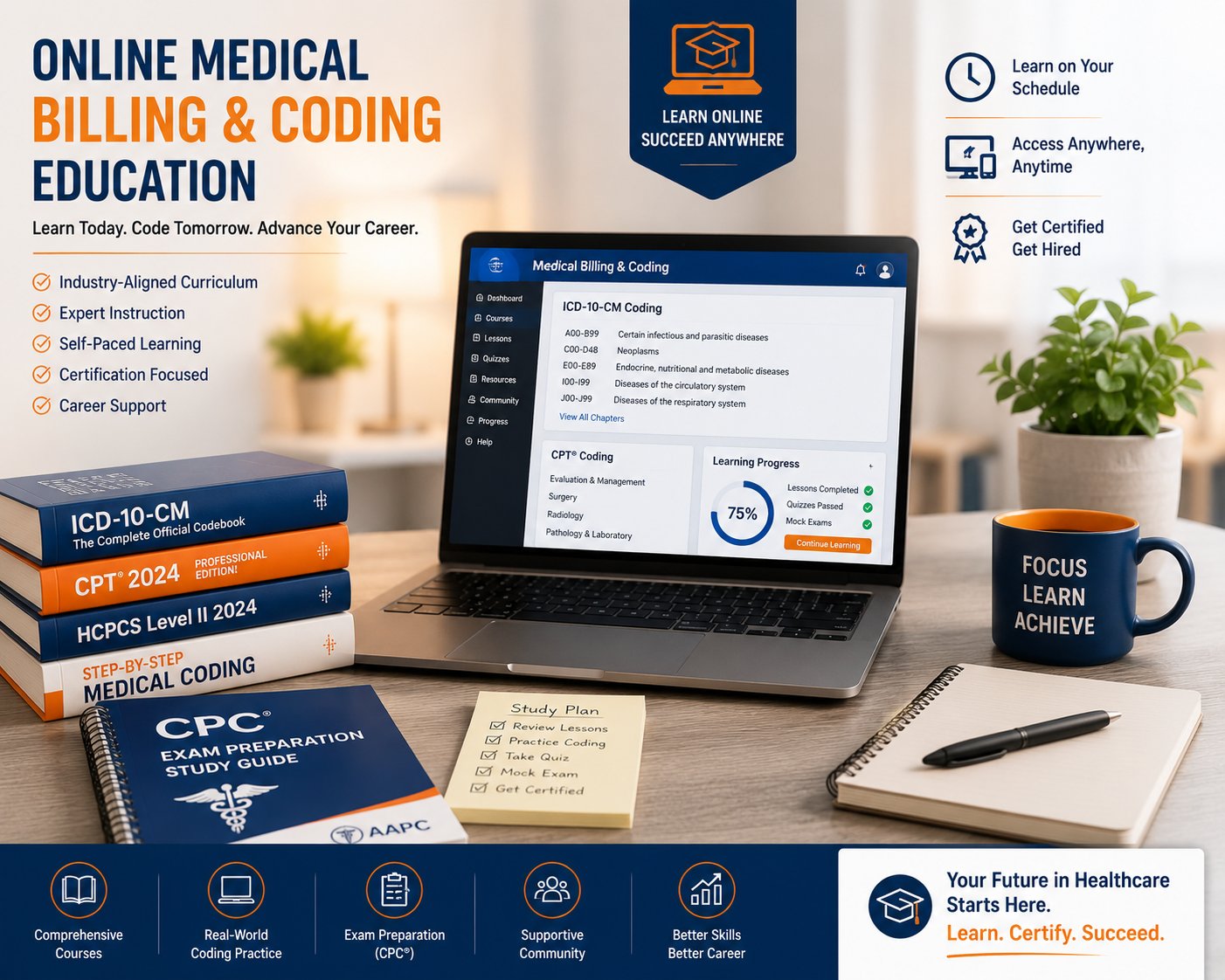
Choosing where to train is one of the most consequential early decisions in this field. The best medical billing and coding schools for career growth are not necessarily the most expensive or the most prestigious by traditional academic measures. What matters far more is whether the program produces graduates who pass credentialing exams, land jobs quickly, and are prepared for the realities of daily coding work.
Below are seven programs that consistently appear in favorable outcome data across AAPC network statistics, employer hiring preferences, and student career outcome surveys.
AAPC Online Coding and Billing Training
AAPC’s own training programs are developed with the certification exam in mind — which makes sense, since they write the CPC. The curriculum maps tightly to exam domains, includes anatomy and physiology review, and comes with practice exams. For motivated self-learners, this is one of the most direct paths from zero to CPC-ready. Explore AAPC Training.
Penn Foster Career School
Penn Foster’s self-paced medical billing and coding program is accredited by the Distance Education Accrediting Commission (DEAC) and prepares students for both the CPC and CCA exams. The affordability and flexibility of its fully online format make it accessible to working adults managing family or job obligations alongside their studies.
AHIMA-Approved Coding Programs
AHIMA maintains a national directory of approved health information management programs, many of which include dedicated medical coding and billing tracks. Students who complete AHIMA-approved curricula are well-positioned for both the CCA and CCS exams and often gain academic credit toward bachelor’s degrees in health information management. Find AHIMA-approved programs.
Purdue Global — Health Information Technology
Purdue Global’s online associate and bachelor’s degrees in health information technology incorporate medical coding throughout the curriculum. The programs are regionally accredited, CAHIIM-accredited for HIT, and designed to accommodate working professionals. Graduates emerge with both exam readiness and a transferable academic credential that matters for management-track roles.
Wake Technical Community College (North Carolina)
For students in North Carolina or those willing to pursue online coursework, Wake Tech’s Medical Coding and Billing curriculum is notable for its real-world emphasis. Instructors include active RHIA- and CPC-credentialed professionals, and the program has a strong track record of exam pass rates. Community college tuition also makes the cost of entry far more manageable than private career schools.
Rasmussen University — Health Information Technology
Rasmussen’s HIT programs include comprehensive medical coding instruction and are available fully online. The university’s career services team maintains active employer relationships in healthcare, and their quarterly-based scheduling allows students to complete coursework faster than traditional semester systems.
University of Cincinnati — Health Information Management
UC’s online Bachelor of Science in Health Information Management is one of the more academically rigorous programs in the country, preparing graduates for RHIA eligibility alongside in-depth medical coding training. For those planning to pursue leadership in health information management, this is among the most respected pathways available.
Medical Coding Training Programs: What to Look For
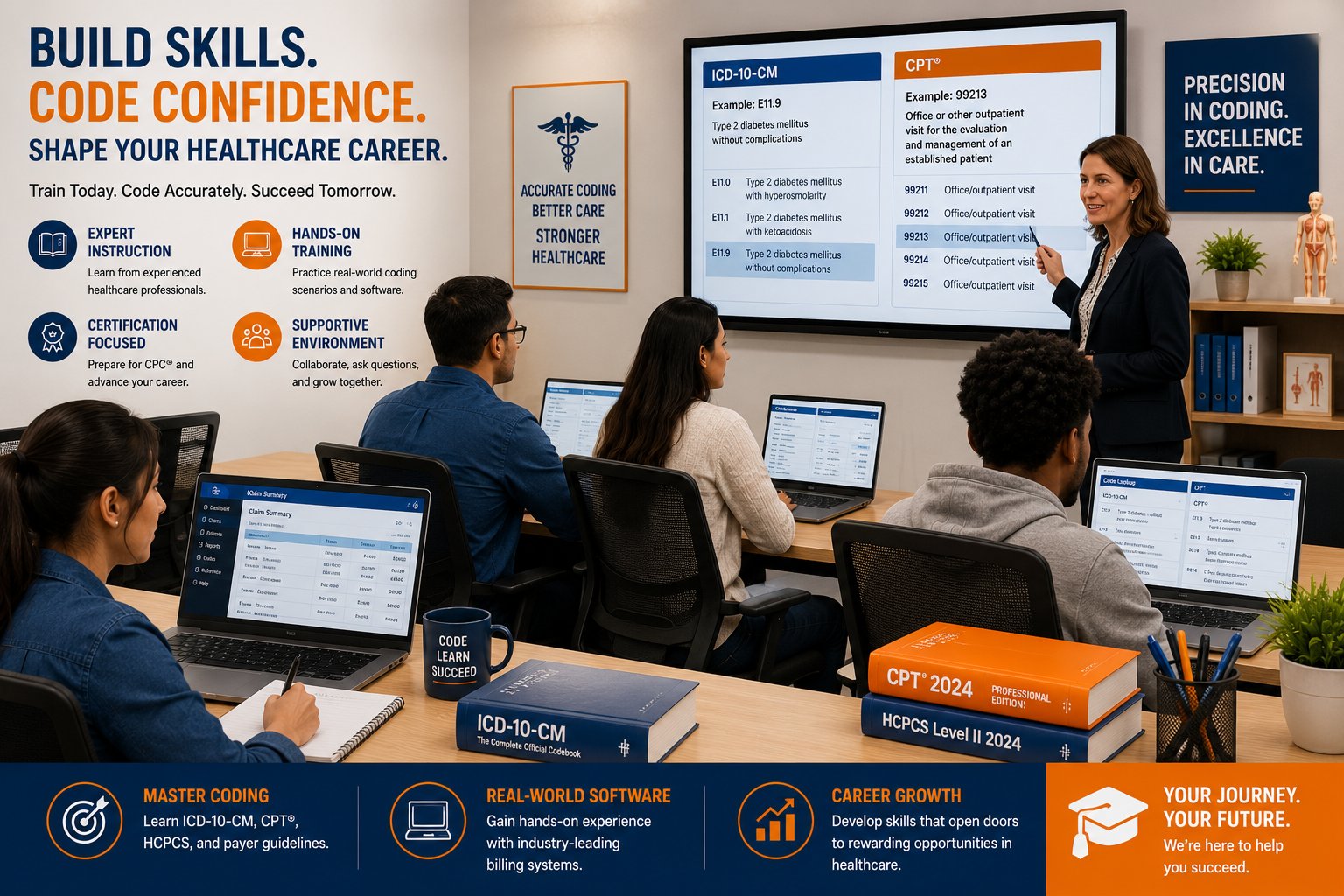
Whether you are evaluating a two-week boot camp or a two-year associate degree, certain markers reliably predict whether a medical coding training program will serve you well.
Accreditation
Look for programs accredited by CAHIIM (Commission on Accreditation for Health Informatics and Information Management Education) for degree programs, or DEAC and regional accreditors for certificate programs. Accreditation signals that an independent body has reviewed the curriculum and found it meets baseline quality standards. It also matters if you ever need to transfer credits.
Exam Pass Rates
Ask directly for the program’s CPC or CCA first-attempt pass rate among graduates. Programs with strong outcomes typically publish this data proactively. If a school is evasive about exam outcomes, that is a meaningful signal.
Externship or Practicum Opportunities
Hands-on experience with real-world documentation, even in a supervised externship context, makes an enormous difference in how quickly you become productive on the job. Programs that embed practical experience in their curriculum consistently produce graduates who adapt faster in their first professional roles.
Current Code Set Instruction
Medical coding is not static. ICD-10-CM updates annually, CPT codes change each January, and payer-specific policies evolve constantly. A quality program should explicitly address how curriculum is updated and should cover the most current code set editions in use. Ask specifically about this if it is not addressed in program materials.
Instructor Credentials
Programs taught by active or recently practicing coders with CPC, CCS, or RHIA credentials behind them tend to offer more practically grounded instruction than those staffed primarily by academic generalists. Look for this detail in faculty bios or ask during your enrollment inquiry.
Understanding the billing side of healthcare — not just the coding side — also makes you a more complete professional. Connecting coding decisions to their reimbursement consequences is a skill set employers value. Resources like those available at Utreatibill can help bridge that gap while you are still in training.
Common Questions Answered
Is medical billing and coding a good career in 2025?
Yes — by most measures, it remains a solid long-term career choice. The BLS projects continued growth for medical records and health information specialists, driven by an aging population requiring more healthcare services, growing administrative complexity, and the continued expansion of electronic health records. The addition of remote work flexibility and the range of advancement pathways make it more attractive than many comparable healthcare support roles.
How long does it take to become a medical coder?
A focused certificate program can be completed in as little as four to six months if you are studying full time. Part-time learners typically finish in nine to eighteen months. Associate degree programs run two years. Factoring in exam preparation after completing coursework, most people enter their first coding role within six to twenty-four months of beginning their studies.
What is the certified medical coder salary compared to non-certified coders?
The certified medical coder salary premium is well-documented. AAPC and AHIMA salary surveys consistently show a gap of $8,000–$18,000 per year between credentialed and non-credentialed coders performing similar work. Over a career, that difference compounds significantly — and credentialing also opens doors to senior, auditing, and management roles that are simply not accessible without recognized credentials.
Can I do medical coding from home?
Absolutely. Remote medical coding jobs are widely available and represent a growing share of all coding positions posted nationally. Most remote roles require at least one active certification and a minimum level of experience, but once you meet those thresholds, the options are genuinely broad. Many full-time remote coders report that geographic flexibility has been the single biggest life improvement their career has brought them.
What is the difference between medical billing and medical coding?
Medical coders read clinical documentation and assign the appropriate diagnostic and procedural codes. Medical billers take those codes and submit insurance claims, manage accounts receivable, handle denials, and follow up with payers to ensure reimbursement. Many professionals do both functions — particularly in smaller practices — while larger organizations often separate the two roles. Both are essential to a functional revenue cycle, and both are teachable within the same foundational training programs.
What GPA or educational background do I need to enter this field?
No college degree is strictly required to begin a medical billing and coding career. A high school diploma or GED is the baseline for most certificate programs. Strong attention to detail, comfort with data, and a willingness to engage with medical terminology and anatomy are far more important predictors of success than prior academic credentials. That said, a bachelor’s degree in health information management does expand your ceiling significantly in the long run.
Putting It All Together: Your Next Steps
The medical billing and coding salary data tells a clear story: entry-level pay is modest but livable in most markets, credentialing reliably accelerates income, specialization raises the ceiling further, and leadership pathways exist for those who want to build toward six-figure careers in healthcare administration. Remote work has also transformed the lifestyle calculus in ways that matter deeply to people balancing careers with other life priorities.
If you are starting from scratch, the sequence that tends to work best is: complete an accredited certificate or associate program, sit for the CCA or CPC within six months of finishing coursework, land your first role, and then continue building credentials and specialty knowledge as your confidence grows. The field rewards steady investment in yourself.
If you are already working in healthcare and looking to transition into coding, you may have more of a foundation than you realize. Familiarity with clinical documentation, payer policies, or EHR systems can shorten the learning curve meaningfully and make you a more competitive candidate right out of training.
Whatever stage you are at, resources that help you understand how billing, coding, and revenue cycle management interconnect will serve your growth throughout your career. The Utreatibill platform is built with exactly that connection in mind — designed for practitioners who want to see how the coding decisions they make every day ripple through to reimbursement outcomes.
The healthcare industry is not going to shrink. Neither is the need for accurate, compliant, experienced professionals who can translate clinical reality into the financial language that keeps practices and hospitals running. This is a field worth entering — and worth staying in.