

Top 10 Medical Billing Companies in America (2026)
Finding the right medical billing company can make or break a healthcare practice’s revenue cycle. This guide covers the top 10 medical billing companies in America for 2026, comparing features, pricing, pros and cons, and best use cases so you can make a confident decision for your organization.
Medical billing is one of the most important components of the healthcare industry in the United States. Every provider — from private clinics to large hospital systems — depends on accurate billing processes to maintain financial stability and ensure timely reimbursements from insurance companies.
As healthcare regulations become more complex, providers increasingly rely on professional billing companies to handle claims processing, coding verification, denial management, patient invoicing, and revenue cycle optimization. According to the American Medical Association (AMA), the average claim denial rate in the US sits between 5% and 10%, with some specialties seeing rates above 15%. Providers that partner with experienced billing companies consistently report faster payment cycles, fewer denials, and improved compliance.
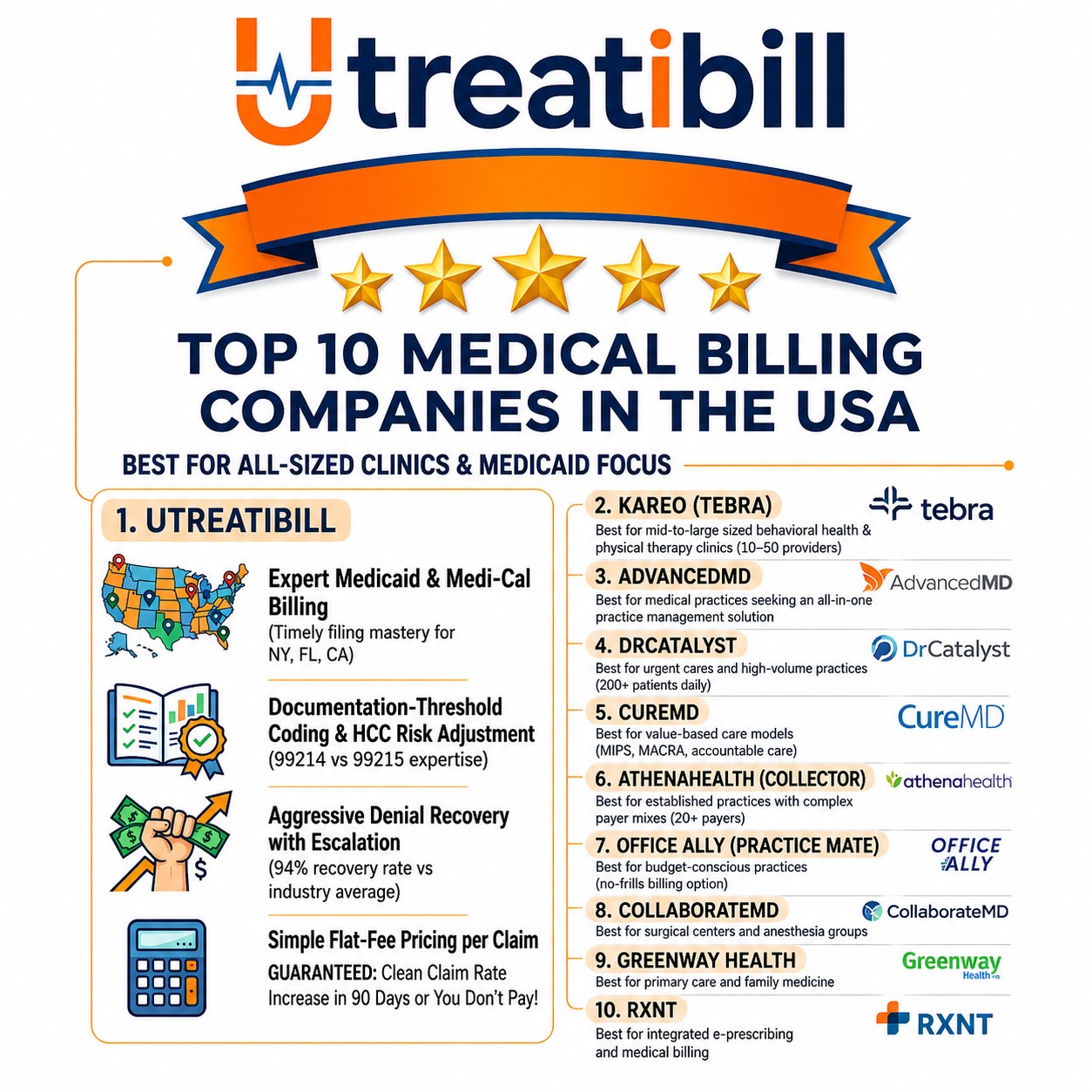
Quick Comparison: Top 10 Medical Billing Companies at a Glance
*Disclosure: UtreatiBill is our own service. We have included it because we stand behind its capabilities, but we encourage you to compare all options before deciding.
Company | Best For | Pricing Model | AI-Powered | Specialty Support |
UtreatiBill | Growing practices | Custom quote | Yes | Yes |
Tebra (Kareo) | Small independent practices | Subscription + % | Yes | Limited |
AdvancedMD | Mid-to-large practices | 4–8% of collections | Yes | Yes |
DrCatalyst | Specialty providers | % of collections | No | Strong |
CureMD | Budget-conscious practices | Per provider/month | No | Yes |
athenahealth | Large practices & hospital networks | 4–7% of collections | Yes | Yes |
Office Ally | Small practices on a budget | Low flat fee / per claim | No | Limited |
CollaborateMD | Remote and cloud-first teams | Subscription | No | Moderate |
Greenway Health | Enterprise organizations | Custom enterprise | Yes | Yes |
RXNT | Independent practices | Per provider/month | No | Moderate |
Why Medical Billing Companies Matter for Healthcare Revenue
Medical billing directly affects the financial performance of every healthcare organization. Even small processing mistakes lead to delayed reimbursements, denied claims, compliance risks, and lost revenue. The Medical Group Management Association (MGMA) reports that practices using professional billing services collect up to 30% more revenue compared to those managing billing entirely in-house.
Modern revenue cycle solutions now use automation, cloud-based platforms, artificial intelligence, and predictive analytics to optimize reimbursements. Healthcare providers that invest in professional billing services consistently experience fewer denied claims, improved compliance, and faster payment cycles.
Top 10 Medical Billing Companies in America for 2026
Best for Growing Practices Seeking Customized Support
Disclosure: UtreatiBill is our own billing service. This listing reflects our honest assessment of our capabilities.
UtreatiBill is a growing medical billing company focused on improving reimbursement rates, reducing administrative workload, and streamlining financial workflows for medical practices of various sizes. The company offers customized billing strategies designed to improve long-term financial performance.
Pros
- Customized billing solutions tailored to each practice
- Fast claims submission turnaround
- Reduced denial rates through proactive claim scrubbing
- HIPAA-compliant workflows and secure data handling
- Dedicated account support with transparent communication
Cons
- Newer company with a shorter track record than established competitors
- Pricing requires a custom quote, making upfront comparison difficult
- Limited publicly available third-party reviews and case studies
Pricing
Custom quotes based on practice size and specialty. Contact UtreatiBill directly for pricing details.
Best Medical Billing Software for Small Independent Practices
Tebra, formerly known as Kareo, is one of the most recognized healthcare revenue management platforms for independent practices. Kareo became popular for its user-friendly software and affordable practice management tools. Today, Tebra continues offering advanced claims management combined with patient communication and operational support systems.
Pros
- Easy-to-use billing dashboard requiring minimal training
- Strong patient communication and engagement features
- Cloud-based and accessible from anywhere
- Good fit for solo practitioners and small group practices
Cons
- Can become expensive as practice size grows
- Customer support response times have been flagged in user reviews
- Limited customization for complex specialty billing workflows
Pricing
Subscription-based plus a percentage of collections. Generally ranges from $300–$500 per month for small practices.
Best All-in-One Platform for Mid-to-Large Practices
AdvancedMD offers comprehensive healthcare finance and practice management solutions designed for modern healthcare organizations. Their integrated platform combines scheduling, electronic health records, telemedicine support, and reimbursement management into one streamlined ecosystem.
Pros
- Automated claim scrubbing reduces errors before submission
- Faster reimbursement cycles through integrated workflows
- Strong revenue analytics and real-time reporting dashboards
- Excellent specialty support across multiple disciplines
- Scalable as your practice grows
Cons
- Higher price point than budget alternatives
- Steeper learning curve for new users
- Customer support can be slow during high-volume periods
Pricing
Typically charges 4–8% of monthly collections depending on practice size and services selected.
Best Medical Billing Company for Specialty Providers
DrCatalyst focuses on specialty reimbursement services for providers such as dermatologists, surgeons, behavioral health professionals, and specialty clinics. The company helps providers optimize collections while reducing coding and processing errors specific to complex specialty billing.
Pros
- Deep expertise in specialty-specific coding and workflows
- Strong denial management and appeals processes
- Compliance monitoring tailored to specialty regulations
- Financial analytics reporting with actionable insights
Cons
- Less ideal for general practice or primary care providers
- Pricing is not publicly listed and varies widely by specialty
- Smaller company footprint compared to enterprise competitors
Pricing
Percentage of collections model. Rates vary by specialty and claim volume.
Best Affordable Medical Billing Service for Growing Practices
CureMD provides cloud-based healthcare reimbursement and electronic health record solutions for independent providers and growing organizations. The company focuses on affordability while maintaining strong performance and workflow automation.
Pros
- Cost-effective pricing designed for smaller practices
- Fast claims processing with solid automation features
- Cloud-based access from multiple locations
- Good specialty coding support included
Cons
- Reporting tools are less robust than premium competitors
- Onboarding can feel slower than other platforms
- Fewer integrations compared to larger enterprise systems
Pricing
Per-provider monthly pricing. Estimated starting range is $195–$295 per provider per month.
Best AI-Powered Medical Billing Company for Large Practices
athenahealth is widely recognized as one of the leading healthcare technology companies in America. Their AI-powered platform helps healthcare providers automate claims management while improving reimbursement accuracy. The platform is especially popular among larger practices and hospital networks due to its scalability and intelligent automation.
Pros
- Industry-leading AI-powered claims automation
- Strong denial reduction backed by real-time analytics
- Excellent patient payment tools and digital billing options
- Proven track record with large organizations and hospital systems
- Robust security infrastructure and cloud-based access
Cons
- Pricing is higher than most competitors on this list
- Can feel overwhelming for small or solo practices
- Contract terms can be rigid and difficult to exit
Pricing
Typically charges 4–7% of monthly collections. Enterprise pricing available for hospital systems.
Best Budget-Friendly Billing Option for Small Practices
Office Ally offers affordable claims processing software and clearinghouse solutions for healthcare providers across the United States. The company helps practices simplify financial operations without high costs, making it one of the most accessible options for smaller organizations or those just getting started.
Pros
- One of the most affordable billing solutions available
- Straightforward electronic claims submission
- Simple practice management integration
- Good option for practices transitioning away from paper billing
Cons
- Limited advanced analytics and reporting features
- Customer support is basic compared to premium alternatives
- Not well-suited for complex specialty billing requirements
Pricing
Low flat fee or per-claim pricing. Basic plans start as low as $29.95 per month, making it the most budget-friendly option on this list.
Best Cloud-Based Medical Billing Software for Remote Teams
CollaborateMD provides flexible claims management and financial workflow solutions for healthcare providers seeking cloud-based technology. Their platform is built for accessibility, making it a strong choice for practices with multiple locations or distributed teams.
Pros
- Cloud-based system accessible from any location
- Patient payment processing integrated directly into the platform
- Solid claims automation and financial reporting dashboards
- Flexible for practices with multiple locations or remote staff
Cons
- Fewer specialty-specific features than dedicated specialty billers
- More limited integrations compared to enterprise alternatives
- Smaller company with fewer publicly available user reviews
Pricing
Subscription-based model. Contact CollaborateMD for a quote based on practice size.
Enterprise Medical Billing Technology
Greenway Health offers enterprise-grade financial management and healthcare technology solutions. The company supports large healthcare organizations with advanced workflow systems and analytics tools built for high-volume environments and complex payer requirements.
Pros
- Robust claims denial management and appeals workflows
- Advanced compliance monitoring tools built for enterprise needs
- Strong patient invoicing automation
- Integrated healthcare systems designed for scale
- Experienced with complex multi-payer environments
Cons
- Not practical or cost-effective for small practices
- Implementation takes longer than lighter platforms
- Enterprise pricing puts it out of reach for independent providers
Pricing
Custom enterprise pricing. Best suited for organizations with high claim volumes and complex operational requirements.
Best Modern Billing Platform for Independent Practices
RXNT provides integrated reimbursement software and practice management solutions for healthcare providers nationwide. Their cloud-based platform focuses on operational efficiency and financial transparency, making it a strong choice for independent and growing practices that want an all-in-one solution without enterprise complexity.
Pros
- Clean, modern interface with strong claims management automation
- Real-time financial reporting keeps practices consistently informed
- Patient invoicing tools are easy for staff to use
- Integrated scheduling reduces administrative friction
- Competitively priced for independent practices
Cons
- AI capabilities less advanced than athenahealth or AdvancedMD
- Fewer specialty-specific billing features
- Customer support quality is inconsistent based on user reviews
Pricing
Per-provider monthly pricing. Generally competitive in the $150–$250 range per provider per month.
Why Medical Billing Is Essential for Healthcare Success
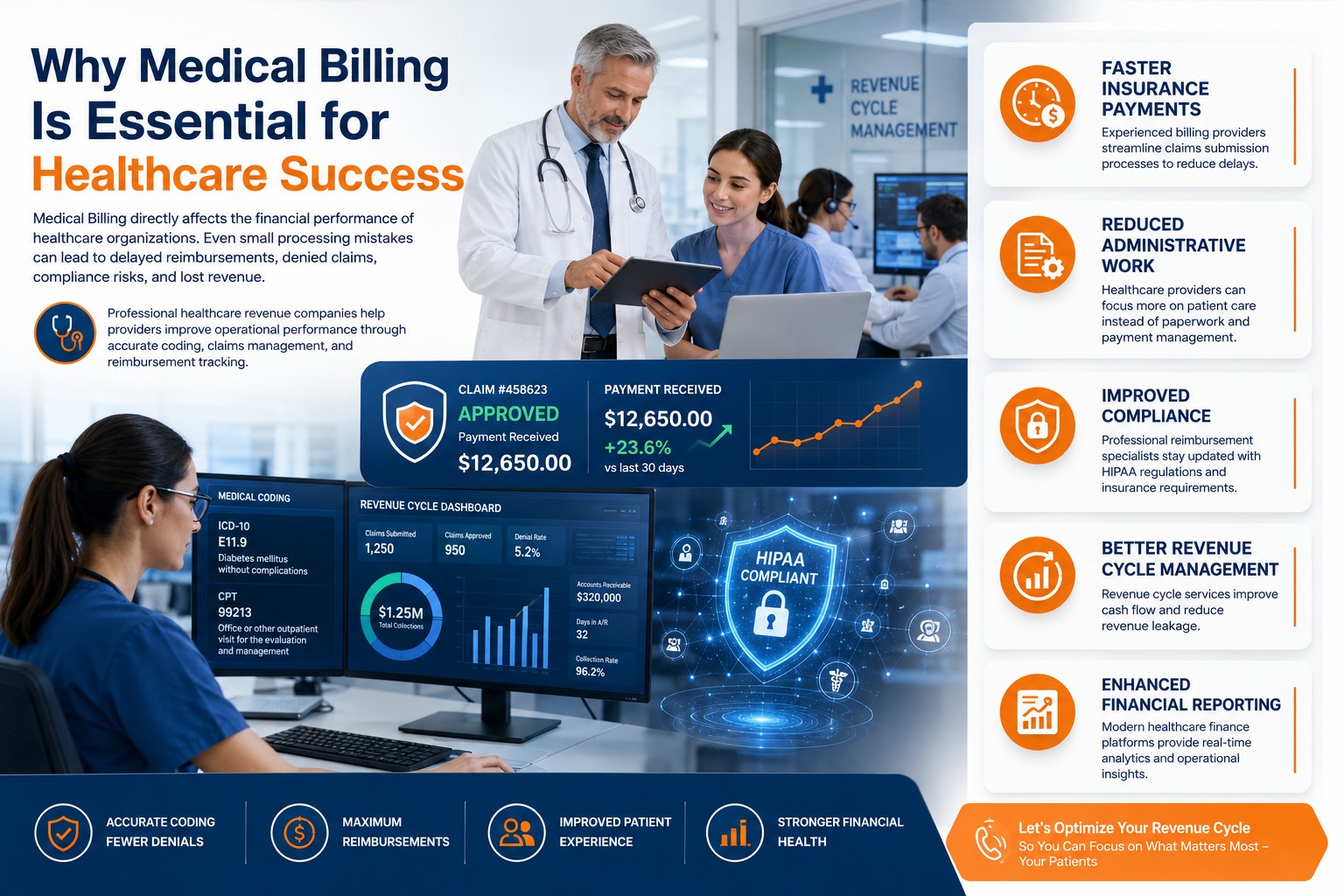
Medical Billing directly affects the financial performance of healthcare organizations. Even small processing mistakes can lead to delayed reimbursements, denied claims, compliance risks, and lost revenue.
Professional healthcare revenue companies help providers improve operational performance through accurate coding, claims management, and reimbursement tracking. Furthermore, According to the American Medical Association (AMA), efficient reimbursement management remains essential for healthcare operational stability.
Faster Insurance Payments
Experienced billing providers streamline claims submission processes to reduce delays.
Reduced Administrative Work
Healthcare providers can focus more on patient care instead of paperwork and financial management.
Improved Compliance
Professional reimbursement specialists stay updated with HIPAA regulations and insurance requirements. Learn more from HIPAA Guidelines.
Healthcare organizations must also follow strict patient privacy and compliance standards established by the Department of Health & Human Services (HHS) .
Better Revenue Cycle Management
Revenue cycle services improve cash flow and reduce revenue leakage.
Enhanced Financial Reporting
Modern healthcare finance platforms provide real-time analytics and operational insights. Financial reporting transparency has become increasingly important for healthcare organizations managing complex reimbursement operations.
Common Medical Billing Challenges Healthcare Providers Face
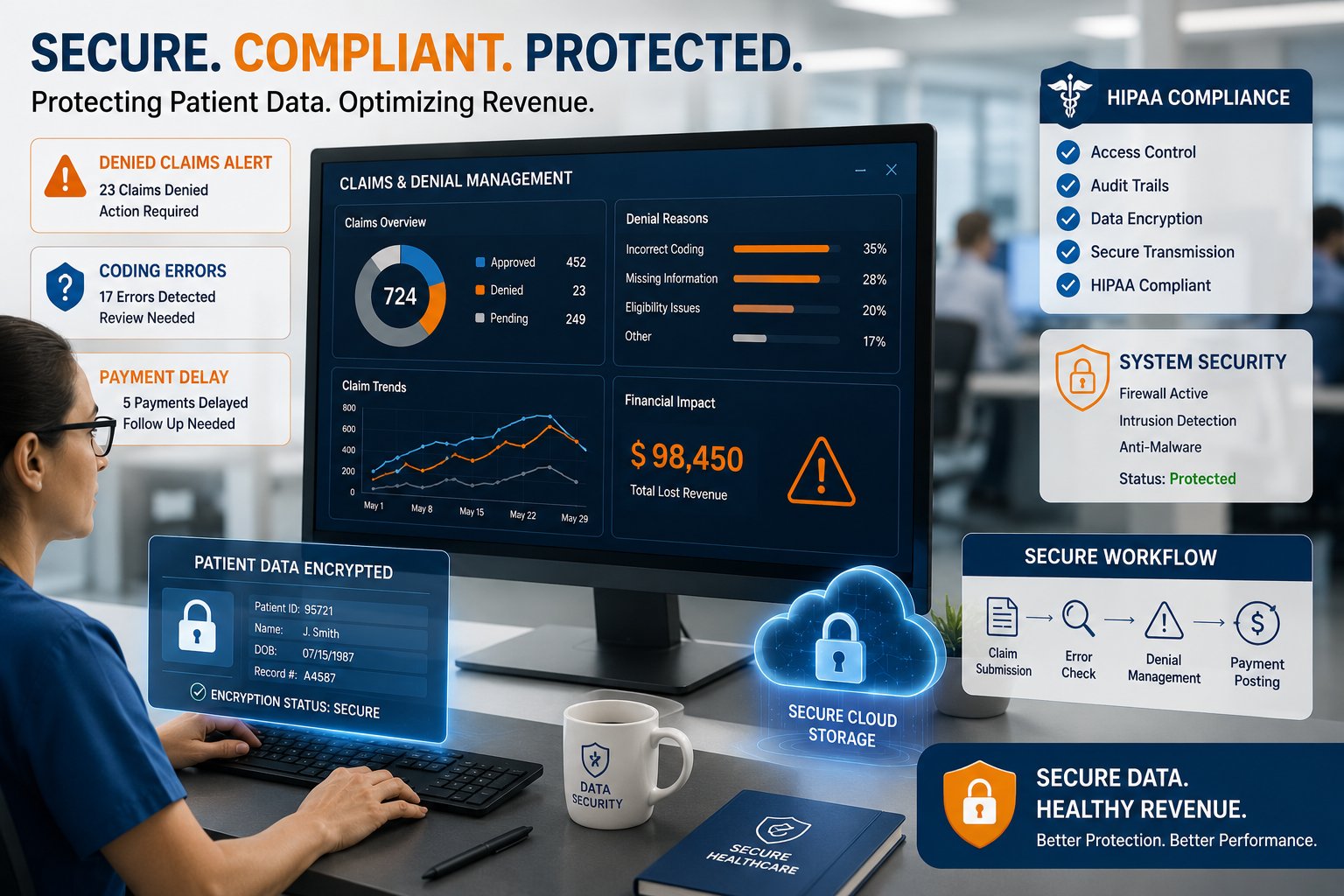
Many healthcare organizations struggle with administrative and reimbursement-related challenges. Without efficient Medical Billing systems, providers may experience delayed payments, denied claims, compliance issues, and operational inefficiencies.
Claim Denials
Insurance companies may reject claims due to coding errors, missing information, or eligibility issues.
Coding Mistakes
Incorrect coding can reduce reimbursements and increase compliance risks.
Accurate coding standards are essential for proper reimbursement processing and insurance claim approvals according to the American Academy of Professional Coders (AAPC).
Delayed Reimbursements
Slow processing cycles negatively impact cash flow and operational stability.
Regulatory Compliance
Healthcare providers must stay compliant with constantly changing healthcare regulations and payer requirements.
Administrative Burdens
Managing billing internally often requires significant staff time and operational resources.
Professional Medical Billing companies help solve these challenges through advanced automation and specialized expertise.
Benefits of Outsourcing Medical Billing Services
Outsourcing Medical Billing has become increasingly common because it improves efficiency and healthcare revenue optimization.Many healthcare organizations now use outsourced medical billing services for clinics to reduce administrative workload and improve reimbursement efficiency.
Healthcare organizations often struggle with changing insurance regulations, coding updates, and administrative burdens. Professional claims management companies help solve these challenges through specialized expertise and advanced technology.
Key Benefits of Outsourcing
- Improve reimbursement speed
- Reduce denied claims
- Increase collections
- Improve coding accuracy
- Lower operational costs
- Enhance compliance monitoring
- Improve patient satisfaction
- Reduce administrative stress
For many healthcare organizations, outsourcing reimbursement management is one of the most effective ways to improve financial performance.
How to Choose the Right Medical Billing Company
Selecting the best provider depends on your healthcare organization’s size, specialty, and operational goals.
Evaluate Industry Experience
Choose a company with experience handling your specialty and payer requirements.
Review Technology Capabilities
Modern healthcare finance systems should include cloud access, automation, and reporting tools.
Understand Pricing Models
Healthcare providers should compare pricing structures carefully before outsourcing services.
Check Customer Support
Reliable support is critical for resolving financial issues quickly.
Prioritize Compliance
Billing companies must maintain HIPAA compliance and secure data handling practices.
Future Trends in Medical Billing
HealthCare Billing industry continues evolving rapidly with new technologies and changing healthcare regulations.
According to Healthcare Financial Management Association (HFMA), automation and analytics continue transforming modern reimbursement workflows.
Artificial Intelligence in Healthcare Finance
AI-powered systems improve claim accuracy and automate repetitive tasks. AI-powered reimbursement technologies are increasingly being adopted across the healthcare industry to reduce administrative inefficiencies.
Predictive Analytics
Revenue cycle companies use analytics tools to identify denial risks and optimize collections.
Telehealth Reimbursement Expansion
As telemedicine grows, providers are adapting to virtual healthcare reimbursement requirements.
Patient-Centered Payment Systems
Modern platforms now offer transparent invoices and flexible payment options.
Automation and Workflow Optimization
Automation helps healthcare organizations reduce administrative costs and improve efficiency.
Consequently, many healthcare organizations are investing more heavily in cloud-based reimbursement technologies.
Why Healthcare Providers Outsource Medical Billing Services for clinics
Outsourcing reimbursement management has become increasingly common among healthcare organizations because it improves efficiency and profitability.
Healthcare providers often struggle with changing insurance regulations, coding updates, and administrative burdens. Professional claims management companies help solve these challenges through specialized expertise and advanced technology.
Outsourced medical billing services can:
- Improve reimbursement speed
- Reduce denied claims
- Increase collections
- Improve coding accuracy
- Lower operational costs
- Enhance compliance monitoring
For many healthcare organizations, outsourcing financial operations is one of the most effective ways to improve performance while reducing stress on internal staff.
How Technology Is Transforming Medical Billing

Technology has completely changed how healthcare organizations manage reimbursements and financial operations. Modern healthcare billing systems now use automation, artificial intelligence, predictive analytics, and cloud-based software to improve efficiency and reduce administrative burdens.
Many healthcare providers previously relied on manual insurance claims management and paper-based workflows. However, these outdated systems often created coding errors, delayed reimbursements, and compliance issues. Today, advanced revenue cycle management platforms help providers streamline every step of the reimbursement process.
Artificial intelligence is becoming especially important in healthcare finance management. AI-powered systems can automatically identify coding issues, detect denied claim patterns, and improve reimbursement accuracy before claims are submitted to insurance companies.
Cloud-based platforms also provide healthcare providers with greater flexibility. Staff members can securely access claims management systems, financial reports, and patient payment information from multiple locations. This improves productivity while supporting remote healthcare administration.
Additionally, predictive analytics helps organizations identify reimbursement trends and operational inefficiencies. By analyzing financial data, healthcare providers can make smarter decisions that improve collections and long-term profitability.
As healthcare regulations continue evolving, technology-driven reimbursement management systems will become even more important for providers seeking efficiency, compliance, and financial growth.
Why Choosing the Right Billing Partner Matters
Selecting the right healthcare reimbursement company can significantly impact a healthcare organization’s financial success. A reliable partner helps providers reduce denied claims, accelerate reimbursements, improve compliance, and optimize operational performance. Healthcare providers should also evaluate whether reimbursement partners follow best practices recommended by the Centers for Medicare & Medicaid Services (CMS).
Healthcare providers should carefully evaluate a company’s industry experience, customer support, reporting capabilities, and technology infrastructure before outsourcing financial operations. A provider with specialty-specific expertise is often better equipped to handle complex coding requirements and payer regulations.
Transparency is another important factor. Healthcare organizations should work with companies that provide detailed financial reports, claim tracking tools, and consistent communication. Visibility into reimbursement performance allows providers to monitor collections and identify operational improvements more effectively.
Scalability also matters when choosing a reimbursement partner. As healthcare practices grow, they need flexible systems capable of handling increasing claim volumes and expanding operational requirements.
Security and HIPAA compliance should remain top priorities as well. Healthcare organizations manage highly sensitive patient information, so billing providers must maintain strong cybersecurity protections and secure data handling processes.
Ultimately, the right reimbursement management company helps healthcare providers improve profitability while allowing physicians and staff members to focus more on patient care instead of administrative tasks.
The Growing Importance of Revenue Cycle Optimization
Revenue cycle optimization has become one of the most important priorities for healthcare organizations across the United States. Rising operational costs, changing insurance regulations, and increasing administrative complexity have forced providers to improve financial efficiency.
Modern reimbursement systems now focus heavily on automation and analytics. Healthcare organizations are using cloud-based platforms and AI-powered tools to streamline claims management, improve coding accuracy, and reduce reimbursement delays.
Patient payment expectations are also changing rapidly. Many patients now expect digital payment portals, flexible financing options, and transparent billing experiences. Healthcare providers that modernize financial operations often improve patient satisfaction alongside revenue performance.
Another major trend involves predictive analytics. Advanced reporting systems help providers identify denial trends, monitor payer behavior, and forecast reimbursement performance more accurately. This allows healthcare organizations to make smarter operational decisions.
Cybersecurity and compliance are becoming increasingly important as well. Healthcare organizations handle sensitive patient information every day, making secure data protection a top operational priority.
Ultimately, providers that invest in efficient revenue cycle strategies are more likely to maintain long-term profitability, operational stability, and patient satisfaction in an increasingly competitive healthcare environment.
Healthcare Revenue Management Best Practices
Healthcare providers that want to improve profitability must focus on strong revenue cycle management strategies. Efficient reimbursement workflows help organizations reduce administrative burdens while increasing operational efficiency.
One of the most important best practices is accurate patient data collection. Incorrect patient information often leads to denied claims, delayed reimbursements, and payment disputes. Front-desk staff should always verify insurance details before appointments to reduce claim rejection rates.
Another important strategy is consistent coding accuracy. Healthcare providers should regularly review coding procedures and stay updated with changing payer regulations. Proper coding improves reimbursement accuracy while reducing compliance risks.
Healthcare organizations should also monitor financial reports consistently. Reviewing reimbursement trends, denial patterns, and operational performance metrics helps providers identify inefficiencies before they become major financial problems.
Automation has also become a critical part of modern healthcare finance management. Automated claims submission, payment posting, and denial tracking systems improve productivity while reducing human error.
Additionally, staff training plays an essential role in operational success. Billing teams that understand payer requirements, compliance standards, and reimbursement workflows are more likely to maintain efficient financial operations.
As healthcare regulations continue evolving, organizations that invest in technology, analytics, and workflow optimization will remain more competitive and financially stable
Final Thoughts on the Best Medical Billing Companies in America for Healthcare Providers
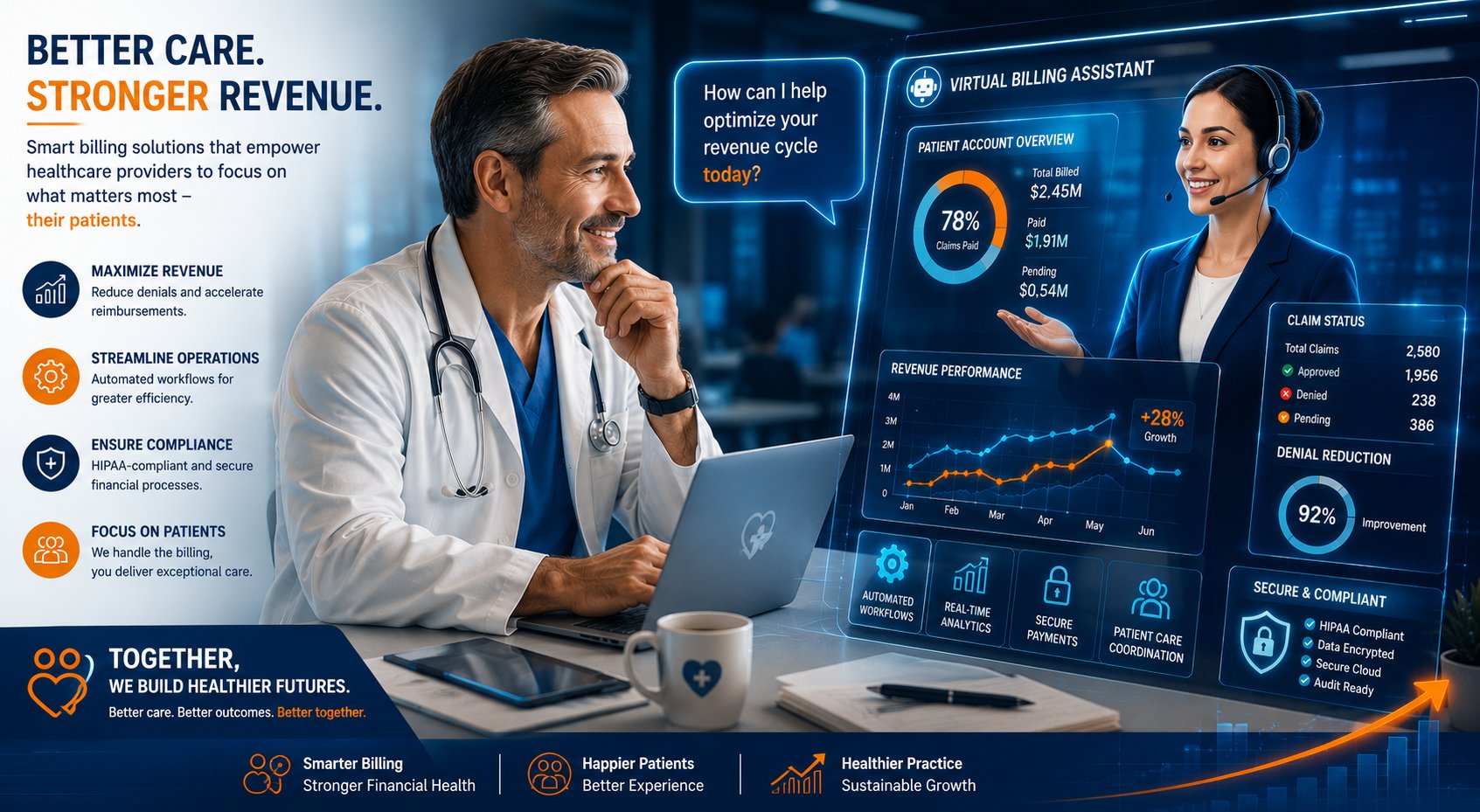
Medical Billing remains one of the most critical functions in the healthcare industry. The right company can help healthcare providers improve collections, reduce claim denials, optimize workflows, and maintain compliance.
Companies like UtreatiBill, Kareo (Now Tebra), AdvancedMD, athenahealth, and Greenway Health continue helping healthcare organizations modernize their financial operations and maximize profitability.
Best Medical Billing Services for Healthcare providers seeking long-term financial growth should carefully evaluate partners based on technology, transparency, specialty expertise, and revenue cycle performance. Therefore, choosing the right healthcare revenue partner can significantly impact long-term operational success.
If your organization is searching for professional reimbursement management services, exploring customized Medical Billing solutions These top 10 medical billing companies continue helping healthcare providers improve reimbursements and operational efficiency.
Frequently Asked Questions
What is Medical Billing?
Medical Billing is the process of submitting insurance claims and managing reimbursements for healthcare services provided to patients. It helps healthcare organizations maintain financial stability while ensuring providers receive accurate payments from insurance companies.
Why is Healthcare Billing important?
Healthcare billing is important because it directly impacts cash flow, reimbursement speed, and operational efficiency. Accurate claims management helps providers maintain compliance with healthcare regulations and insurance requirements. Providers can also review reimbursement regulations and compliance updates through official CMS resources.
What are the benefits of outsourcing Healthcare Billing?
Outsourcing healthcare reimbursement services can reduce denied claims, improve coding accuracy, lower administrative costs, and increase collections. It also allows healthcare providers to focus more on patient care instead of paperwork.
Which Healthcare Billing company is best for small practices?
Smaller healthcare practices often prefer companies like Kareo (Now Tebra), Office Ally, and RXNT because of their affordability, ease of use, and flexible cloud-based systems.
Which Healthcare Billing company is best for large healthcare organizations?
Larger healthcare organizations frequently choose athenahealth and Greenway Health because they offer advanced analytics, enterprise-level reporting, and scalable operational systems.
How does AI improve Medical Billing?
Artificial intelligence improves reimbursement management by automating repetitive tasks, identifying coding issues, reducing denied claims, and improving claims accuracy before submission.
Is cloud-based RCM services better?
Cloud-based revenue cycle management systems provide better flexibility, scalability, and remote accessibility compared to traditional on-premise systems. They also improve workflow efficiency and data accessibility.
Can healthcare billing companies reduce denied claims?
Yes. Professional reimbursement management companies use automated claim scrubbing, coding verification, and denial tracking tools to reduce claim rejection rates significantly.
What should healthcare providers look for in a Medical Billing company?
Healthcare providers should evaluate experience, compliance standards, transparency, reporting capabilities, customer support, pricing models, and technology infrastructure before choosing a financial management partner.
Where can I find professional Medical Billing services?
Healthcare providers looking for customized reimbursement management solutions can explore services from UtreatiBill to improve operational efficiency and financial performance.